
Optimized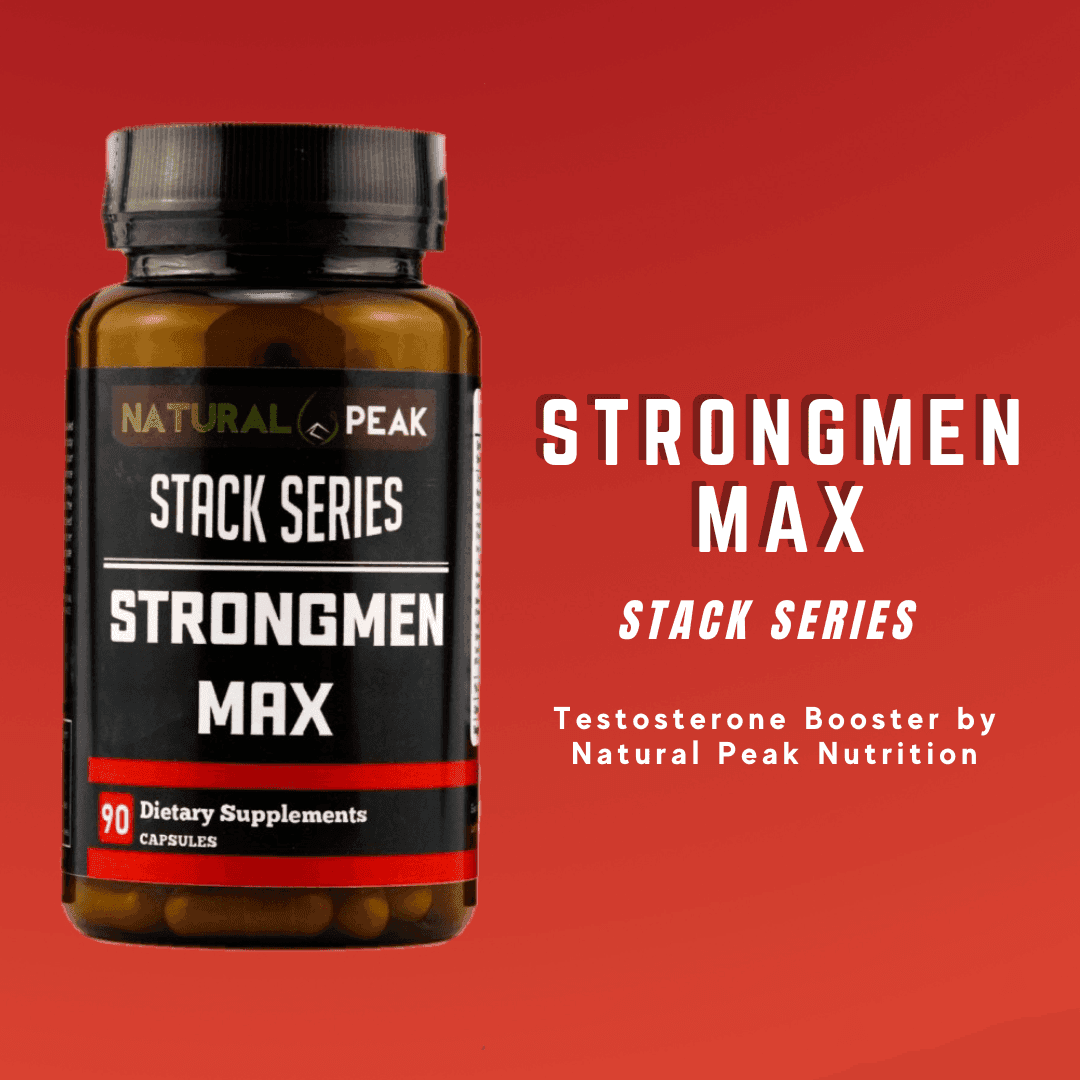
Recovery
Last reviewed July 23, 2026
Occasional emails. Unsubscribe anytime.
TL;DR
In the Philippines, shoppers comparing testosterone-focused supplements often need to balance ingredient quality, local availability, and realistic expectations.
Testosterone is a key male sex hormone with roles in libido, spermatogenesis, secondary sexual characteristics, and lean mass.14 It also plays important roles in sexual function and metabolism across the lifespan, and age-related decline is a recognized pattern in men.5 That said, testosterone is only one part of the muscle-building picture. Training stimulus, total calories, protein intake, sleep, and consistency still drive most of the visible progress in the gym.
For men with confirmed testosterone deficiency, testosterone replacement therapy may improve sexual function, hypogonadal symptoms, depressive symptoms, bone density, and lean body mass.67 Reviews also note that TRT aims to raise serum testosterone into the physiologic range and can improve symptoms and signs of deficiency such as loss of muscle and bone mass.1 But even in that setting, cardiovascular outcomes remain uncertain, with reviews describing conflicting evidence.67
That distinction matters because not every person with fatigue, sluggish recovery, or slow gains has low testosterone. Functional hypogonadism can overlap with obesity, type 2 diabetes, and ageing without clear hypothalamic-pituitary-testicular pathology.23 In practice, that means “feels low” is not the same as “has documented deficiency.” If a supplement stack is built on a wrong assumption, the result is often disappointment rather than a useful training edge.
If the goal is muscle growth, protein is usually the first supplement to get right. The reason is simple: it helps people reach daily intake targets that support training adaptation. For most readers, that is more useful than chasing a long list of hormone claims. When diet is already protein-sufficient, extra products tend to have smaller returns.
Creatine monohydrate is the next practical option for many lifters. It is widely used because it supports strength and lean mass goals in a way that aligns with training performance rather than hormone hype. If your main objective is better gym output and recovery between sessions, creatine usually has a clearer role than a “testosterone support” blend.
Magnesium and zinc are often marketed in testosterone conversations, but they are better understood as nutrient repletion tools. If intake is low, correcting the gap can matter; if intake is already adequate, the effect is less dramatic. The point is not that these nutrients are irrelevant. The point is that they are not magic switches, and they work best when there is an actual shortfall.2
For readers wanting a straightforward training anchor, creatine monohydrate is the most established add-on in this category.
Catalog option: natural peak nutrition strongmen max testosterone booster.
A lot of over-the-counter testosterone products are sold with bold promises, but the evidence base is much thinner than for prescription testosterone therapy in diagnosed hypogonadism.36 That does not mean every supplement is useless. It does mean buyers should separate three different ideas: correcting a deficiency, supporting training, and raising testosterone itself.
That distinction also helps with “natural booster” marketing. Some formulas are built around zinc, magnesium, vitamin D, herbal extracts, or proprietary blends. Those products may look attractive on a label, but if the claim is that they will rapidly raise testosterone in all users, caution is warranted. Reviews and guidelines emphasize that functional hypogonadism requires proper diagnosis and that symptom-based self-selection can be misleading.32
Social media amplifies the same problem. Demand for natural testosterone boosters is high, but buyer demand is not evidence. In real life, a person who sleeps poorly, under-eats, or overtrains may feel better from fixing those basics long before any “booster” bottle makes a difference. In other words, the marketing promise often outruns the likely physiological effect.
A useful rule: if a product reads like it is trying to do the work of medical therapy, be skeptical. If it is framed as a nutrient support product or training adjunct, the claim is usually easier to evaluate.
A simple stack is usually better than a crowded one. For most people, the order makes sense as: protein first, creatine second, and targeted micronutrients only if diet or labs suggest a gap.2 That approach is boring, but it is often the most efficient.
This also fits recovery-focused planning. If someone already trains consistently, eats enough protein, and sleeps reasonably well, the biggest gains usually come from programming, not from piling on more bottles. Supplements can support recovery, but they do not replace recovery. If you are trying to choose among muscle growth supplements, ask whether the product is helping you train harder, recover better, or simply feel more optimistic about a label.
For readers who want the less-is-more approach, protein is still the first foundation. It supports daily intake, and it is easier to audit than a complex proprietary blend. From there, creatine monohydrate is the usual next step if your goal is strength and lean mass support. If you are specifically looking for a testosterone support stack, it is still reasonable to keep the stack small and practical rather than trying to “cover everything” at once.
Men with symptoms of testosterone deficiency should be assessed properly rather than self-diagnosing from gym fatigue alone.23 That caution matters because the same symptoms can overlap with poor sleep, depression, obesity, diabetes, and training stress. A supplement stack cannot sort out that entire differential on its own.
Fertility is a major reason to be careful. Exogenous androgens can suppress gonadotropin levels, inhibit endogenous testosterone production, and drastically reduce intratesticular testosterone, which can impair spermatogenesis.4 Reviews also note that testosterone has a pivotal role in spermatogenesis, erectile function, libido, and secondary sexual characteristics.4 So if someone is actively trying to conceive, or wants to keep that option open, product choice deserves a more conservative review.
That does not mean every testosterone-adjacent supplement is off-limits. It does mean the ingredient list matters more than the slogan. If a product is really a hormone-active item rather than a benign nutrient blend, it should be approached with more care.
When you are shopping from a catalog, look for transparent labeling, clear serving sizes, and a formula that matches the actual goal. A mega-blend with vague ingredient amounts is usually less helpful than a simpler product with an understandable purpose. This is especially true for best gym supplements, where the decision often comes down to whether the product improves training performance, fills a dietary gap, or just borrows testosterone language for attention.
In the Philippines, that also means checking local availability, shipping terms, and whether the product page clearly explains serving instructions. When a seller lists a product for a general audience, the label should still make sense for your specific goal. If the listing leans heavily on sexual performance language, ask whether that positioning is marketing-first or whether the ingredient list actually supports the use case.
A good catalog rule is to prioritize products that align with your goal taxonomy, but not every “testosterone support” item deserves the same weight. Some products are best thought of as recovery aids; others are more clearly positioned as sexual performance support. If the product name and label are built around testosterone, the right question is not “does it sound strong?” but “does the formula actually match what I need?”
For a testosterone-branded option, StrongMen Max Testosterone Booster is sold as a testosterone-support product, so its positioning is closer to the sexual performance side of the market than to a basic nutrition staple.
What supplement should I start with if I want both testosterone support and muscle growth?
Start with the basics: protein for overall intake, then creatine for training performance and lean mass support. Testosterone-focused products are better as secondary options unless you have a confirmed deficiency.
Do testosterone boosters actually work?
Some ingredients may help correct nutrient gaps, but broad claims that an over-the-counter booster will meaningfully raise testosterone for everyone are not supported by strong evidence.32
Can I build muscle without taking a testosterone supplement?
Yes. Muscle gain depends heavily on training, total calories, and adequate protein; supplements are add-ons, not replacements.
Is there a PH or Philippines angle I should know before buying a testosterone booster?
Check local availability, shipping, and product labeling carefully; the most useful choice is usually the one that matches your training goal and ingredient transparency, not the loudest claim.
Should I worry about fertility if I use testosterone products?
Yes, especially if the product contains exogenous testosterone or similar hormone-active ingredients, because testosterone therapy can suppress natural production and affect spermatogenesis.4
If you want a single testosterone-focused catalog option, natural-peak-nutrition-strongmen-max-testosterone-booster
This article is for educational purposes only. It is not medical advice, not a substitute for professional consultation, and is not intended to diagnose, treat, cure, or prevent any disease.
Statements about dietary supplements have not been evaluated by the FDA. Individual results vary. Consult a licensed physician before starting any new supplement — especially if you are pregnant, breastfeeding, have a medical condition, or are taking prescription medication.
Quality and sourcing information is available on our quality page. Batch-level lab test data is available on request — contact support.
Last reviewed: 2026-07-23
Arcangelo Barbonetti, Settimio D'Andrea, Sandro Francavilla. Testosterone replacement therapy.. Andrology (2020). https://pubmed.ncbi.nlm.nih.gov/32068334/
Nipun Lakshitha De Silva, Nikoleta Papanikolaou, Mathis Grossmann. Male hypogonadism: pathogenesis, diagnosis, and management.. The lancet. Diabetes & endocrinology (2024). https://pubmed.ncbi.nlm.nih.gov/39159641/
Giovanni Corona, Dimitrios G Goulis, Ilpo Huhtaniemi. European Academy of Andrology (EAA) guidelines on investigation, treatment and monitoring of functional hypogonadism in males: Endorsing organization: European Society of Endocrinology.. Andrology (2020). https://pubmed.ncbi.nlm.nih.gov/32026626/
Bryan D Naelitz, Leila Momtazi-Mar, Sanjay Vallabhaneni. Testosterone replacement therapy and spermatogenesis in reproductive age men.. Nature reviews. Urology (2025). https://pubmed.ncbi.nlm.nih.gov/40346275/
Haoyang Cheng, Xiaoyan Zhang, Yongheng Li. Age-related testosterone decline: mechanisms and intervention strategies.. Reproductive biology and endocrinology : RB&E (2024). https://pubmed.ncbi.nlm.nih.gov/39543598/
Joel J Heidelbaugh, Aleksandr Belakovskiy. Testosterone Replacement Therapy for Male Hypogonadism.. American family physician (2024). https://pubmed.ncbi.nlm.nih.gov/38905552/
Karol M Pencina, Thomas G Travison, Glenn R Cunningham. Effect of Testosterone Replacement Therapy on Sexual Function and Hypogonadal Symptoms in Men with Hypogonadism.. The Journal of clinical endocrinology and metabolism (2024). https://pubmed.ncbi.nlm.nih.gov/37589949/