
Starter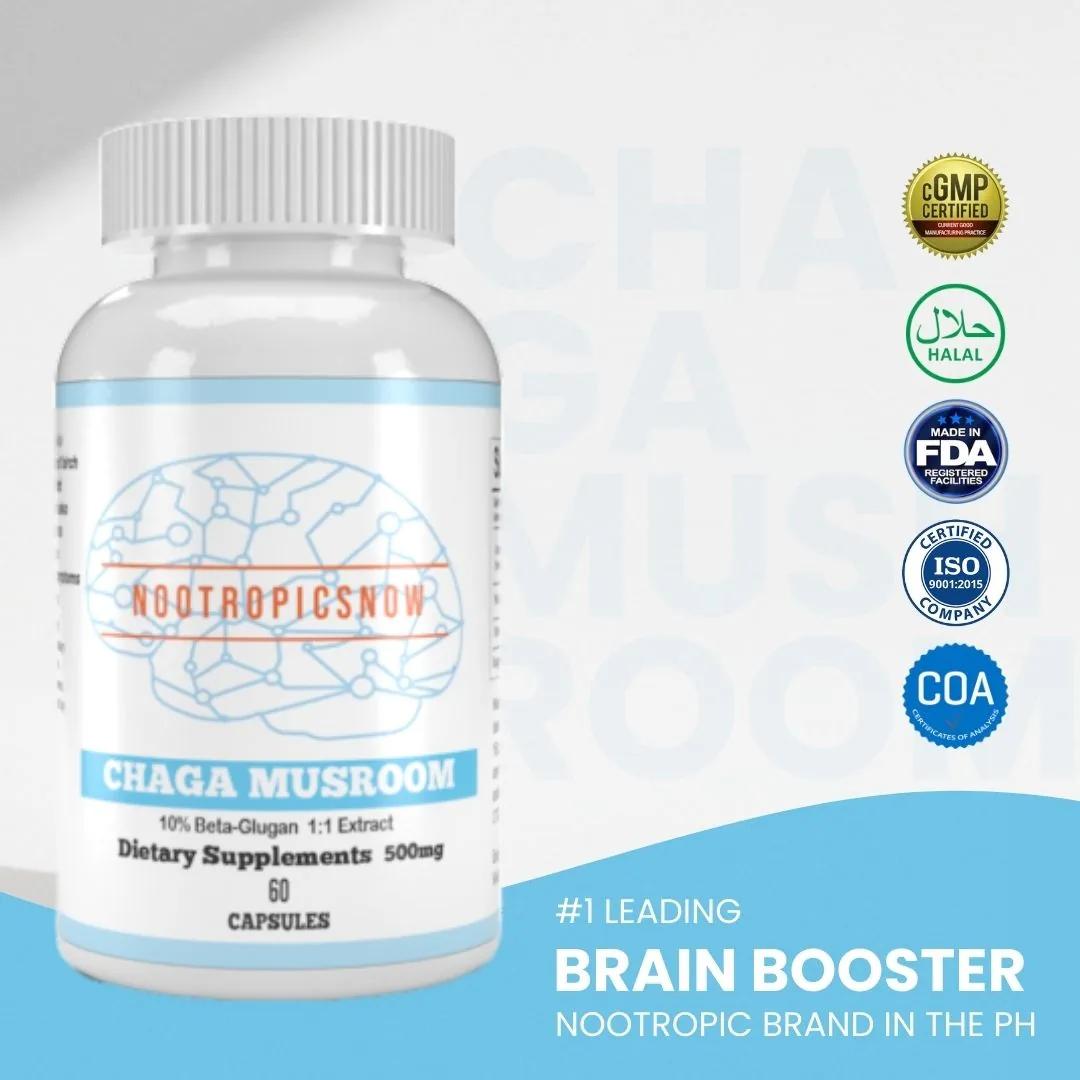
Recovery
Last reviewed May 5, 2026
Occasional emails. Unsubscribe anytime.
TL;DR
In the Philippines, shoppers comparing chaga tinctures often need to weigh label quality, delivery timing, and whether a listing gives enough detail to judge the extract properly.
Chaga is a medicinal fungus, and research on its chemistry has highlighted triterpenoids as one of its bioactive components.2 More recent extraction work also describes chaga as a source of diverse bioactive compounds and compares how different methods affect phytochemical composition and antioxidant activity.1 That matters for buyers because a tincture is not just “liquid chaga”; it is a product shaped by the extraction method, solvent, and processing choices used by the manufacturer.1
That distinction is the heart of a cautious buying process. Two bottles can both say chaga tincture on the front label while still being quite different in what they contain and how they were made. Comparative extraction studies have looked at water, ethanol, ultrasound-assisted extraction, and combined supercritical CO-pressurized liquid approaches, which is a good reminder that the same mushroom can yield different profiles depending on the process.1 Supercritical fluid extraction has also been used in chaga triterpenoid research, reinforcing the idea that extraction conditions are not a footnote — they are central to what ends up in the bottle.2
If you are trying to decide what makes the best chaga tincture, it helps to think in terms of formulation transparency rather than brand language. A better product page should tell you what kind of extract it is, what solvent or system was used, and enough about the source to let you compare it against other bottles. Without that, you are mostly guessing.
The first quality filter is simple: can you see how it was extracted? Chaga extraction research has directly compared maceration, ultrasound-assisted extraction, and combined supercritical CO-pressurized liquid extraction, using water and ethanol mixtures of different strengths.1 That is not the same thing as proving one commercial bottle is superior, but it does show why extraction disclosure is useful. If a label gives no clue about the process, you cannot judge whether it is aligned with the kind of extract you want.
The second filter is solvent transparency. Water and ethanol are both commonly used in extraction studies, and solvent polarity affects what compounds are drawn out of plant or fungal material.1 For shoppers, that means a “full-spectrum” style claim is only helpful if the listing explains what that actually means on the manufacturing side. If the page is vague, the claim is mostly marketing.
The third filter is specificity. A strong listing should name the mushroom source, the extract form, and any formulation notes that help you compare products. That does not require a long technical essay, but it does require enough detail to distinguish one bottle from the next. In practical terms, a chaga tincture with a clean ingredient list and a stated extraction style is easier to assess than one that hides behind broad wellness language.
For readers comparing local options in the Philippines, this is also where shopping realities matter. If two products look similar on paper, the better choice is often the one with clearer stock status, local Philippine shipping, and a price shown in PHP so you can judge the real landed cost before checking out.
Dual extraction is a common consumer phrase because chaga contains compounds that may respond differently to different extraction conditions. The research pool here supports that general idea: one study focused on triterpenoids using supercritical fluid extraction, while another compared several green extraction techniques and solvents to evaluate phytochemical composition.21 That makes dual extraction a reasonable shorthand for “the maker is trying to capture a wider range of compounds.”
Still, dual extraction is a buying signal, not a guarantee of superiority. A label that says “dual extracted” without explaining what was extracted, with what solvents, and under what process is only partially informative. By contrast, if a product tells you it uses water plus alcohol or describes the relevant extraction steps, you can at least understand the intended design.
Chaga shoppers sometimes assume that a more elaborate process automatically means a better product. The evidence does not support that simple conclusion. What it does support is the broader point that extraction technique changes the chemical output.1 So when a listing uses the phrase dual extraction, the right question is: does the rest of the label back it up?
If you are browsing the best chaga extract options online, a dual-extraction claim can be useful when it is paired with honest detail. Without detail, it is just a slogan. If you want to move from research to an actual bottle of mushroom extract, the listing below is a practical place to start comparing labels and availability.
If you are narrowing the field to a single mushroom product page, this chaga mushroom option is worth checking for how clearly it presents the extract details.
The safest way to read a chaga tincture label is to ask three questions: what is the source, what is the extraction method, and what exactly is inside the bottle? Comparative chaga work used different solvents and extraction styles, which means the label should ideally tell you enough to place the product on that spectrum.1 If you cannot tell whether it is a water extract, an ethanol extract, or something more complex, then the listing is underdescribed.
Look closely at ingredient transparency. Some products emphasize the mushroom name but omit the process, while others mention an extract ratio or solvent without explaining the starting material. Either approach is incomplete on its own. The better listing is the one that gives you enough context to compare. That is especially important if you are buying chaga online and cannot inspect the bottle in person.
It also helps to separate label signal from label noise. A crowded front panel full of wellness buzzwords may feel persuasive, but it tells you less than a plain statement about source and extraction. If the page does not explain the process at all, that is a transparency gap, not a minor omission.
For a buyer in the Philippines, label reading should include practical checks too: Is the stock current? Is the price listed in PHP? Is delivery within the Philippines clear? Those details do not tell you whether the extract is better, but they do tell you whether the product is realistically comparable after shipping and local fulfillment.
A simple checklist can keep the decision grounded:
That checklist is informed by the extraction literature because the chemistry of chaga changes with process and solvent choice.12 It is also useful because many retail listings offer just enough information to create confidence, but not enough to support a real comparison. A label that states source and extract style is usually more useful than one that just says “premium mushroom formula.”
If you are evaluating whether a bottle is worth buying, think in terms of fit, not hype. Do you want a liquid extract because it is easier to dose or carry? Are you comfortable with the taste? Do you care more about a detailed process description or a simpler label with a lower price? Those are buyer questions, not science questions, and they should guide the final choice.
And if you are shopping locally, make the Philippines-specific checks part of the process: compare local shipping, look at PHP pricing, and confirm whether the item is in stock before you decide. A product that looks appealing on the page is not much help if fulfillment is uncertain.
The most important expectation-setting point is that a chaga tincture is best evaluated as an extract format, not as a universal solution. The extraction research supports the idea that different methods produce different chemical profiles, so one bottle is not interchangeable with another just because both use chaga as the starting material.12
That does not mean you need to overcomplicate the decision. It means you should make the decision on the information that is actually meaningful: source, extraction style, and label disclosure. If you prefer liquids, a tincture may be a convenient form. If you care most about a certain extract approach, then the method on the product page matters more than the branding.
There is also a practical tolerance issue. Some shoppers care about taste, some about simplicity, and some about how easy the bottle is to use consistently. Those are real selection factors even when the science is still limited. The best chaga tincture for one person may be the one with the clearest extract language; for another, it may be the one that is easiest to order and receive locally.
To keep expectations grounded, avoid assuming that two chaga products are equivalent just because the marketing copy sounds similar. Extraction is the differentiator, and the label should show its work.
What should I look for in the best chaga tincture?
Start with disclosure: look for a clear extraction method, a readable ingredient list, and enough product detail to compare one bottle with another.
Why do people talk about dual extraction so much?
Because chaga contains different compounds that may be associated with different extraction approaches, so shoppers often use that term as a quality shortcut.12
Is a stronger-looking label always better?
Not necessarily. A better chaga listing is one that is specific about source and process rather than one that relies on vague marketing language.1
How should I compare two chaga tinctures online?
Compare the extraction method, ingredient transparency, product format, and how clearly the listing explains what you are getting.1
Can I buy chaga tincture in the Philippines without overthinking it?
Yes, but it still helps to check stock, shipping, and price in PHP before choosing a bottle.
For readers ready to move from label-reading to a product page, this chaga mushroom listing is the closest match in the current selection. chaga-mushroom-philippines
This article is for educational purposes only. It is not medical advice, not a substitute for professional consultation, and is not intended to diagnose, treat, cure, or prevent any disease.
Statements about dietary supplements have not been evaluated by the FDA. Individual results vary. Consult a licensed physician before starting any new supplement — especially if you are pregnant, breastfeeding, have a medical condition, or are taking prescription medication.
Quality and sourcing information is available on our quality page. Batch-level lab test data is available on request — contact support.
Last reviewed: 2026-05-05
Nevena Preradović, Đura Nakarada, Uroš Gašić. Green Extraction and Liposomal Encapsulation of(Chaga) Extracts: Comparative Phytochemical and Antioxidant Analysis.. Molecules (Basel, Switzerland) (2026). https://pubmed.ncbi.nlm.nih.gov/41515441/
Nghia Huynh, Gabriele Beltrame, Marko Tarvainen. Supercritical COExtraction of Triterpenoids from Chaga Sterile Conk of.. Molecules (Basel, Switzerland) (2022). https://pubmed.ncbi.nlm.nih.gov/35335249/