
Starter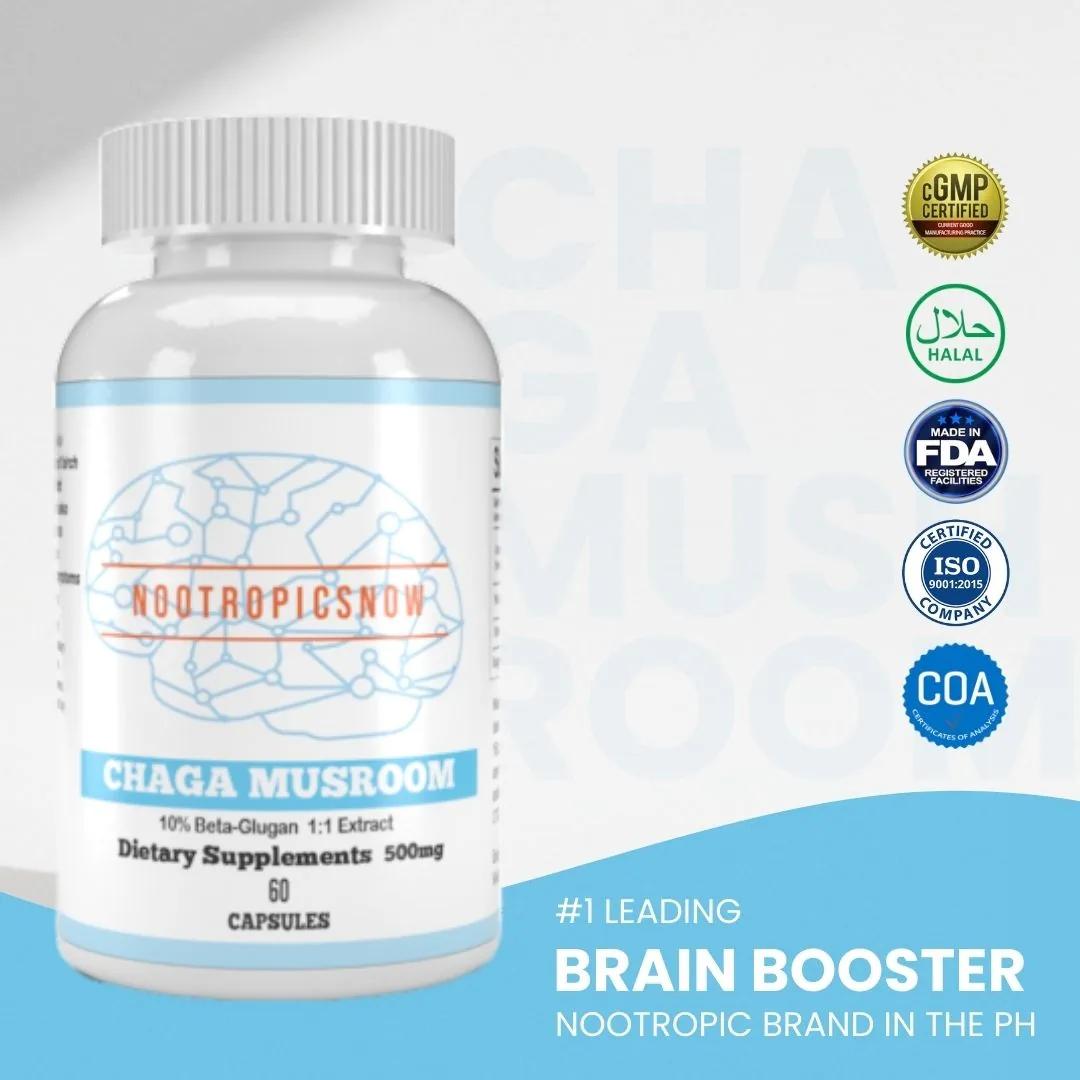
Recovery
Last reviewed May 4, 2026
Occasional emails. Unsubscribe anytime.
TL;DR
In the Philippines, shoppers comparing mushroom coffee often want a drink that feels easy to fit into an ordinary morning, with local delivery and a label they can understand quickly.
Chaga coffee is generally a coffee blend made with chaga-derived ingredients, usually positioned as a mushroom coffee option rather than a classic black coffee replacement. The reason people search for it is practical: they want a beverage that keeps the familiar coffee ritual but adds a functional mushroom ingredient. In that sense, the product category is defined more by formulation and positioning than by one fixed recipe.2
From a research perspective, chaga is of interest because it contains bioactive compounds, including triterpenoids. Extraction studies have identified and quantified several triterpenoids from chaga, showing that the ingredient can be chemically characterized in different ways depending on the method used.1 Other work on chaga extracts has compared extraction techniques and phytochemical profiles, reinforcing the point that the source material and processing method shape what ends up in the final extract.2
That matters for buyers because “chaga coffee” can mean several different things on a label. One product may use a small amount of chaga extract, another may use mushroom powder, and another may rely on a proprietary blend with limited disclosure. The shopper’s real comparison is often not “Which coffee tastes identical to coffee?” but “Which one has the ingredient format, flavor, convenience, and price that fit my routine?” Taste and daily usability are part of the decision, especially when the product is meant to be consumed every day rather than occasionally.
The first label question is simple: what form of chaga is actually in the product? Extract and whole mushroom powder are not the same thing, and the distinction matters because extraction studies show that solvent choice and processing approach can change the phytochemical profile of chaga extracts.2 If a product only says “chaga” without clarifying whether it is extract, powder, or part of a blend, you have less information for comparison.
Ingredient transparency should come next. A better product page will usually tell you whether chaga is paired with coffee, cocoa, other mushrooms, sweeteners, or flavoring agents. That kind of disclosure helps you decide whether the blend is meant as a daily coffee replacement, a functional add-in, or a specialty beverage for people who want a more earthy profile. The more the seller explains the format, the easier it is to compare servings and real value.
Caffeine is also worth checking. Some mushroom coffee products are coffee-based and therefore still caffeinated, while others are more like mushroom beverages with different stimulant profiles. If you are planning to use the drink in the morning, the caffeine level affects not only how it feels, but also whether it fits your usual schedule. A label that states the serving size and coffee content is more useful than one that only leans on general wellness language.
When you are comparing products, ask whether the blend is trying to be a one-step routine or a flexible add-in. A daily coffee replacement needs to taste acceptable on its own. A concentrated powder or extract can make more sense if you want to mix it into another drink. That decision is personal, but it becomes easier when the product page clearly tells you how the blend is intended to be used.
The strongest research signal around chaga is ingredient-level chemistry, not product-level performance claims. One study describes triterpenoids as bioactive components of chaga and reports supercritical fluid extraction of chaga triterpenoids, with GC-MS identification and GC-FID quantification of several compounds.1 That kind of paper is useful because it shows that chaga is a chemically active fungal ingredient, and that different methods can recover different compounds.
Another study compared maceration, ultrasound-assisted extraction, and combined supercritical CO-pressurized liquid extraction, using water and ethanol-based solvents, and then analyzed phytochemical composition and antioxidant activity.2 The practical lesson is not that every chaga product is equally rich in the same compounds. It is that extraction technique and solvent polarity can materially change what the final extract contains.
That is why careful wording matters. Research on chaga extracts does not tell you that a specific coffee product has the same composition or effects as a lab extract. It also does not mean a consumer product will deliver a fixed amount of triterpenoids just because the front label says “mushroom coffee.” For buyers, the useful translation is narrower: ingredient disclosure, extract type, and processing details are better shopping signals than broad wellness claims.
If a brand highlights “green extraction” or says the product uses a particular chaga extract process, that may be relevant, but only if the product page gives enough detail to interpret it. Otherwise, the research is mostly a reminder to check the label carefully rather than a reason to expect a specific outcome from the beverage.
Taste is where many chaga coffee shoppers end up making the final call. Chaga blends are often described in earthy, roasted, or slightly woody terms, which means they may feel more like a functional beverage than a straight coffee clone. That is not a flaw; it is part of the category. If you expect an ordinary coffee-only profile, a mushroom blend may feel unusual at first.
Convenience matters just as much. Some products dissolve easily in hot water or brewed coffee, while others need more stirring, a frother, or a specific preparation method. If the routine becomes annoying, even a decent formula may be left on the shelf. For repeat use, the best option is usually the one you can prepare consistently without changing your whole morning setup.
A practical way to compare products is to think like a regular drinker, not a supplement tester. Does it mix well hot and iced? Does the aftertaste stay mild enough for daily use? Can you prepare it at work or while traveling? Those questions are not flashy, but they are usually more predictive of whether you will keep using the product.
If you want a chaga mushroom coffee that keeps the category simple, the product page should make the mushroom content, serving format, and intended use easy to understand. That is the point at which a mushroom product stops being abstract and becomes a realistic part of your routine.
Label comparison should start with the ingredient list, because that tells you whether chaga is the main feature or just a supporting note in a larger blend. If chaga appears near the end of a long list, the product may be more about flavoring or branding than a high-concentration mushroom format. If the label names an extract and gives serving details, you have a better basis for comparison.1
The next question is source transparency. Products that disclose the chaga form, origin, and extraction style are easier to evaluate than products that rely on vague terms like “mushroom blend” or “functional coffee.” Since chaga extraction method can change phytochemical composition, disclosure is not just cosmetic; it helps you understand what kind of ingredient you are buying.2
It is also worth comparing the drink format itself. Is it packaged as instant coffee, a powdered blend, or a standalone mushroom powder? Each format fits a different user. Instant coffee is convenient for people who want a quick brew. A powdered blend may be better if you like to control strength. A standalone ingredient makes more sense if you already have a coffee routine and simply want to add chaga separately.
For buyers in the Philippines, this is also where cost and logistics come in. A product may look attractive on the product page but become less appealing once you factor in local delivery, shipping time, and the total cart amount in PHP. If two products are similar, the one that arrives reliably and stores easily is often the better choice.
Chaga coffee is often a better fit for shoppers who want a coffee ritual with a more earthy flavor profile and an added mushroom ingredient. It appeals to people who like the idea of one beverage doing more than basic caffeine delivery, without turning their morning into a complicated supplement stack. That is a preference issue, not a medical promise.
It can also suit buyers who enjoy trying functional beverages and want to compare how a mushroom blend behaves across days of use. Some people are drawn to the novelty and taste; others like the idea of a more complex ingredient list. If that sounds appealing, chaga coffee may fit well.
On the other hand, if you only want a standard coffee taste with no extra notes, the category may not be ideal. The earthy flavor and the added mushroom positioning are part of the product’s identity. In that case, plain coffee may be the more satisfying everyday choice.
This is where the “best” in best chaga coffee becomes personal. The best product is not the one with the most dramatic claim. It is the one whose flavor, caffeine level, ingredient disclosure, and prep style match how you actually drink coffee.
For readers shopping from the Philippines, product availability should be checked before you get attached to a specific label. Some mushroom coffee products ship locally, while others may have longer delivery windows or limited stock. That affects not just convenience but also whether the purchase makes sense if you want something you can reorder regularly.
It helps to look at the cart total in PHP rather than focusing only on the product headline. Shipping charges, packaging size, and order minimums can change the real cost substantially. If local Philippine shipping is available, that usually makes the purchase easier to plan, especially for products you expect to use often.
Storage matters too. A mushroom coffee blend that ships well and stays stable in a pantry is easier to manage than a product that requires more careful handling. If you are comparing options, ask whether the format suits your routine at home, at work, or while traveling within the Philippines.
If the product catalog offers a chaga-focused option, that can be the most straightforward path once you have checked the label and decided you want a mushroom beverage rather than a plain coffee. chaga-mushroom-philippines
Can buyers in the Philippines order chaga coffee online?
Yes, if the product is listed for local delivery and the checkout shows shipping availability for your address.
How does chaga coffee taste compared with regular coffee?
It is usually described as earthy or roasted, and the exact taste depends on the coffee base and the chaga format used.
Does chaga coffee usually contain caffeine?
That depends on the blend. Some products are coffee-based, while others are mushroom-style beverages with different caffeine levels.
Is chaga coffee a good option if I want a simpler daily routine?
It can be, if you prefer a one-step drink that combines coffee with a functional ingredient and fits your usual schedule.
What should I check first on a chaga coffee label?
Start with the ingredient list, chaga form, serving size, and whether the product clearly states how it is intended to be used.
Can I use chaga coffee as my only source of energy support?
It is better to view it as a beverage choice, not a substitute for sleep, nutrition, or overall routine quality.
If you want to compare a chaga mushroom option from the catalog after reading the labels, a mushroom-focused product path is the simplest next step. chaga-mushroom-philippines
This article is for educational purposes only. It is not medical advice, not a substitute for professional consultation, and is not intended to diagnose, treat, cure, or prevent any disease.
Statements about dietary supplements have not been evaluated by the FDA. Individual results vary. Consult a licensed physician before starting any new supplement — especially if you are pregnant, breastfeeding, have a medical condition, or are taking prescription medication.
Quality and sourcing information is available on our quality page. Batch-level lab test data is available on request — contact support.
Last reviewed: 2026-05-04
Nghia Huynh, Gabriele Beltrame, Marko Tarvainen. Supercritical COExtraction of Triterpenoids from Chaga Sterile Conk of.. Molecules (Basel, Switzerland) (2022). https://pubmed.ncbi.nlm.nih.gov/35335249/
Nevena Preradović, Đura Nakarada, Uroš Gašić. Green Extraction and Liposomal Encapsulation of(Chaga) Extracts: Comparative Phytochemical and Antioxidant Analysis.. Molecules (Basel, Switzerland) (2026). https://pubmed.ncbi.nlm.nih.gov/41515441/