
Starter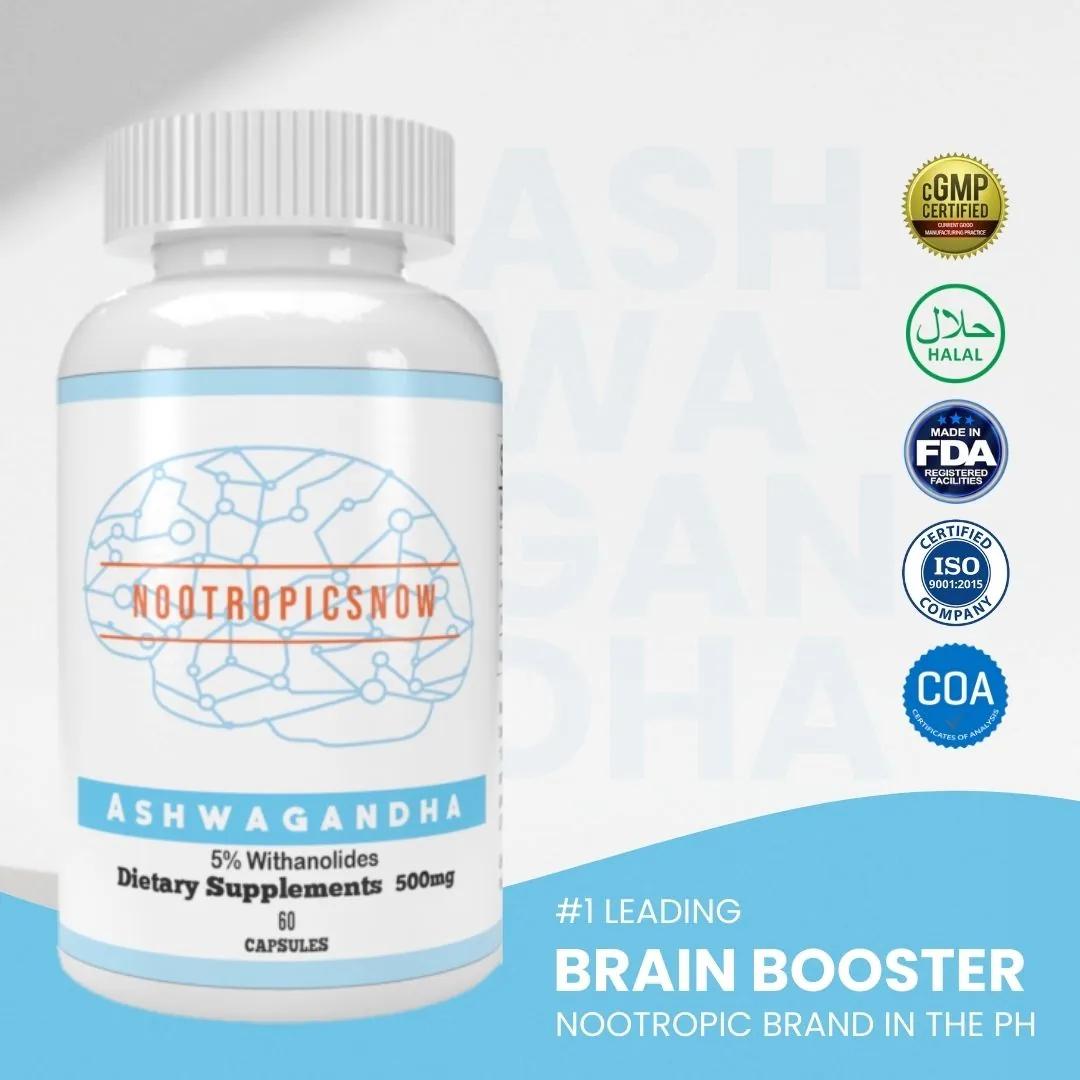
Stress
Last reviewed July 23, 2026
Occasional emails. Unsubscribe anytime.
TL;DR
In the Philippines, shoppers comparing an ashwagandha supplement often need to balance evidence, label clarity, and delivery within the Philippines rather than relying on brand hype.
Ashwagandha, also called Withania somnifera, is a traditional herbal ingredient that has drawn attention because it is commonly discussed as an adaptogen and has been studied for stress-related uses.45 Reviews describe it as widely used in traditional medicine, while modern research has focused on stress, anxiety-related outcomes, sleep, and related wellbeing measures.26
That said, the evidence is not uniform. A 2022 systematic review and meta-analysis reported that clinical trial results were conflicting across randomized studies of ashwagandha extract for anxiety and stress.1 A 2024 systematic review likewise looked at stress and anxiety outcomes and evaluated both effects and safety, which is a reminder that usefulness and tolerability should be considered together rather than assumed.5 For shoppers, the practical takeaway is simple: the evidence is promising enough to compare products seriously, but not so clean that every bottle should be expected to behave the same way.
This is why brand selection matters. A strong label can help you understand what you are actually buying, while a weak label makes it hard to compare one product against another. When the ingredient is not standardized clearly, or the serving size is unclear, you are not really comparing like with like.27
If you are trying to decide on the best ashwagandha brand, start with the label, not the marketing. Clear labeling of extract type, dose, and serving size makes comparison much easier, especially when you are browsing online or checking a local Philippines storefront. Reviews of ashwagandha products repeatedly emphasize the importance of transparent ingredient information and manufacturing quality, because those are the details that let you separate a focused formula from a vague one.27
A few practical checks help:
The goal is not perfection. The goal is to buy a product you can evaluate fairly. A brand that gives you enough information to compare doses and forms is usually more useful than one that leans on vague wellness language. That is especially true if you are shopping in the Philippines and want to factor in local shipping, bottle count, and value per serving rather than just the sticker presentation.
Ashwagandha is traditionally used in settings that involve stress and wellbeing, but the better question for a shopper is: does this specific label give me enough information to judge whether it matches my goal?34 That is the most honest way to think about quality.
Different ashwagandha products can use different extract styles, which is one reason users compare brands so heavily.7 Social chatter often centers on KSM-66 versus Sensoril versus other branded extracts, but the label details matter more than the shorthand. In practice, the useful comparison is not “which name sounds better,” but “what exactly is in this bottle, and how does it fit my goal?”
Research reviews also note that ashwagandha root extract has been used in many biomedical applications, but they do not imply that every extract style is interchangeable.7 That is an important distinction for shoppers who see the same herb name on multiple products and assume the results should be identical. They should not be assumed identical.
For example, a root-only formula may appeal to someone who wants a simpler product and fewer moving parts. A branded extract may appeal to someone who wants a more standardized approach. But neither label alone tells you everything. You still want to compare per-serving amount, the extract style, and whether the product is a single capsule or part of a broader blend.
When people ask about sensoril vs ksm-66, the most useful answer is usually: check the actual formula, then decide which one matches your routine better. If you want to keep the evaluation simple, a straightforward ashwagandha capsule is easier to reason about than a multi-ingredient mix. That is why many shoppers prefer to begin with an ashwagandha capsule that lists one main active rather than a crowded label. For readers who want the simplest route, a plain ashwagandha capsule keeps the comparison cleaner.
The strongest research discussion around ashwagandha is in stress and anxiety-related outcomes.15 A randomized, double-blind, placebo-controlled study in stressed, healthy adults examined the stress-relieving activity of an ashwagandha extract over 60 days, which is one reason the ingredient is so often discussed for stress support.3 Reviews also describe ashwagandha as widely used in traditional systems and increasingly studied for neuropsychiatric effects.4
Sleep is another common reason shoppers look at ashwagandha supplements.6 A systematic review and meta-analysis evaluated the effect of ashwagandha extract on sleep in adults, which supports why the ingredient often appears in bedtime-oriented supplement searches.6 That does not mean every formula is a bedtime formula, though. A product’s timing can depend on how it is formulated and how you respond to it.
Some reviews also discuss broader wellbeing, brain function, and sports performance, but that does not mean ashwagandha should be expected to do everything at once.7 A cautious shopper does better by choosing a single goal first. If your main aim is stress support, select for stress-oriented design and clear dosing. If sleep is the bigger issue, look for a product that is easy to time in the evening and does not bundle too many extra ingredients.
A good rule is to match the product to the use case:
The evidence base is encouraging, but it is still a supplement evidence base, not a guarantee. That is why a careful buyer should judge the product in front of them rather than the category name alone.1
Safety matters as much as ingredient choice. Reviews of ashwagandha explicitly discuss safety and toxicity aspects, which is a reminder not to address “natural” as a substitute for careful use.25 A thoughtful brand choice should include transparent labeling and conservative expectations about tolerance.
If you take medications or have a medical condition, it is prudent to review the product with a qualified clinician before use.8 That is especially sensible if you are already managing a sleep routine, mood concerns, or another supplement stack. Even a well-made product may not fit neatly into every routine.
For a cautious buyer, the main safety questions are practical:
The literature supports asking these questions because ashwagandha has been studied for stress and related outcomes, but reviews still emphasize that results and safety considerations belong together.15 A brand that is clear about its formula is easier to use responsibly than one that leaves too many gaps.
If you are comparing products side by side, start with the facts you can verify. Compare servings per bottle, extract amount per serving, and whether the formula is a single-ingredient capsule or a blend.72 Then look at standardization and whether the product tells you enough to compare apples to apples.
Here is a simple shopping framework:
A helpful way to think about brand value is: does the bottle let me understand what I am paying for? Reviews and product analyses repeatedly emphasize transparency because it is what makes comparison meaningful.27 A hidden-dose formula can look attractive until you try to compare it against another product that gives you a clear serving breakdown.
A single-ingredient ashwagandha product is the simplest starting point for readers who want a straightforward stress-support option.3 In the ashwagandha category, simplicity often wins because it reduces guesswork: one ingredient, one serving structure, one main use case. If you want the least complicated path into the category, a plain ashwagandha product is the cleanest fit.
That also makes it easier to compare against other ashwagandha picks if your needs change later. Instead of starting with a blend and trying to decode multiple ingredients at once, you can begin with a focused capsule and judge whether the routine suits you. Research on stress and sleep gives this approach a reasonable foundation, since those are the two most common use cases discussed in the literature.16
For a buyer in the Philippines, this kind of simplicity also helps with practical shopping. You can compare one bottle’s label, one shipping fee, and one daily serving without trying to separate several active ingredients. If you want to keep the process easy, a plain ashwagandha capsule is the most direct way to start. ashwagandha
It can be a reasonable option to compare if your main goal is stress support, but the best choice still depends on label clarity, dose, and your personal tolerance.32
These are commonly discussed extract styles in social reviews, and shoppers usually compare them by formula details, serving size, and the brand’s labeling transparency.72
Many shoppers ask this because they associate ashwagandha with sleep support, but the right timing depends on the product and how you personally respond.6
Reviews and buyer discussions often center on trying a product consistently for a period of time before deciding whether it suits their routine.3
Check the extract type, amount per serving, and whether the brand is clear about what is actually in the bottle.27
Online reviewers usually favor brands that are easy to compare, clearly labeled, and aligned with a specific goal rather than trying to do everything at once.74
Research reviews suggest ashwagandha has been studied for stress, anxiety, and sleep-related outcomes, but results vary across trials and product types.156
Look at servings per bottle, serving size, and local shipping, then compare the per-serving value instead of the headline price alone.
This article is for educational purposes only. It is not medical advice, not a substitute for professional consultation, and is not intended to diagnose, treat, cure, or prevent any disease.
Statements about dietary supplements have not been evaluated by the FDA. Individual results vary. Consult a licensed physician before starting any new supplement — especially if you are pregnant, breastfeeding, have a medical condition, or are taking prescription medication.
Quality and sourcing information is available on our quality page. Batch-level lab test data is available on request — contact support.
Last reviewed: 2026-07-23
Camellia Akhgarjand, Farzaneh Asoudeh, Amir Bagheri. Does Ashwagandha supplementation have a beneficial effect on the management of anxiety and stress? A systematic review and meta-analysis of randomized controlled trials.. Phytotherapy research : PTR (2022). https://pubmed.ncbi.nlm.nih.gov/36017529/
Deepa S Mandlik Ingawale, Ajay G Namdeo. Pharmacological evaluation of Ashwagandha highlighting its healthcare claims, safety, and toxicity aspects.. Journal of dietary supplements (2021). https://pubmed.ncbi.nlm.nih.gov/32242751/
Adrian L Lopresti, Stephen J Smith, Hakeemudin Malvi. An investigation into the stress-relieving and pharmacological actions of an ashwagandha (Withania somnifera) extract: A randomized, double-blind, placebo-controlled study.. Medicine (2019). https://pubmed.ncbi.nlm.nih.gov/31517876/
Alex B Speers, Kadine A Cabey, Amala Soumyanath. Effects of(Ashwagandha) on Stress and the Stress- Related Neuropsychiatric Disorders Anxiety, Depression, and Insomnia.. Current neuropharmacology (2021). https://pubmed.ncbi.nlm.nih.gov/34254920/
Velan Arumugam, Venugopal Vijayakumar, Arthi Balakrishnan. Effects of Ashwagandha (Withania Somnifera) on stress and anxiety: A systematic review and meta-analysis.. Explore (New York, N.Y.) (2024). https://pubmed.ncbi.nlm.nih.gov/39348746/
Kae Ling Cheah, Mohd Noor Norhayati, Lili Husniati Yaacob. Effect of Ashwagandha (Withania somnifera) extract on sleep: A systematic review and meta-analysis.. PloS one (2021). https://pubmed.ncbi.nlm.nih.gov/34559859/
Shiyi Guo, Mohammad J Rezaei. The benefits of ashwagandha () supplements on brain function and sports performance.. Frontiers in nutrition (2024). https://pubmed.ncbi.nlm.nih.gov/39155932/
Jerome Sarris, Arun Ravindran, Lakshmi N Yatham. Clinician guidelines for the treatment of psychiatric disorders with nutraceuticals and phytoceuticals: The World Federation of Societies of Biological Psychiatry (WFSBP) and Canadian Network for Mood and Anxiety Treatments (CANMAT) Taskforce.. The world journal of biological psychiatry : the official journal of the World Federation of Societies of Biological Psychiatry (2022). https://pubmed.ncbi.nlm.nih.gov/35311615/