
Optimized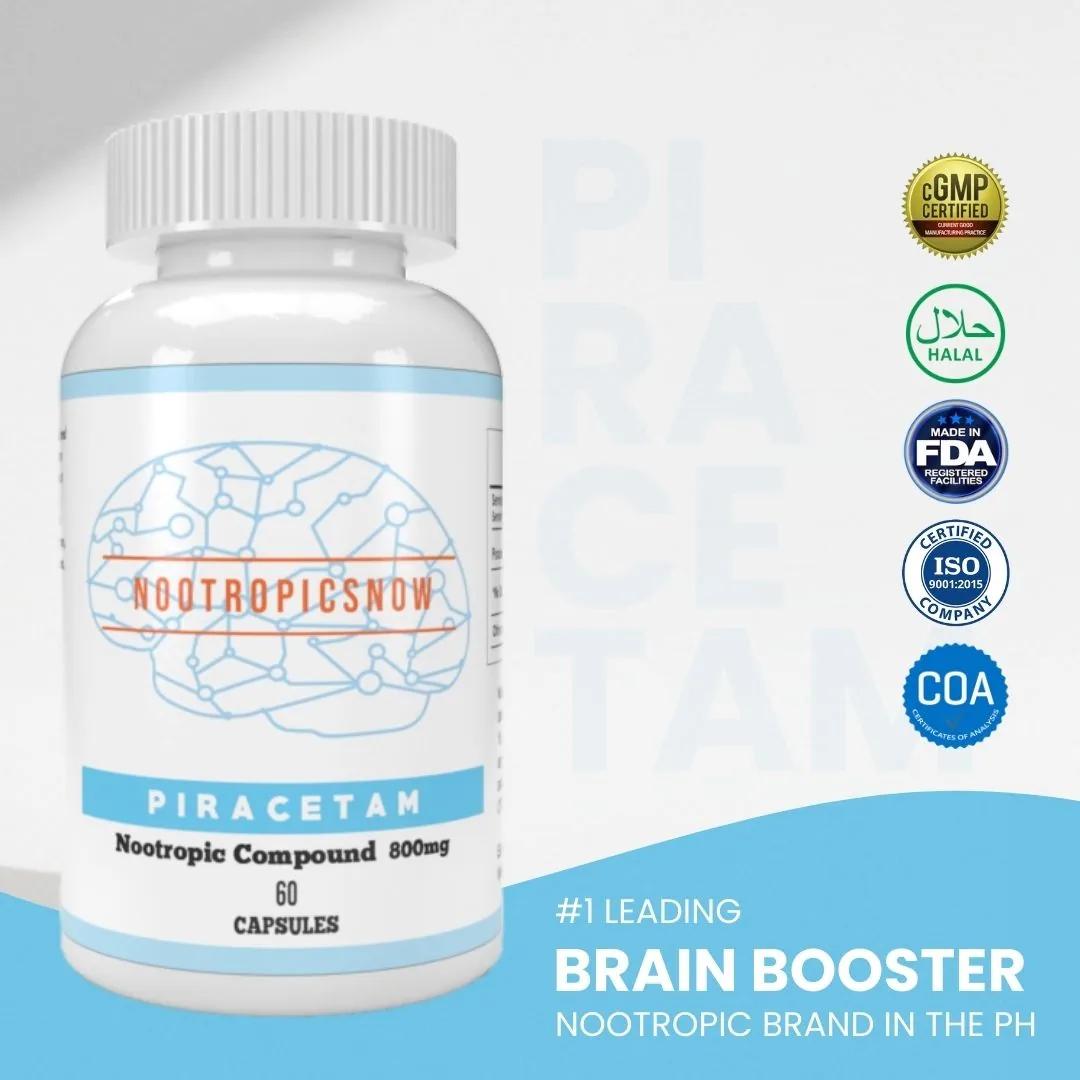
Memory
Last reviewed July 23, 2026
Occasional emails. Unsubscribe anytime.
TL;DR
In the Philippines, shoppers comparing piracetam often want a simple routine they can actually follow, along with a realistic view of timing, interactions, and whether the product fits their goals.
Piracetam is discussed here as a memory-focused nootropic topic, with an emphasis on practical use rather than bold claims.3 A useful starting point is to think in terms of goals: cognition depends on how goals shape the way people process inputs, responses, and outcomes, so the “best” routine is usually the one that matches the task you care about.1 That framing is especially helpful if you are deciding whether a supplement routine belongs in study days, workdays, or only occasional use.
This guide focuses on the everyday questions readers ask before trying piracetam: how much to start with, whether to divide the day’s amount, and whether taking it with food makes sense. It also covers the more cautious side of the decision, because memory support is not just about the product itself; it is also about your broader cognitive context and how reliably you can evaluate the routine over time.23
A second reason to keep expectations measured is that memory is not a single, simple system. Working memory research shows that people sustain internal representations over short periods, but those representations vary in fidelity and are not just simple copies of what was seen or heard.3 That matters for supplement decisions because short-term impressions can feel convincing even when they are not stable from day to day.
The most practical advice is to start with the dosing directions on the product label and avoid changing the amount too quickly. When people build a new routine, gradual adjustment is easier to judge than making several changes at once, because the brain’s learning and memory systems are shaped by ongoing activity and feedback rather than by one isolated input.2
Many users also prefer dividing the daily amount into smaller doses across the day instead of taking everything at once. That preference is usually about convenience and tolerability: smaller doses can be easier to fit into a routine, and they can help you notice how the supplement feels at different times. Research on working memory and learning supports the general idea that how information is represented over time matters, so a consistent schedule is often more useful than an erratic one.31
If you want to test tolerability, keep your routine consistent for several days before deciding whether the schedule works for you. That does not mean forcing yourself to stay on a regimen that feels wrong; it means giving your routine enough time to produce a meaningful pattern. In practice, a short, steady trial is usually more informative than a one-off day of use followed by a verdict.
The other practical question is what you are trying to notice. If your target is recall, task completion, or mental stamina, decide in advance which outcome matters most. Goal selection matters because goals shape perception and action, and that same idea applies to supplement tracking: the cleaner the goal, the easier it is to judge whether a routine is earning its place.1 If you want a piracetam-centered option for that kind of use case,
A practical approach is to take it earlier in the day if you are watching for effects on daytime focus or routine performance. That recommendation is less about a universal rule and more about reducing schedule conflict: many people already have a fixed work or class pattern, so an early routine is easier to remember and compare against ordinary days.3
Splitting doses can also make it easier to fit the supplement into a predictable schedule. In everyday use, predictability matters because people judge cognitive products by how they fit into existing habits, not just by what they do in isolation. The learning literature underscores that goals influence how people structure inputs and outcomes, which is another reason a tidy schedule is often more useful than an improvised one.1
If a product or routine feels hard on the stomach, pairing it with meals is a common preference many buyers ask about. That is not a special claim about piracetam alone; it is a practical way people improve comfort with many supplements. For readers in the Philippines, this may be especially relevant on busy workdays when breakfast timing, commuting, and heat can all make a rigid empty-stomach routine less appealing.
Another useful timing strategy is to avoid making timing the only variable you change. If you move the dose, change the time, switch from one dose to multiple doses, and add other supplements all at once, you will not know which change mattered. A cleaner approach is to hold most of the routine steady, then adjust one thing at a time.
Review the label carefully and avoid combining it casually with other products you have not checked. That is especially important when you already use supplements that may overlap in purpose or that could make your routine harder to interpret. It is also consistent with the broader point that cognitive function is shaped by multiple interacting systems, including neuroimmune signaling and homeostatic brain activity.5
If you take medicines that affect blood clotting, interaction questions deserve extra caution before use. The reason is simple: once a supplement is added to a routine, it is part of a wider system that includes prescriptions, over-the-counter products, and your underlying health situation. When memory and cognitive support are the goal, a careful interaction review is often more valuable than looking for a quick yes-or-no answer.45
Be cautious if you are already taking medications or if you have a health history that makes supplement decisions more sensitive. In those situations, a clinician or pharmacist can help you think through whether the timing, dose, or product choice needs adjustment. That is not overkill; it is a practical way to reduce guesswork when the cost of uncertainty is high.
If you notice unwanted effects, stop and reassess rather than increasing the amount on your own. A structured pause helps you separate a true tolerability issue from a temporary impression. It also gives you a chance to review whether the problem came from piracetam itself, a second product, or just a schedule that did not suit your day.
A simple way to evaluate a nootropic is to track one or two outcomes you actually care about, such as recall, task completion, or mental stamina. Working memory research is useful here because it reminds us that cognitive performance is about the quality and stability of internal representations, not just whether you felt “on” or “off” for an hour.3
Short-term impressions can be misleading, so give the routine a fair trial before deciding it is or is not useful. The learning literature suggests that outcomes are interpreted relative to goals and context, which is why a supplement can seem helpful on a busy day and underwhelming on an easier one.12 If you want a more meaningful read, compare similar days: similar sleep, similar workload, similar caffeine intake, and similar timing.
If your main goal is memory, compare how you feel on days with and without the product under similar conditions. You do not need a perfect experiment to learn something useful, but you do need consistency. Even a brief log with notes on time taken, meals, and the day’s cognitive demands can make your decision much clearer.
Some people also find it helpful to check whether the product is helping with a specific part of the day. For example, does the routine make morning work easier, or does it simply feel noticeable without changing actual output? That kind of question is more useful than asking whether the supplement feels “strong,” because strong sensations do not always map to useful performance.
Be cautious if you are already taking medications or if you have a health history that makes supplement decisions more sensitive. That includes situations where you are already juggling multiple products, because the more moving parts you have, the harder it becomes to tell what is helping and what is just noise.45
If you are unsure how piracetam fits your situation, ask a qualified clinician or pharmacist before starting. That advice is especially sensible when your goal is to avoid unnecessary trial and error, because a short conversation can often flag interaction risks, timing issues, or reasons to choose a different approach altogether.
It is also worth remembering that cognition is not isolated from the rest of the body. Reviews of the neuroimmune system describe a bidirectional communication system between neural cells and immune cells, and they note that these mechanisms participate in cognition during homeostatic brain function.5 For a supplement user, that means general health, medication load, and overall routine can all matter more than the product label suggests.
If you are looking at piracetam as one part of a broader nootropic stack, slow down and check each product separately first. That approach is usually safer than mixing several unfamiliar ingredients at once, because it gives you a better chance of understanding what your body actually responds to.
Is piracetam better taken in one dose or split across the day?
Many shoppers ask this because they want a routine that is easy to remember. A split schedule is often the more practical option when you want a steady daily habit.
Can you take piracetam with food if it bothers your stomach?
Yes, that is a common practical question. If a supplement feels rough on your stomach, many people prefer taking it with meals for convenience.
How long should you try piracetam before judging it?
A fair trial is usually better than judging it on one day alone. Track the outcomes you care about and compare them under similar conditions.
Can piracetam be stacked with other nootropics?
People ask this a lot in reviews, but the safer approach is to check each product separately first and avoid mixing things casually.
What should I watch for if I feel off after taking it?
Pause the routine and review your dose, timing, and any other products you use. If the issue continues, get professional advice.
Can people in the Philippines buy piracetam online?
This is a practical buying question for PH readers. Check the store listing, shipping details, and any local guidance before placing an order.
If you want to compare piracetam options while keeping the routine simple, piracetam-philippines
This article is for educational purposes only. It is not medical advice, not a substitute for professional consultation, and is not intended to diagnose, treat, cure, or prevent any disease.
Statements about dietary supplements have not been evaluated by the FDA. Individual results vary. Consult a licensed physician before starting any new supplement — especially if you are pregnant, breastfeeding, have a medical condition, or are taking prescription medication.
Quality and sourcing information is available on our quality page. Batch-level lab test data is available on request — contact support.
Last reviewed: 2026-07-23
Gaia Molinaro, Anne G E Collins. A goal-centric outlook on learning.. Trends in cognitive sciences (2023). https://pubmed.ncbi.nlm.nih.gov/37696690/
Yuri I Alexandrov, Mikhail V Pletnikov. Neuronal metabolism in learning and memory: The anticipatory activity perspective.. Neuroscience and biobehavioral reviews (2022). https://pubmed.ncbi.nlm.nih.gov/35439520/
Paul M Bays, Sebastian Schneegans, Wei Ji Ma. Representation and computation in visual working memory.. Nature human behaviour (2024). https://pubmed.ncbi.nlm.nih.gov/38849647/
Richard J McNally. Are memories of sexual trauma fragmented?. Memory (Hove, England) (2022). https://pubmed.ncbi.nlm.nih.gov/33435857/
Robyn S Klein. The neuroimmune system and cognition.. Nature immunology (2026). https://pubmed.ncbi.nlm.nih.gov/42373788/