
Optimized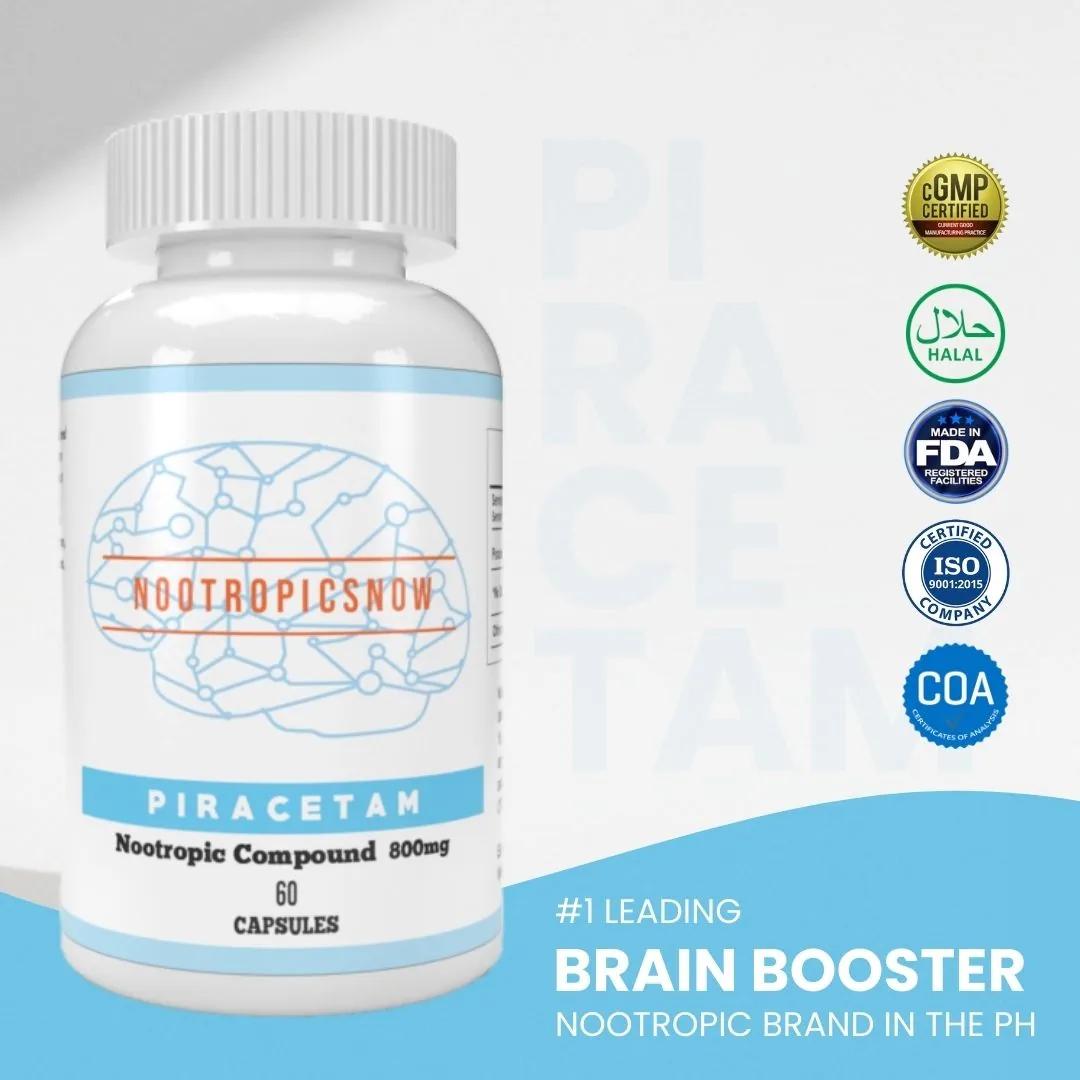
Memory
Last reviewed July 23, 2026
Occasional emails. Unsubscribe anytime.
TL;DR
In the Philippines, people comparing piracetam timing are usually trying to make a practical supplement decision, not a theoretical one. The question is less “what is the perfect hour?” and more “what schedule is realistic for my day?”3
Piracetam is discussed in the research literature as a nootropic, or cognitive enhancer, and the most common interest is memory and learning support.12 Reviews describe it as part of the broader group of compounds studied for cognitive enhancement, especially when memory or learning is impaired.3 That distinction matters because the evidence base is not the same for everyone.
A 2024 systematic review and meta-analysis focused on adults with memory impairment and described piracetam as a “widely recognized nootropic drug,” while also noting that there remains a “lack of conclusive evidence” about its impact on memory.1 A separate review of smart drugs in healthy individuals says these products are used by students and workers to improve memory, attention, learning, executive functions, and vigilance, but that their effect on non-impaired brains is still not fully assessed.2 In other words, piracetam is most often talked about as a memory-oriented compound, but the certainty level depends on who is using it.
Mechanistically, a later review describes piracetam as a cyclic derivative of gamma aminobutyric acid that may have a neuroprotective effect, may augment the effect of acetylcholine on muscarinic receptors, and may influence neurotransmitters involved in cognitive function.5 The same abstract also says it may improve blood flow by increasing erythrocyte deformability.5 Those are research hypotheses and mechanistic descriptions, not a guarantee of how any individual will feel after taking it.
For a reader building a memory-support stack, the key point is that piracetam sits in the cognitive-enhancer category, not the general wellness category.36 If you are looking for a product that matches that role, piracetam is the relevant starting point.
Timing questions usually show up because people want the supplement to fit work, school, or study habits. That is especially true for readers who use nootropics as part of a daily routine rather than as something they take occasionally.42 In practice, timing is often about routine, tolerability, and whether the schedule is easy to remember.
The literature on nootropics does not give a single universal clock time for piracetam. Instead, reviews frame cognitive enhancers as substances used for thinking, learning, and memory, with dosing and side effects depending on the specific compound and context.3 A practical takeaway is that timing should support adherence. If a schedule is too complicated, it tends to fall apart.
That is why many people ask about piracetam morning or night. Morning use can be easier if the goal is to place the dose alongside breakfast, commute, or a first-work-block habit. Evening use can be easier for people who already reserve all supplements for a night routine. The better choice is usually the one you can repeat without friction.23
It is also worth separating timing from expectation. Even when a compound is used for memory support, the evidence in healthy brains is less settled than in populations with impairment.21 So the decision about when to take piracetam is usually a practical scheduling choice, not a way to force a stronger result by changing the hour.
A sensible starting point is to take piracetam at the same time each day so it fits a stable routine.3 That advice is less about a magical hour and more about reducing missed doses and making the habit easier to follow. If you already take other supplements in the morning, pairing piracetam with that block may be the simplest choice. If your day is chaotic before lunch, another reliable block may work better.
Many people prefer earlier-in-the-day use when they want the supplement schedule to line up with work or study hours. That preference is common enough that it comes up naturally in student and worker use patterns for cognitive enhancers.24 But “earlier” is not a rule; it is a convenience strategy.
If a product is used multiple times per day, dividing the doses across the day is often the organizational approach discussed in dosing reviews.3 The main idea is spacing, not concentration. Even spacing can make routines easier to follow, especially when a person wants a predictable pattern rather than a single large dose anchored to one moment.
For shoppers comparing timing strategies, the question is usually whether the label directions fit real life. That matters even more if you are ordering online and building a delivery-based routine, because it is easier to stay consistent when the product page, shipping timeline, and daily plan all match up.4 If you want to check the catalog item after deciding on a schedule, the piracetam product is the most direct place to start. piracetam-philippines
Morning use has one main advantage: it is easy to attach to an existing habit. If you already take supplements with breakfast or before work, the morning slot can lower the chance of forgetting. That is one reason readers often default to morning when they ask about piracetam timing.23
Evening use can also make sense, especially if your supplement routine is already built around dinner or bedtime prep. Some people prefer a single daily block at night because it feels cleaner than splitting attention across the day. Again, this is a habit question first and a pharmacology question second.
The practical tradeoff is consistency versus convenience. Morning dosing may suit people who want the day to start with one organized routine. Evening dosing may suit people who want to avoid juggling supplements during work hours. Neither option is inherently better for everyone, and the research summaries available here do not support a universal winner.12
A useful way to decide is to ask what you are trying to support. If the supplement is part of daytime productivity planning, morning may be easier. If it is part of a broader night routine, evening may be simpler. The better schedule is the one you can keep without making the day more complicated than it needs to be.3
People also ask whether piracetam with food is better. The abstracts in the research pool do not give a single universal rule, so the most defensible answer is to follow the label directions on the specific product and keep the routine consistent.34 For many readers, the food question is really about comfort and predictability.
Food can matter because it helps anchor the habit. If breakfast is already a fixed point in your day, taking piracetam then may be easier to remember than taking it on an empty stomach at an irregular hour. If lunch is your most reliable meal, that may be your best anchor instead. The goal is not perfection; it is a routine you can actually sustain.
Another practical tip is to match timing with your own response patterns. Some people notice that a supplement schedule feels smoother when taken earlier, while others prefer later because it aligns with their daily rhythm. Since the evidence base does not define a single best clock time, personal routine becomes a bigger part of the decision than many shoppers expect.23
If you are buying online in the Philippines, also pay attention to the product page itself. Label directions, serving form, and any notes from the seller should guide how you place it into your day. The best timing plan is the one that fits the product you actually bought, not a generic rule borrowed from a different item.4
Piracetam is not the same as a simple flavorless wellness add-on. Reviews of cognitive enhancers discuss side effects and harms as part of the decision-making process, which is a useful reminder that these compounds deserve medication-style caution.32 That does not mean everyone will have problems, but it does mean thoughtful use is better than casual use.
This matters especially if you already take other agents for cognition, attention, sleep, or mood. The nootropics literature includes prescription and non-prescription substances with different risk profiles, so the broader context matters.43 If your stack is already crowded, adding another cognitive enhancer without a plan can make the routine harder to interpret.
People with specific medical questions should get individualized advice from a healthcare professional. That is the safest way to sort out whether timing, combination choices, or overall suitability make sense in your situation.2 Research reviews are helpful for general context, but they are not a substitute for personal medical guidance.
For some shoppers, the real issue is not whether piracetam belongs in a stack, but whether the stack itself is too complex. If so, simplify first. A clearer routine is usually easier to follow than a dense schedule with multiple moving parts.
Research reviews place piracetam in the broader category of compounds studied for cognitive enhancement, with particular interest in memory and learning.16 That makes it a natural fit for a memory-focused setup, but it should still be viewed as one part of a larger routine rather than the whole plan.
A good memory-support stack usually has three pieces: a product that matches the goal, a timing plan that is realistic, and a schedule you can repeat. If any one of those is off, the result is often frustration rather than clarity. Reviews of nootropics and cognitive enhancers repeatedly emphasize that these substances are heterogeneous, which is another way of saying that one-size-fits-all advice is rarely enough.32
For shoppers comparing options in a nootropics catalog, piracetam is the obvious product when the goal is memory support rather than energy, sleep, or mood. The product is best judged in context: what you want from it, when you plan to take it, and whether the routine can survive real life in the Philippines, including busy workdays and local shipping timing.46 If the product and schedule line up, the habit is easier to maintain.
That is also why the “best time to take piracetam” question has a practical answer rather than a dramatic one. Start with a repeatable slot, keep the schedule simple, and let consistency do the heavy lifting.
Is piracetam better in the morning or at night?
Most readers choose a time they can repeat consistently. Morning is often easier for daytime routines, while night may suit people who prefer a simple evening habit.
Can I take piracetam with food?
People commonly ask this for routine and comfort reasons. The safest approach is to follow the product label and keep the timing consistent.
How long does it take before I notice anything?
Responses can vary, and the evidence base does not support a guaranteed timeline. Consistency matters more than chasing a specific hour.
Should I split piracetam doses through the day?
Some dosing discussions use divided doses to keep the schedule even. The right plan depends on the product directions and your routine.
Can people in the Philippines buy piracetam online?
Availability depends on the seller and current catalog options, so shoppers should check the product page and shipping details before ordering.
Does piracetam work the same for everyone?
No. Reviews of cognitive enhancers show mixed results across populations, and effects can differ based on the reason someone is using it.
If you already know you want to compare the catalog item directly, piracetam-philippines
This article is for educational purposes only. It is not medical advice, not a substitute for professional consultation, and is not intended to diagnose, treat, cure, or prevent any disease.
Statements about dietary supplements have not been evaluated by the FDA. Individual results vary. Consult a licensed physician before starting any new supplement — especially if you are pregnant, breastfeeding, have a medical condition, or are taking prescription medication.
Quality and sourcing information is available on our quality page. Batch-level lab test data is available on request — contact support.
Last reviewed: 2026-07-23
Felipe Araujo Gouhie, Karina Oliveira Barbosa, Amanda Borges Rufino Cruz. Cognitive effects of piracetam in adults with memory impairment: A systematic review and meta-analysis.. Clinical neurology and neurosurgery (2024). https://pubmed.ncbi.nlm.nih.gov/38878641/
Fabrizio Schifano, Valeria Catalani, Safia Sharif. Benefits and Harms of 'Smart Drugs' (Nootropics) in Healthy Individuals.. Drugs (2022). https://pubmed.ncbi.nlm.nih.gov/35366192/
Matěj Malík, Pavel Tlustoš. Nootropics as Cognitive Enhancers: Types, Dosage and Side Effects of Smart Drugs.. Nutrients (2022). https://pubmed.ncbi.nlm.nih.gov/36014874/
Safia Sharif, Amira Guirguis, Suzanne Fergus. The Use and Impact of Cognitive Enhancers among University Students: A Systematic Review.. Brain sciences (2021). https://pubmed.ncbi.nlm.nih.gov/33802176/
Hayder M Al-Kuraishy, Ali I Al-Gareeb, Duaa Eliwa. The mechanistic role of piracetam in the management of vascular dementia.. Behavioural brain research (2025). https://pubmed.ncbi.nlm.nih.gov/40139397/
Akash Vikal, Rashmi Maurya, Brij Bihari Patel. A Mini-Review on Unlocking Cognitive Enhancement: An Innovative Strategy for Optimal Brain Functions.. Central nervous system agents in medicinal chemistry (2025). https://pubmed.ncbi.nlm.nih.gov/40662561/