Starter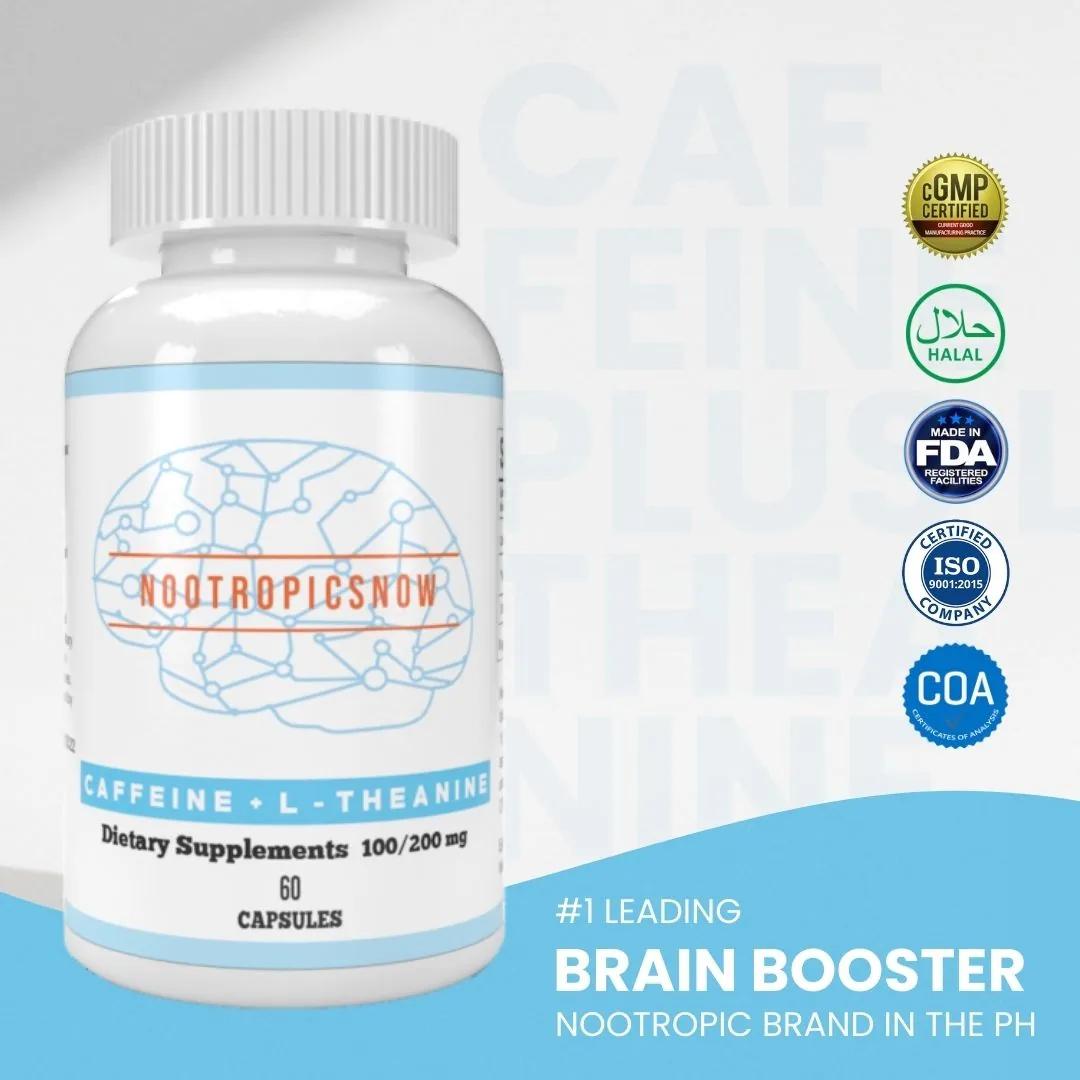
Focus
Last reviewed July 23, 2026
Occasional emails. Unsubscribe anytime.
TL;DR
In the Philippines, shoppers comparing a calm-focus stack usually want two things at once: noticeable alertness and a smoother feel than caffeine alone. That makes this combination worth understanding before you order online.
Caffeine is one of the most widely used ingredients for short-term alertness, and reviews describe improvements in alertness, vigilance, attention, and reaction time at low to moderate doses.1 In practical terms, that is why many people reach for it before work, study, or a long commute.
L-theanine is often paired with caffeine because the combination is commonly used to pursue a more composed focus experience rather than a jittery one. A systematic review examined the cognitive-enhancing outcomes of caffeine and L-theanine together, which is the main reason this pairing shows up in so many nootropic stacks.3 The idea is not that the combo creates a dramatic change for everyone; it is that some users prefer the feel of the pair over caffeine alone.
The narrow goal here is day-to-day focus support, not a medical outcome. That distinction matters because response can vary with tolerance, dose, sleep, and timing. Even a well-designed stack can feel too strong if the caffeine amount is high for your baseline, or too subtle if the serving is too small for your needs.13
The evidence base for caffeine is broad because caffeine has been studied in both cognitive and performance settings. A review on cognitive, physical, and occupational performance reports that low to moderate doses can improve alertness, vigilance, attention, reaction time, and attention, while effects are less consistent at higher doses.1 That “less consistent” part is important: more caffeine is not automatically better.
A sports-focused meta-analysis also found caffeine can acutely enhance various aspects of exercise performance, which is useful context because alertness and mental readiness often matter outside the gym too.4 Another review of caffeine’s impact on cognitive function describes effects across attention, vigilance, executive functions, processing speed, and memory-related outcomes, while noting that dose-response relationships and individual differences shape the result.5
For shoppers, the main takeaway is simple: start with the label dose, not with the biggest serving you can find. If a product delivers a very large caffeine amount per serving, it may be harder to use consistently, especially if you also drink coffee or tea. People who are sensitive to caffeine often do better when they keep the serving earlier in the day and watch for sleep interference.25
The caffeine and L-theanine stack is popular because many users want the alertness of caffeine without feeling overly wired. A systematic review specifically examined the cognitive-enhancing outcomes of caffeine and L-theanine, which supports the idea that this pairing is not just a social-media trend but a researched combination.3
Green tea research is also relevant because L-theanine is one of the compounds often discussed in that context. A systematic review of green tea, green tea extracts, and L-theanine looked at cognition, mood, and human brain function, which helps explain why the ingredient is often marketed around calm focus rather than stimulation alone.6 That does not mean every L-theanine product will feel identical, but it does show why the ingredient is commonly used in this role.
If you want a practical rule, think of the pair as a balance problem. Caffeine tends to push alertness upward, while L-theanine is used to smooth the experience. The combination may be especially appealing if your usual caffeine routine leaves you with a restless edge or if you want a more controlled daytime option for work or study.36
When the formula is framed around caffeine, the pairing logic becomes even clearer. Because caffeine already has a well-described alertness profile, some people use L-theanine as a way to make that alertness feel more manageable during demanding tasks.14
If you want that kind of all-in-one setup, a caffeine-rich combo is the most direct place to start.
The label matters more than the front-of-pack promise. First, check the caffeine amount per serving. Reviews describe low to moderate caffeine doses as the range where alertness and attention benefits are commonly observed, so the number on the panel is the starting point for judging whether the serving looks practical for you.1
Next, check the L-theanine amount per serving and whether the formula is a simple two-ingredient stack or a broader blend. Simpler formulas are easier to evaluate because you can connect your response to the actual ingredients rather than to a long list of extras. That is especially helpful if you are buying a nootropic stack for productivity and want predictability over novelty.
Serving size matters too. Some products use one capsule per serving, while others use two capsules or a powder scoop. If you are comparing the best l-theanine and caffeine combo options, serving size tells you whether the product is meant for convenience or for more flexible adjustment. Transparent labeling is usually better than vague proprietary blends when you want repeatable use.
It is also smart to compare price per serving rather than only the bottle price. A product that looks cheaper up front can cost more per day if the serving size is large or if you need to take multiple capsules. For shoppers in the Philippines, that is especially useful because local Philippine shipping and delivery timing can affect the real total cost.
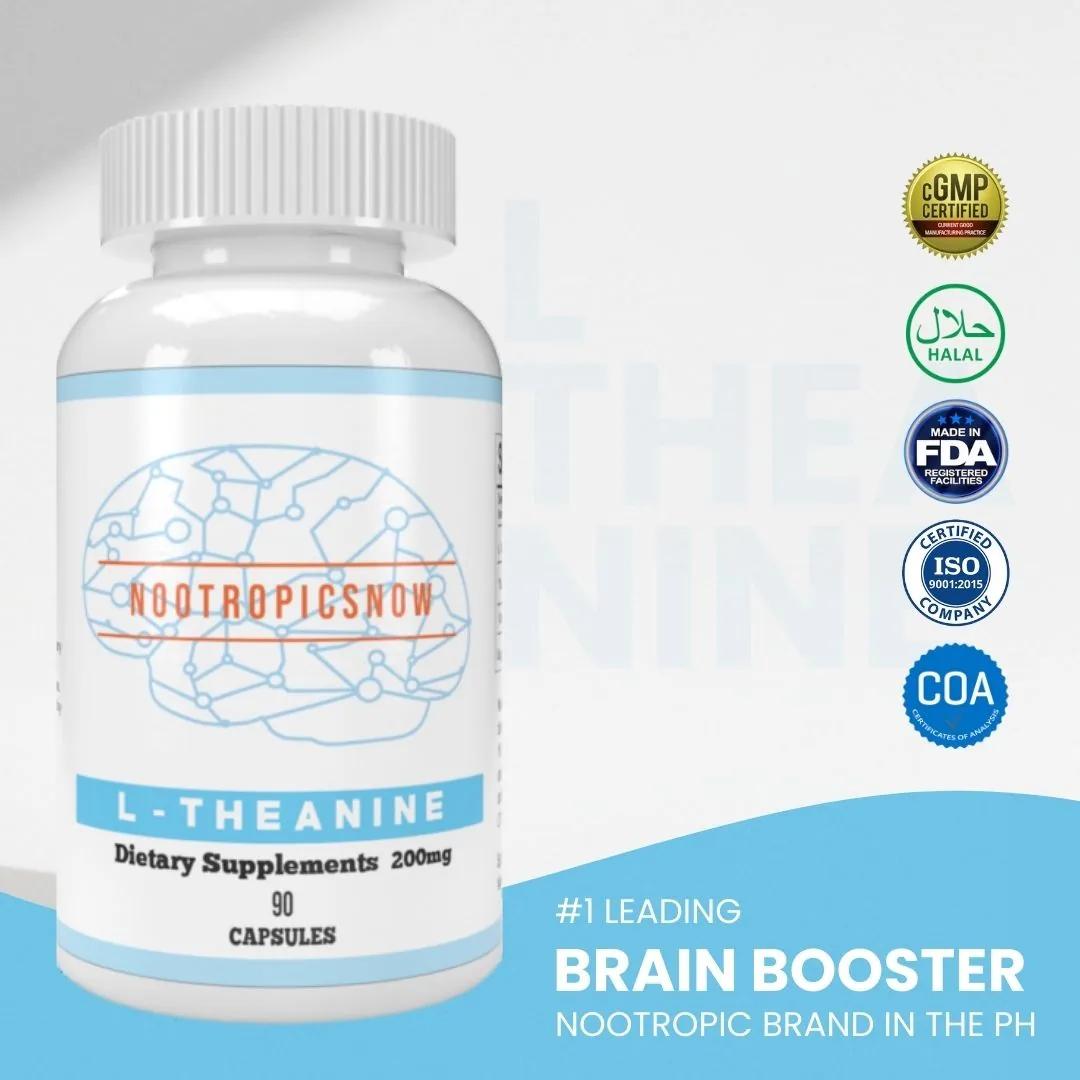
If you would rather build the stack yourself, a standalone theanine option can give you more control over the ratio and timing.
This stack is usually a better fit for readers who want a daytime focus option with a smoother feel than caffeine alone. That can include students during long reading sessions, knowledge workers facing a heavy task list, or anyone comparing a coffee alternative that feels more controlled.15
It may also appeal to people who already know they respond well to caffeine but dislike the edge that sometimes comes with it. The combination is often used as a convenience choice: one serving, clear timing, and a familiar stimulant base. In that sense, it works as a preference-based nootropic stack for productivity rather than as a specialized formula.
The stack is less attractive if you are very sensitive to caffeine, if you are trying to keep total stimulant intake low, or if your sleep schedule is already fragile. Coffee, tea, energy drinks, and pre-workout products can all add up quickly, so the “best” product is not always the one with the highest milligram count.25
People often ask whether the pair is only for intense work. It is not limited to that use case. The main reason it keeps showing up in focus supplement review conversations is that it offers a familiar, easy-to-try structure: one ingredient that supports alertness and one ingredient that may make the experience feel calmer.36
A conservative approach is usually the best place to start. Reviews of caffeine suggest low to moderate doses are the range most commonly associated with alertness and attention benefits, so there is little reason to rush into a high serving on day one.1 If the label offers multiple serving options, start with the lowest practical one and see how you feel.
Timing matters too. Many people prefer caffeine earlier in the day, especially if they already know they are sensitive to it. A review on caffeine and mental health notes that caffeine has psychostimulant effects through adenosine receptor antagonism and can influence anxiety and depression-related experiences, which is another reason to be cautious if you are prone to feeling keyed up.2
Total caffeine intake is the other major variable. If your routine already includes coffee or tea, count those sources before you add a capsule or powder. A product can look mild on its own but become too stimulating once you stack it onto a busy day with multiple drinks.
Habitual use also matters. Reviews of coffee and cognition note that individual differences and habitual consumption patterns influence the cognitive response.5 That means a supplement can feel effective for one person and underwhelming for another, even at the same label dose. The practical response is to test your own tolerance over several days instead of judging the stack from one use.
Before checkout, compare product availability, price per serving, and shipping details. That is especially important when you are shopping in the Philippines, because stock status and delivery within the Philippines can change from one product page to another. A nice-looking label is not enough if the serving size, delivery time, or final cost does not fit your needs.
If you are deciding between a combo capsule and separate ingredients, think about flexibility. A combo is more convenient because the caffeine and L-theanine arrive in one serving, while separate ingredients make it easier to adjust the balance around your own caffeine source. If you already have coffee you like, separate L-theanine may be the more adaptable route.6
You should also read the ingredient list carefully if you are comparing a clean two-ingredient stack with a formula that adds extras. Extra ingredients are not automatically bad, but they do make the response harder to interpret. When the goal is a calm-focus supplement, predictability usually matters more than a crowded label.
Finally, if you are comparing products online, remember that the best caffeine L-theanine supplement is the one you can use comfortably and consistently. The research supports the general idea of caffeine for alertness and the caffeine-plus-L-theanine pairing as a studied combination, but your own routine, sensitivity, and schedule will decide what works best.13
What is the best caffeine L-theanine ratio to look for?
There is no single ratio that works for everyone. A practical approach is to compare the labeled caffeine amount and L-theanine amount, then choose a serving you can use consistently and comfortably.
Can I take caffeine and L-theanine if I already drink coffee?
Many people compare the stack with coffee because caffeine already plays a role in alertness. If you use both, check your total caffeine intake across the day.1
Does this combo feel different from caffeine alone?
That is the main reason people try it. Review content often describes a smoother, calmer focus feel, but individual experience varies.3
Is the best caffeine L-theanine supplement in the Philippines easy to order online?
Availability can change by stock and shipping window, so it is best to confirm the product page, delivery terms, and checkout details before buying.
Can I use this stack for studying or work?
That is a common use case. Readers usually look for a daytime focus aid that fits study sessions, deep work, or other tasks that need sustained attention.1
Should I choose a combo capsule or separate ingredients?
A combo is convenient, while separate ingredients give you more control over each dose. The better choice depends on how precisely you want to adjust your stack.6
Shop the calm-focus stack: caffeine-plus-l-theanine-philippines
This article is for educational purposes only. It is not medical advice, not a substitute for professional consultation, and is not intended to diagnose, treat, cure, or prevent any disease.
Statements about dietary supplements have not been evaluated by the FDA. Individual results vary. Consult a licensed physician before starting any new supplement — especially if you are pregnant, breastfeeding, have a medical condition, or are taking prescription medication.
Quality and sourcing information is available on our quality page. Batch-level lab test data is available on request — contact support.
Last reviewed: 2026-07-23
Tom M McLellan, John A Caldwell, Harris R Lieberman. A review of caffeine's effects on cognitive, physical and occupational performance.. Neuroscience and biobehavioral reviews (2016). https://pubmed.ncbi.nlm.nih.gov/27612937/
Morvarid Meamar, Payman Raise-Abdullahi, Ali Rashidy-Pour. Coffee and mental disorders: How caffeine affects anxiety and depression.. Progress in brain research (2024). https://pubmed.ncbi.nlm.nih.gov/39168554/
Anas Anas Sohail, Fernando Ortiz, Teresa Varghese. The Cognitive-Enhancing Outcomes of Caffeine and L-theanine: A Systematic Review.. Cureus (2021). https://pubmed.ncbi.nlm.nih.gov/35111479/
Nanci S Guest, Trisha A VanDusseldorp, Michael T Nelson. International society of sports nutrition position stand: caffeine and exercise performance.. Journal of the International Society of Sports Nutrition (2021). https://pubmed.ncbi.nlm.nih.gov/33388079/
Payman Raise-Abdullahi, Ehsan Raeis-Abdollahi, Morvarid Meamar. Effects of coffee on cognitive function.. Progress in brain research (2024). https://pubmed.ncbi.nlm.nih.gov/39168555/
Edele Mancini, Christoph Beglinger, Jürgen Drewe. Green tea effects on cognition, mood and human brain function: A systematic review.. Phytomedicine : international journal of phytotherapy and phytopharmacology (2017). https://pubmed.ncbi.nlm.nih.gov/28899506/