
Optimized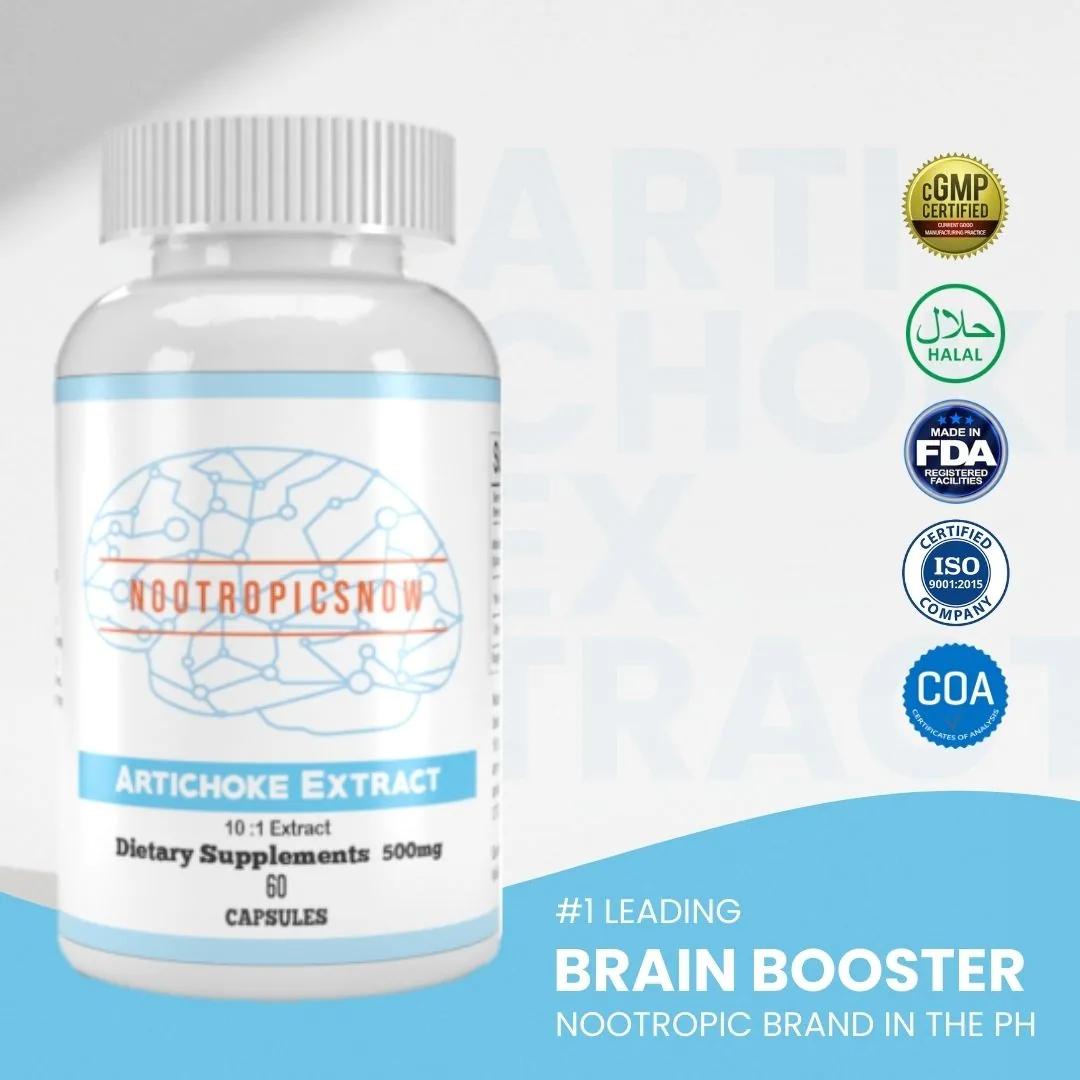
Focus
Last reviewed July 23, 2026
Occasional emails. Unsubscribe anytime.
TL;DR
In the Philippines, shoppers comparing artichoke extract usually want a simple answer: which option is worth buying, and what should it realistically do? That is a fair question, but the best answer starts with what artichoke extract is actually used for in the literature and on supplement shelves.12
Artichoke extract comes from Cynara scolymus, a plant that has been studied for a broad mix of bioactive compounds, including polyphenols, flavonoids, anthocyanins, phenolic compounds, inulin, coumarins, terpenes, dietary fibre, enzymes, polysaccharides, minerals, and vitamins.1 That wide chemical profile helps explain why artichoke shows up in so many supplement categories: digestive support, metabolic wellness, lipid support, and general health products.16
A lot of consumer interest clusters around weight-related goals, but that does not mean artichoke is a classic “fat burner.” Reviews describe artichoke leaf extract more as a botanical used in relation to lipid profile discussions and possible mechanisms of action than as a direct body-fat intervention.2 In other words, it is typically positioned as a support ingredient, not a standalone answer for fat loss.27
There is also a digestive angle. Gut-health reviews place artichoke among botanicals of interest because prebiotic-style plant compounds can modulate the intestinal microbiota, and artichoke is part of the broader list of foods and botanicals studied in that space.89 That does not make every artichoke supplement a gut product, but it does explain why some labels emphasize digestion, bloating, or “metabolic balance” instead of scale change alone.89
If you are reading labels in a Philippine marketplace, that distinction matters. Products may be marketed for wellness, lipid support, or digestion, while the buyer may be hoping for weight loss. Those are related ideas, but they are not the same claim.52
The most relevant human evidence for weight-adjacent use is not a clean “artichoke alone for fat loss” story. Instead, recent research has examined artichoke in multi-ingredient or broader metabolic contexts. A 2024 randomized controlled trial on a dietary supplement containing dry artichoke and bergamot extracts reported effects on serum lipid concentration, insulin sensitivity, hs-CRP, and indexes of non-alcoholic fatty liver disease in adults with suboptimal cholesterol levels.3 That is meaningful for metabolic discussion, but it is still not the same as proving a direct weight-loss effect.3
A 2024 network meta-analysis on natural products for NAFLD also included artichoke leaf extract among the interventions evaluated for patients with fatty liver-related outcomes.4 Again, this points toward metabolic and liver-related interest, not a promise of rapid body-fat reduction.4 For shoppers, the practical takeaway is that artichoke belongs in the “may support metabolic markers” conversation rather than the “guaranteed scale drop” conversation.34
Reviews of artichoke consumption and artichoke leaf extract similarly discuss potential impact on lipid profile and possible mechanisms of action, which is why the ingredient appears in products aimed at metabolic support.2 But even supportive reviews remain cautious, and that caution is worth preserving when you are choosing a supplement for body-composition goals.2
If your real goal is fat loss, the more useful lens is this: artichoke may fit into a broader plan that already includes calorie control, exercise, sleep, and a routine you can actually follow. It is not the main driver of results.34
Artichoke leaf extract is often grouped with nutraceuticals that are discussed in cholesterol-focused and statin-intolerant contexts. A review on nutraceuticals in statin-intolerant patients lists artichoke among options that might be considered alone or in combination with other nutraceuticals.7 Another review of dietary supplements for hypercholesterolemia compares artichokes with other supplements and notes that efficacy, side effects, adherence, affordability, and procurement all matter when choosing a product.5 That is a useful shopping framework because it reflects how these products are actually used: as part of a broader lifestyle or wellness plan, not as a standalone fix.75
Mechanistically, the interest in artichoke largely comes from its rich plant-compound profile and the way those compounds are discussed in relation to lipids, digestion, and metabolic health.12 If you are trying to build a “fat-loss stack,” that means artichoke is usually a secondary ingredient: something you might add if you want a formula aimed at metabolic support, but not the first thing you would choose if you want a more direct, high-signal outcome.
For readers in the Philippines comparing products, this also shapes how to evaluate value. A product that is heavily marketed for dramatic weight loss may be overselling the ingredient. A more reasonable product description is one that frames artichoke as a metabolic or wellness support ingredient and explains what else is in the formula.56
Artichoke is commonly sold as part of broader wellness formulas, and the safest interpretation is to read those formulas as support-oriented rather than result-guaranteeing. That is especially important when the label mixes artichoke with other botanicals, because the overall effect then becomes harder to attribute to a single ingredient.35
When people ask how to choose artichoke extract, the first answer is label clarity. Reviews of artichoke note that the plant contains many bioactive compounds, which is one reason extract quality and disclosure matter.1 Look for a product that states whether it uses artichoke leaf extract, how the extract is standardized, and what the serving size is. Vague “proprietary blend” language makes it harder to compare products fairly.15
Source part also matters. The literature does not address every artichoke product as interchangeable; reviews specifically discuss cooked hearts and artichoke leaf extract in different ways, and the research on metabolic outcomes often refers to leaf extract.24 So if a bottle does not clearly say what part of the plant is used, it is harder to judge whether it matches the evidence base.2
Serving size is another practical issue. Some products use tiny amounts that look impressive on a front label but are unlikely to be meaningful once you check the actual capsule content. Others bundle artichoke with a long list of add-ons, which can be fine if your goal is a broader formula but less ideal if you want a simple comparison. Reviews of supplement selection emphasize adherence, affordability, and procurement alongside efficacy, which means the “best” product is often the one you can use consistently and understand clearly.5
If you want a straightforward option for a wellness-oriented routine, artichoke extract is often sold as a general support ingredient rather than a dramatic stand-alone intervention. That is exactly why a transparent label matters so much. For a simple, artichoke-forward option, the core issue is whether the product actually tells you what you are getting before you buy it.
People interested in digestive wellness may be drawn to artichoke because plant-based bioactive compounds are often discussed in gut microbiome and prebiotic conversations.89 That does not make artichoke a universal gut solution, but it does explain why some users report looking for it when they want a supplement that feels more “whole-body” than cosmetic.
Consumers focused on cholesterol or metabolic markers may also care, because the available reviews and trials have examined lipid profile, insulin sensitivity, hs-CRP, and NAFLD-related endpoints.234 In practice, that makes artichoke more relevant to people who want a wellness supplement that aligns with blood-lipid or metabolic discussions than to people who only want a quick body-fat fix.
The ingredient is less compelling if your only goal is rapid weight reduction. The literature you can actually cite here points to metabolic support, digestive interest, and broader wellness framing, not a dramatic body-recomposition claim.24 That is an important distinction because it keeps expectations realistic and helps you avoid overpaying for an oversold formula.
A review of dietary supplements for hypercholesterolemia highlights that when people choose supplements, they care not only about efficacy but also side effects, adherence, affordability, and procurement.5 That same framework applies to artichoke products. A supplement can look attractive on the front of the bottle and still be a poor fit if the label is vague, the formula is crowded, or the serving size is inconvenient.5
Multi-ingredient products deserve extra attention. A trial that used artichoke in combination with bergamot studied a blend, not artichoke in isolation, so you cannot automatically assign those findings to any single-ingredient artichoke capsule.3 Likewise, when artichoke is bundled with other botanicals, the user is buying a formula, not a single isolated effect.36
For shoppers in the Philippines, this usually comes down to practical checks: clear ingredient disclosure, a recognizable extract form, and a seller that shows availability and shipping details without making inflated promises.5 If a product page leans heavily on bold weight-loss language but gives little detail about the extract itself, that is a sign to slow down and compare more carefully.5
The most sensible risk-management approach is simple: choose a formula you can explain in one sentence, and do not expect it to do the work of diet, movement, or sleep.
Start with your goal. If you want a supplement that fits general wellness and metabolic support, artichoke extract can be a sensible choice, especially when the label is clear and the formula is straightforward.12 If you want a product for digestion, look for wording that matches that use case. If you want a more metabolic-oriented supplement, look for extract disclosure and a dose that is easy to track over time.5
Then compare the label, not just the name. Reviews of artichoke and broader nutraceutical discussions both support a cautious approach: source disclosure, formulation simplicity, affordability, and procurement all matter.57 That means a “best artichoke extract” is usually the one that is transparent about the plant part, extract form, and serving size, rather than the one that makes the loudest promise.21
Finally, keep the marketing frame in check. If a product is presented as a shortcut to fat loss, that is a red flag. Artichoke belongs in a support role, not a miracle story.34
Can people in the Philippines buy artichoke extract online?
Yes. Shoppers in the Philippines often compare product pages for stock, pricing, and delivery within the Philippines before choosing a supplement.
Does artichoke extract directly burn fat?
The available evidence is better suited to metabolic and lipid-related discussion than direct fat-burning claims.34
What form of artichoke extract is best?
Look for clear extract labeling, source disclosure, and a formula that matches your goal rather than a vague proprietary blend.25
Can artichoke extract be taken daily?
Many people use it as a daily supplement, but the label directions and your own tolerance should guide use.5
Is artichoke extract only for weight loss?
No. It is also discussed in relation to digestion, metabolic markers, and broader wellness support.89
For a simple, artichoke-forward option that fits a wellness or metabolic-support routine, check the available catalog listing below.
This article is for educational purposes only. It is not medical advice, not a substitute for professional consultation, and is not intended to diagnose, treat, cure, or prevent any disease.
Statements about dietary supplements have not been evaluated by the FDA. Individual results vary. Consult a licensed physician before starting any new supplement — especially if you are pregnant, breastfeeding, have a medical condition, or are taking prescription medication.
Quality and sourcing information is available on our quality page. Batch-level lab test data is available on request — contact support.
Last reviewed: 2026-07-23
Thais Feiden, Eunice Valduga, Jamile Zeni. Bioactive Compounds from Artichoke and Application Potential.. Food technology and biotechnology (2023). https://pubmed.ncbi.nlm.nih.gov/38022879/
Heitor Oliveira Santos, Allain Amador Bueno, João Felipe Mota. The effect of artichoke on lipid profile: A review of possible mechanisms of action.. Pharmacological research (2018). https://pubmed.ncbi.nlm.nih.gov/30308247/
Federica Fogacci, Marina Giovannini, Antonio Di Micoli. A Randomized, Double-Blind, Placebo-Controlled Clinical Trial on the Effect of a Dietary Supplement Containing Dry Artichoke and Bergamot Extracts on Metabolic and Vascular Risk Factors in Individuals with Suboptimal Cholesterol Levels.. Nutrients (2024). https://pubmed.ncbi.nlm.nih.gov/38892519/
Hongshuai Liu, Yufei Li, Yan Jin. Effects of different natural products in patients with non-alcoholic fatty liver disease-A network meta-analysis of randomized controlled trials.. Phytotherapy research : PTR (2024). https://pubmed.ncbi.nlm.nih.gov/38886838/
Isabel von Känel-Cordoba, Katharina Wirnitzer, Katja Weiss. Efficacy, side effects, adherence, affordability, and procurement of dietary supplements for treating hypercholesterolemia: a narrative review.. Journal of health, population, and nutrition (2024). https://pubmed.ncbi.nlm.nih.gov/39563466/
Chiara Porro, Tarek Benameur, Antonia Cianciulli. Functional and Therapeutic Potential ofin Health Benefits.. Nutrients (2024). https://pubmed.ncbi.nlm.nih.gov/38542782/
Maciej Banach, Angelo Maria Patti, Rosaria Vincenza Giglio. The Role of Nutraceuticals in Statin Intolerant Patients.. Journal of the American College of Cardiology (2018). https://pubmed.ncbi.nlm.nih.gov/29957236/
Amrit Pal Kaur, Sonali Bhardwaj, Daljeet Singh Dhanjal. Plant Prebiotics and Their Role in the Amelioration of Diseases.. Biomolecules (2021). https://pubmed.ncbi.nlm.nih.gov/33809763/
Katarzyna Pacyga, Aleksandra Tabiś, Paweł Pacyga. Medicinal Plants for a Healthy Gut Microbiome: Scientific Insights into Modern Herbal Applications.. International journal of molecular sciences (2025). https://pubmed.ncbi.nlm.nih.gov/41303363/