
Optimized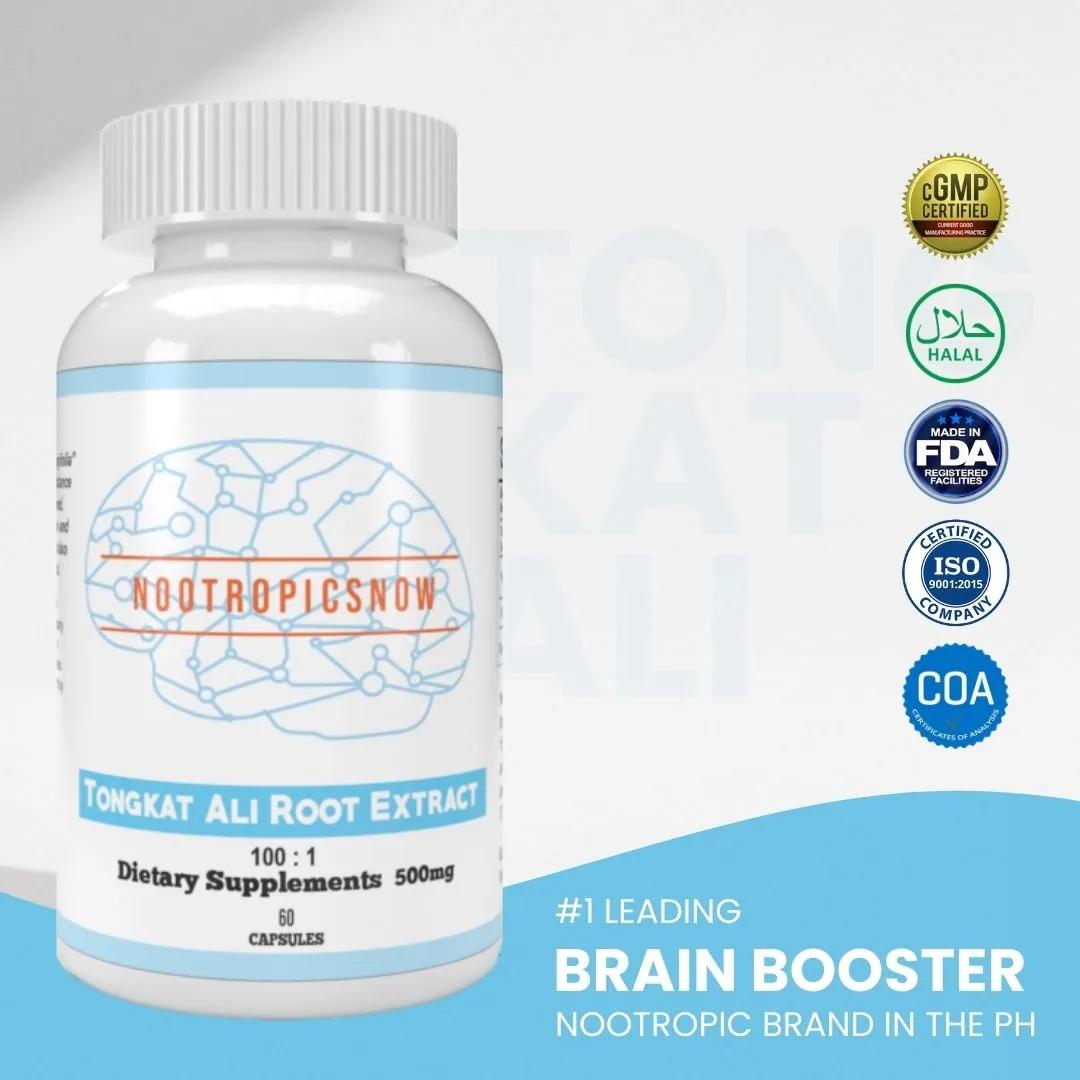
Sexual Performance
Last reviewed July 23, 2026
Occasional emails. Unsubscribe anytime.
TL;DR
In the Philippines, shoppers comparing tongkat ali often want a simple way to separate a credible label from a flashy one, especially when buying online.
Tongkat ali is the common name for Eurycoma longifolia, a medicinal plant from Southeast Asia with a long traditional history.1 It is also described in review literature as a popular herbal medicine with aphrodisiac use and broader folk uses in Asia.3 In practice, people tend to buy it for overlapping reasons: sexual function, libido, energy, mood, exercise recovery, or general vitality.36
That broad use pattern is part of why tongkat ali can be confusing to shop for. One product may be a crude root powder, another may be a standardized water extract, and another may be a capsule blended with additional herbs.2 Those formats are not interchangeable. A label that only says “tongkat ali” does not tell you much about how concentrated the extract is, whether it is standardized, or how easy it will be to compare with published research.26
The research base also helps explain why the herb keeps showing up in buyer guides. Review and trial literature discuss associations with energy, mood disturbance, and related well-being outcomes, while traditional-use summaries describe its role in sexual function and vitality goals.76 That does not make every product equal. It simply means buyers should look beyond the name and ask what kind of tongkat ali they are actually getting.
Quality control is the first thing to check. Research on tongkat ali fingerprinting and metabolite profiling shows that commercial products can differ in composition, and analytical methods such as NMR and GC-MS are used to distinguish authentic extract from commercial samples.2 In other words, two bottles with similar front labels may still represent very different products.
That is why extract detail matters. A product may be marketed as a “tongkat ali extract,” but extract ratio alone does not fully explain what is inside. Standardization, source transparency, and a clear ingredient panel are stronger signs that the seller knows what the product contains.2 Published research also uses standardized root water extract in human work, which makes standardization a practical comparison point when you are reading a label.46
This is especially important for capsules and blended formulas. Capsules are convenient, but convenience is not the same as transparency. A crowded herbal blend can make it harder to judge how much tongkat ali you are really getting, and research on commercial samples shows why composition clarity is valuable.2 If a product does not tell you whether it is root powder, an extract, or a standardized extract, it is harder to compare its quality against other options.2
When people ask for the best tongkat ali extract, the most useful answer is usually the one that says: look for identity, standardization, and enough manufacturing detail to judge consistency. That is a practical quality filter, not a promise of outcome.
The literature around tongkat ali is broader than one use case. A review of nutritional bioactives describes tongkat ali as a traditional herbal medicine known for aphrodisiac use and mentions folk use for sexual dysfunction, aging, anxiety, exercise recovery, fever, and increased energy.3 Another review frames it as a plant with centuries of medicinal history and says it has shown diverse effects and high safety in the literature, with broad market prospects.5
Human research also points toward possible well-being and immune-related effects. A randomized, placebo-controlled study examined a standardized root water extract in middle-aged adults and focused on immune modulation, using 200 mg/day in the trial design.4 A different trial protocol describes tongkat ali as commonly used in traditional anti-aging contexts to address decreased energy, mood, libido, and hormonal imbalances.6 Those descriptions help explain the supplement’s market position, but they do not mean every commercial product will perform the same way.
Sleep-related findings are more limited. One animal study found that tongkat ali supplementation enhanced sleep and wake consolidation in wild-type mice, while not in narcoleptic mice.7 That is interesting biology, but it is not the same as showing a sleep benefit in people. If you see tongkat ali sold as a nighttime or sleep-support option, that is a marketing position, not a human outcome guarantee.
There is also traditional and preclinical discussion around male sexual health. One paper describes tongkat ali roots as ethnically used to boost male sexual desire, libido, energy, and fertility.8 Another review describes it as a well-known aphrodisiac herb and references folk medicine use for sexual dysfunction.3 This is the main reason many shoppers compare tongkat ali for intimate wellness goals. Even so, the quality of the extract and the clarity of the label still matter more than the marketing headline.
A useful way to compare tongkat ali capsules is to separate three things: the plant identity, the extract style, and the delivery format. Research on quality control makes it clear that tongkat ali can appear as crude powder, capsules, or products blended with other herbs, so the front label alone is not enough.2 If you want the best tongkat ali supplement, start by asking whether the product states Eurycoma longifolia clearly and gives enough extract detail to judge what is being sold.
Standardization is one of the strongest clues. Human research has used a standardized root water extract, which gives buyers a concrete reference point when they compare commercial products.46 Standardization does not automatically make a product better, but it does make the product easier to compare. Without it, you are often relying on marketing language instead of useful formulation detail.
Extract ratio can be helpful, but it is not the whole story. A product may list a ratio and still leave out key information about standardization, part used, or composition. The analysis literature shows why this matters: researchers use metabolite fingerprinting and profiling because composition can vary across samples and products.2 So when you see a bold extract number on a label, ask what it is tied to.
If the format is a capsule, look at the ingredient panel carefully. Capsules are convenient for travel and daily use, but they should still tell you whether the product is simple or blended. That distinction matters for anyone trying to manage tongkat ali dosage or compare a beginner-friendly formula with a more concentrated option. A clean ingredient list usually makes decision-making easier than a crowded stack.
For sexual-performance-focused shoppers, the best choice is usually the one with the clearest tongkat ali identity and the least ambiguity about what is in the bottle. Review literature connects tongkat ali with aphrodisiac use, sexual dysfunction, libido, and vitality themes.38 That makes product clarity especially valuable: if the label is vague, you cannot judge whether the product is aligned with your goal.
For people who want a broader vitality supplement, cleaner formulas often beat crowded blends. The review literature mentions energy, fatigue, mood disturbance, and anti-aging use contexts, but those are broad themes rather than a single narrow outcome.67 A simple product with clear extract details is easier to fit into a routine than a mixed formula where the tongkat ali dose is hard to isolate.
If you are sensitive to supplements, consider starting with a product that makes dose control easier. The human literature includes a standardized extract trial design using 200 mg/day, which gives you a reference point for how research sometimes frames intake.4 That does not mean 200 mg is the right amount for everyone, but it does show why a transparent label is useful. When dosing is unclear, you are left guessing how much you are taking.
For readers comparing tongkat ali dosage, the practical issue is less about chasing the largest number and more about knowing the product type. Root powder, standardized extract, and blended capsule all imply different levels of concentration and consistency.2 If you are new to tongkat ali capsules, a simple product with a clear extract description is often easier to assess than a flashy multi-ingredient formula.
Review literature generally frames tongkat ali as having a discussed safety profile within traditional and supplement use.5 Still, “discussed as safe” is not the same as “right for everyone.” Any supplement can be a poor fit if the label is unclear, the formula is crowded, or your personal situation makes careful review important.
Product quality matters here too. Research on fingerprinting and quality control is relevant because commercial tongkat ali products can differ in composition.2 That means safety is not only about the herb itself; it is also about whether the bottle contains what it claims to contain. For that reason, the best tongkat ali supplement is often the one with the simplest path to verifying what you are buying.
If you are already taking other supplements or medications, it is sensible to review the label closely before adding tongkat ali. The literature does not support casual assumptions based only on the herb’s reputation.15 A careful buyer asks what the formula contains, how much tongkat ali it delivers, and whether the format makes sense for daily use.
Shoppers in the Philippines usually care about local availability, pricing in PHP, and whether the listing is easy to compare without decoding overseas packaging.25 That is a reasonable approach. A local catalog can save time if it presents the essential facts clearly: product identity, extract style, capsule count, and any standardization details.
When buying online, compare the label first, not the hype. If the product page says “tongkat ali extract,” check whether it also states Eurycoma longifolia, what part of the plant is used, and whether the product is a crude powder or a standardized extract.2 Those details matter more than vague wellness claims. If the page is unclear, it is harder to judge value, especially when you are comparing multiple tongkat ali capsules.
For Filipino readers, local shipping and delivery within the Philippines also matter because they affect convenience and repeat purchasing. If a seller makes the product easy to understand and easy to receive locally, that is often more useful than a long list of marketing adjectives. The best tongkat ali supplement for a PH buyer is the one that combines transparency, practical format, and sensible listing quality.
Tongkat ali is the common name for Eurycoma longifolia, a Southeast Asian herbal plant discussed in both traditional use and supplement research.1
Not always. A stronger-looking extract is not automatically better if the product does not clearly explain standardization, composition, or quality control.2
Yes. Shoppers in the Philippines often look for locally available listings with clear labels, format details, and pricing in PHP.5
Check whether the label identifies the herb clearly, explains extract details, and gives enough information to compare one product against another.2
No. Social content can help surface common questions, but it should not replace product label review or research-based comparison.[^369?]
Look for a product with clear tongkat ali labeling, sensible dosage information, and enough quality detail to support an informed choice.36
This article is for educational purposes only. It is not medical advice, not a substitute for professional consultation, and is not intended to diagnose, treat, cure, or prevent any disease.
Statements about dietary supplements have not been evaluated by the FDA. Individual results vary. Consult a licensed physician before starting any new supplement — especially if you are pregnant, breastfeeding, have a medical condition, or are taking prescription medication.
Quality and sourcing information is available on our quality page. Batch-level lab test data is available on request — contact support.
Last reviewed: 2026-07-23
Rehman SU, Choe K, Yoo HH.. Review on a Traditional Herbal Medicine, Eurycoma longifolia Jack (Tongkat Ali): Its Traditional Uses, Chemistry, Evidence-Based Pharmacology and Toxicology.. Molecules (2016). https://pubmed.ncbi.nlm.nih.gov/26978330/
Ahmed Serag, Ahmed Zayed, Ahmed Mediani. Integrated comparative metabolite profiling via NMR and GC–MS analyses for tongkat ali (Eurycoma longifolia) fingerprinting and quality control analysis. Scientific Reports (2023). https://doi.org/10.1038/s41598-023-28551-x
Mohamed A Farag, Abiodun O Ajayi, Mohammed Taleb. A Multifaceted Review ofNutraceutical Bioactives: Production, Extraction, and Analysis in Drugs and Biofluids.. ACS omega (2023). https://pubmed.ncbi.nlm.nih.gov/36687023/
George A, Suzuki N, Abas AB. Immunomodulation in Middle-Aged Humans Via the Ingestion of Physta® Standardized Root Water Extract of Eurycoma longifolia Jack--A Randomized, Double-Blind, Placebo-Controlled, Parallel Study.. (2016). https://pubmed.ncbi.nlm.nih.gov/26816234/
Dan-Ni Ye, Lin-Yuan Wang, Wen-Ting Fei. [Literature research and discussion on properties of a new oversea-introduced traditional Chinese medicine Malaysian ginseng(Tongkat Ali)].. Zhongguo Zhong yao za zhi = Zhongguo zhongyao zazhi = China journal of Chinese materia medica (2024). https://pubmed.ncbi.nlm.nih.gov/39701690/
Subashini Muniandy, Hanis Mastura Yahya, Suzana Shahar. Effects ofstandardised water extract (Physta) on well-being of perimenopausal and postmenopausal women: protocol for a randomised, double-blinded, placebo-controlled, parallel group study.. BMJ open (2023). https://pubmed.ncbi.nlm.nih.gov/37914304/
Noriaki Sakai, Kazuhiro Komi, Naoya Nishino. Eurycoma longifolia (Tongkat Ali) supplementation enhances sleep and wake consolidation in wild-type, but not in narcoleptic mice.. Sleep advances : a journal of the Sleep Research Society (2024). https://pubmed.ncbi.nlm.nih.gov/39055967/
Ebrahimi F, Ibrahim B, Teh CH. Urinary NMR-based metabolomic analysis of rats possessing variable sperm count following orally administered Eurycoma longifolia extracts of different quassinoid levels.. (2016). https://pubmed.ncbi.nlm.nih.gov/26899442/