
Starter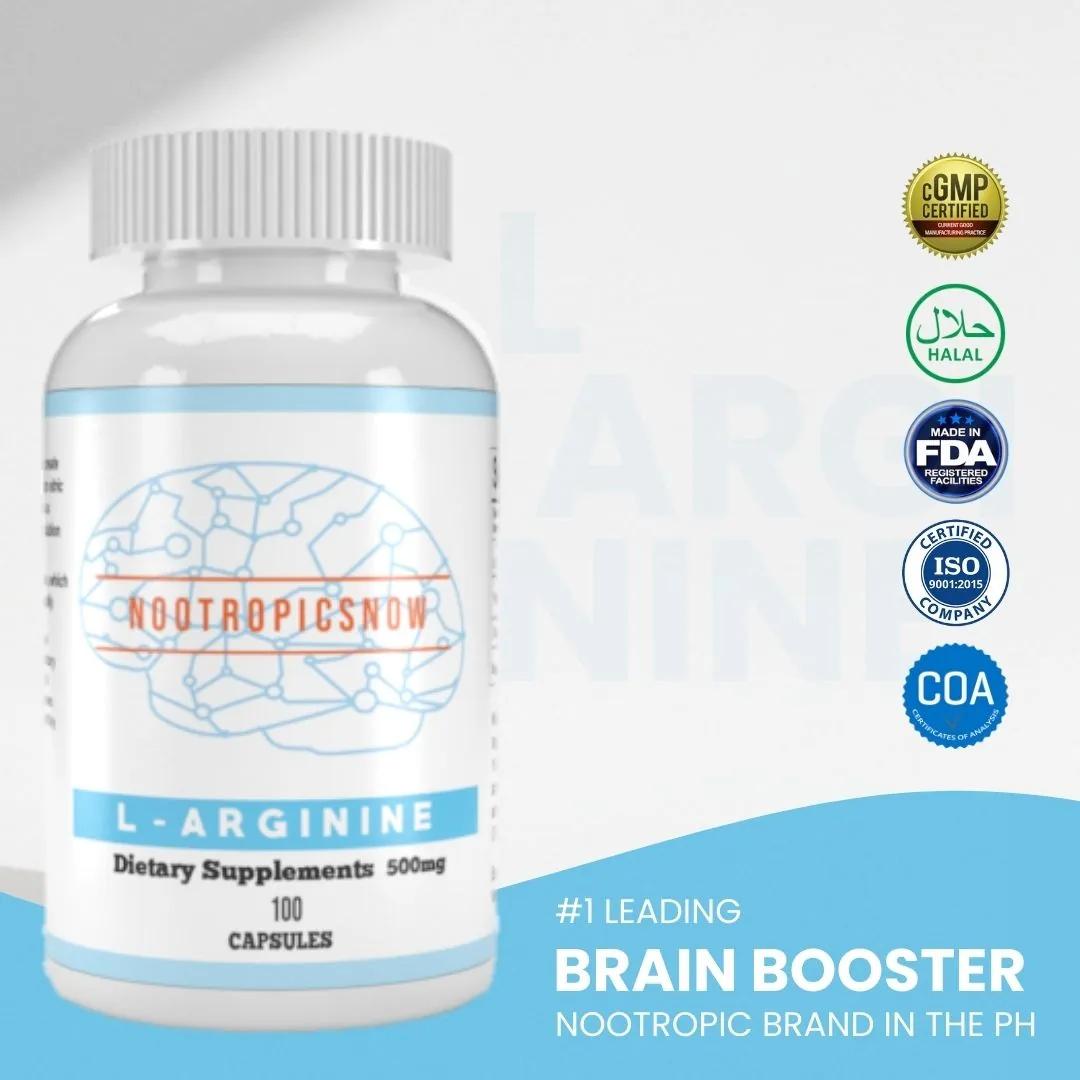
Sexual Performance
Last reviewed July 23, 2026
Occasional emails. Unsubscribe anytime.
TL;DR
In the Philippines, shoppers comparing L-arginine often want a simple way to sort marketing claims from the label details that actually matter.
L-arginine is an amino acid that appears in supplement conversations because review literature links it to nitric oxide biology, and nitric oxide is central to many circulation-focused use cases.1 That is one reason you will see it discussed alongside exercise performance and blood-flow support, even when the buyer’s real goal is narrower than the marketing suggests.1
The practical reason shoppers compare it is straightforward: different products can look similar on the front of the bottle but differ a lot in format, serving size, and simplicity. A careful buyer should check whether the product is a powder or capsules, whether the label clearly identifies the ingredient, and whether the serving size matches how often they plan to use it.12 Those details matter because supplement shopping is often less about the headline claim and more about whether the product can fit a routine consistently.
Many people also compare L-arginine with L-citrulline before buying. Review literature notes that L-citrulline has received attention for its potential to augment L-arginine bioavailability, nitric oxide production, and exercise performance.1 That does not make one universally better than the other, but it does explain why buyers often research both before deciding.
If you want the simplest product format to evaluate, single-ingredient L-arginine is usually easier to compare than a blended stack, because you can see exactly what you are getting without reverse-engineering the formula.2
Research reviews place L-arginine in a broad group of ingredients discussed for nitric oxide biology and related performance questions.1 That means you will see it positioned for workouts, circulation support, and sometimes sexual-performance shopping, but those are still product-positioning frames rather than a guarantee of any particular result.
This is also where expectations should stay cautious. A review on prediabetes and its management focuses on L-arginine in metabolic and cardiovascular contexts, which shows why the ingredient attracts interest in more than one category.2 But broad scientific interest does not turn a supplement into a one-size-fits-all answer. If someone is browsing because of social media or short-form video, it helps to separate the reason a product is sold from the reason a paper discusses it.
L-arginine also appears in broader conversation around long COVID, but that literature is about management approaches in a complex condition with many interventions under study, not a simple endorsement of any one ingredient.34 In other words, the fact that a compound is discussed in a research review does not mean it should be addressed as a shortcut for recovery, sleep, or general wellness. It is better thought of as a targeted ingredient that may fit a narrow use case.
If you are shopping for a routine, the key question is whether you want a product that is easy to use consistently. That usually means choosing a label you can read quickly, a form you will actually take, and a serving size that fits your daily plan.2
When comparing L-arginine powder and L-arginine capsules, the “best” format depends on convenience, dose flexibility, and taste tolerance. Powder is often the more adjustable choice if you want to fine-tune servings, while capsules are easier if you want something quick and portable.1
Powder tends to work better for buyers who dislike paying for capsule shells or who want to tailor intake by day. Capsules are often better for travel, office use, or anyone who prefers a set-and-forget routine. The label should make the format obvious; if it does not, that is a sign to look elsewhere.2
If you are looking at a pure single-ingredient product, check that the panel clearly states L-arginine and shows the serving size in a way that is easy to compare across brands. That makes it simpler to judge value per serving instead of only comparing the front label or the claim language.2 For many buyers, that straightforwardness matters more than an elaborate formula.
Some shoppers prefer blends built around performance support. That can make sense if the formula is designed with a clear use case, but a blend also adds variables: more ingredients, more label reading, and more chance that one added component changes how the product feels. A single-ingredient option is usually the cleaner starting point if your goal is to understand how L-arginine fits your routine.1
If you want a straightforward ingredient-first option, L-arginine is the clearest place to start.
The best L-arginine is usually the product that is easiest to evaluate honestly. That means looking beyond branding and checking the ingredient panel, the form, the serving size, and whether the label is unusually vague.2 Clear labeling matters because it lets you compare products on actual content rather than on marketing copy.
A useful filter is whether the brand tells you exactly what you are buying. Prefer labels that plainly identify L-arginine as the ingredient and state whether the product is powder or capsules. Avoid products that bury the relevant details behind proprietary language if your main goal is a clean, direct amino acid choice.2
Dose matters too, but buyers should think about dose in practical terms rather than as a headline number. The right serving is the one that fits your intended use, tolerability, and routine. Because different products can vary widely in format, it is more useful to compare the amount per serving than to compare front-panel promises alone.12
It is also sensible to ask whether a product is being sold as a stand-alone ingredient or as part of a broader performance formula. If you want clarity, a pure ingredient is often easier to assess. If you want convenience, a blend may reduce the number of separate bottles you buy, but you give up some simplicity in return.2
Quality markers also matter. Even when a product looks simple, buyers should still read the label carefully and check whether the seller explains the format well enough to compare options fairly. The goal is not to find the flashiest supplement; it is to find the one whose contents you can verify without guesswork.2
L-arginine vs L-citrulline is one of the most common comparison points because review literature says L-citrulline may help augment L-arginine bioavailability, nitric oxide production, and exercise performance.1 That is the basic reason shoppers keep seeing both ingredients in the same category.
For buyers, the practical takeaway is that the ingredient name alone does not tell the whole story. If you are building a nitric-oxide-focused stack, the form you choose can matter as much as the ingredient itself, because the experience depends on how the supplement fits your routine and how easy it is to take consistently.1 People often start by comparing one bottle against the other, but the better question is which one is easier to use every day.
This is also where it helps to resist oversimplified social media advice. One ingredient may be described as “better,” but a review summary does not automatically translate into a best-for-everyone answer. The literature supports a more careful view: L-citrulline has a role in the broader discussion, and it is reasonable that buyers compare it with L-arginine before deciding what to purchase.1
If your main interest is a basic amino-acid supplement for a routine, a simple L-arginine product can still make sense. If your priority is a nitric oxide-focused stack, compare how each ingredient is presented, how the serving works, and which format you are actually willing to use over time.1
Anyone with existing medical conditions or who uses prescription medication should review supplement choices carefully before buying L-arginine.2 That is especially true when a supplement is being used in a circulation-oriented context, because the ingredient is often discussed in cardiovascular and metabolic literature rather than as a casual wellness add-on.2
Caution is also sensible if your interest is tied to a complex condition rather than a simple routine. Long COVID research is still evolving, and reviews of management approaches describe many interventions being studied, which is a reminder that a supplement mentioned in the literature is not a standalone answer.34 That same caution applies to broad internet advice about “general support” claims.
If you are using a performance routine, it is usually wise to start with the lowest practical complexity and pay attention to how your body responds. A simple single-ingredient product is easier to assess than a multi-ingredient formula, especially if you are trying to figure out what is helping and what is just adding noise.2
People with cardiovascular concerns, metabolic conditions, or prescription regimens should be especially careful about self-directed use and should ask a qualified clinician when they are unsure how a supplement fits their situation.2 Shopping convenience is not the same as medical fit.
If your main goal is sexual-performance-oriented shopping, compare the ingredient form, label clarity, and how easy the product is to use consistently. Those are the features that matter most because they determine whether the supplement is simple enough to keep in your routine.2
For training stacks, review literature suggests buyers often compare L-arginine with related nitric-oxide ingredients instead of picking a bottle based on the front label alone.1 That approach is sensible. The more targeted your use case, the more important it becomes to understand the role of each ingredient, not just the marketing around it.
If you want a simple catalog choice, a single-ingredient product is often the easiest path. It lowers decision fatigue, makes label reading easier, and lets you compare value without sorting through extra actives. That is especially useful when you want a product you can buy once, understand quickly, and slot into a routine without overthinking.2
In short, the best L-arginine is usually the one that matches your goal, fits your format preference, and keeps the ingredient list simple enough to trust at a glance.
Can buyers in the Philippines order L-arginine online?
Yes, many shoppers compare online supplement options first. Check product details, serving size, and local Philippine shipping terms before placing an order.
Is L-arginine powder better than capsules?
Neither is automatically better. Powder is often easier to dose flexibly, while capsules are usually more convenient for daily use.1
Does L-arginine work the same way as L-citrulline?
Not exactly. Review literature notes that L-citrulline can help increase L-arginine bioavailability, which is why buyers often compare them.1
What should I check on the label before buying?
Look for the exact ingredient name, the serving size, and a label that makes the format easy to verify. Simple labels are easier to compare.2
Why do some YouTube videos recommend L-arginine for circulation or performance?
That framing reflects common supplement marketing and social discussion. It is best to read those claims as shopping context, not proof.2
How do I decide between a pure ingredient and a blend?
If you want clarity and easier comparison, a single-ingredient product is usually simpler. If you want an all-in-one stack, compare each added ingredient carefully.12
If you want the simplest path, start with the ingredient-first option that keeps the label clean and the serving easy to follow.l-arginine
This article is for educational purposes only. It is not medical advice, not a substitute for professional consultation, and is not intended to diagnose, treat, cure, or prevent any disease.
Statements about dietary supplements have not been evaluated by the FDA. Individual results vary. Consult a licensed physician before starting any new supplement — especially if you are pregnant, breastfeeding, have a medical condition, or are taking prescription medication.
Quality and sourcing information is available on our quality page. Batch-level lab test data is available on request — contact support.
Last reviewed: 2026-07-23
Adam M Gonzalez, Eric T Trexler. Effects of Citrulline Supplementation on Exercise Performance in Humans: A Review of the Current Literature.. Journal of strength and conditioning research (2020). https://pubmed.ncbi.nlm.nih.gov/31977835/
Massimo Volpe, Armando Ferrera, Roberto Piccinocchi. The Emerging Role of Prediabetes and Its Management: Focus on L-Arginine and a Survey in Clinical Practice.. High blood pressure & cardiovascular prevention : the official journal of the Italian Society of Hypertension (2023). https://pubmed.ncbi.nlm.nih.gov/38060094/
Dena Zeraatkar, Michael Ling, Sarah Kirsh. Interventions for the management of long covid (post-covid condition): living systematic review.. BMJ (Clinical research ed.) (2024). https://pubmed.ncbi.nlm.nih.gov/39603702/
Achilleas Livieratos, Charalambos Gogos, Karolina Akinosoglou. Beyond Antivirals: Alternative Therapies for Long COVID.. Viruses (2024). https://pubmed.ncbi.nlm.nih.gov/39599909/