
Optimized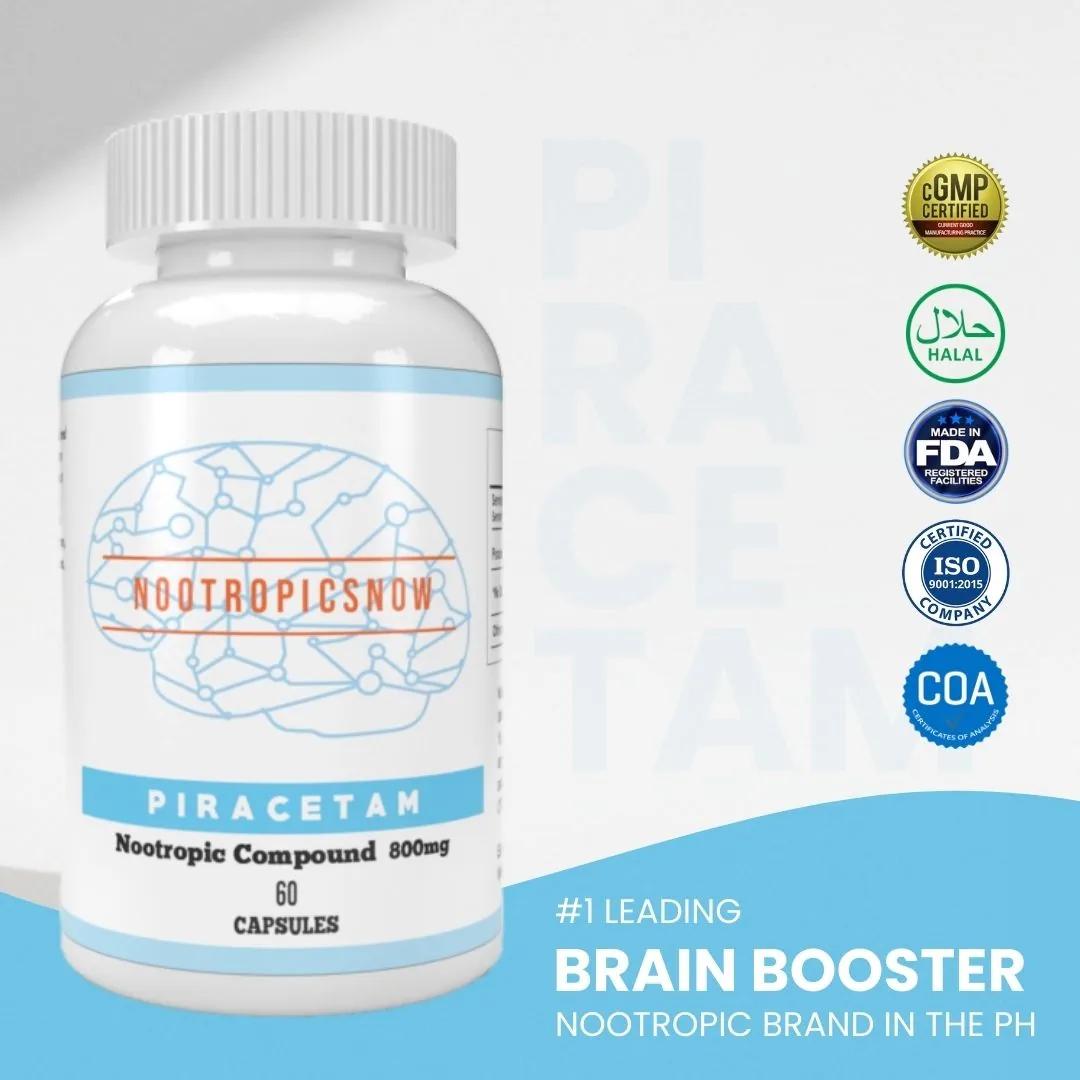
Memory
Last reviewed July 23, 2026
Occasional emails. Unsubscribe anytime.
TL;DR
In the Philippines, readers comparing a piracetam stack often want a practical way to organize memory support without overcomplicating the routine. That usually means starting with one core ingredient, checking how it feels, and only then deciding whether a support compound is worth adding.
A piracetam stack is not a single fixed recipe. It usually means piracetam plus one or more supporting ingredients chosen to match a specific goal, such as memory, study focus, or mental clarity. Reviews describe nootropics as a heterogeneous group of substances, and that matters because a stack should be built around a clear purpose rather than a vague promise of “brain boosting.”3
Piracetam is widely discussed as a nootropic, and a recent systematic review describes it as hypothesized to enhance memory function through its influence on synaptic plasticity and neurotransmitter levels. But that same review also says there remains a lack of conclusive evidence regarding its impact on memory.1 That is the right starting point for any honest stack conversation: the goal is to support memory-related performance, not to expect guaranteed outcomes.
This is why “best” is a moving target. For some people, the best piracetam stack is just piracetam alone while they learn how they respond. For others, it is piracetam plus a second ingredient that is chosen for a specific reason, such as a choline source. The key is to avoid stacking ingredients just because the internet says they belong together.
People browsing nootropics are often students or workers who want help with memory, attention, learning, executive function, or vigilance.2 Another review of cognitive enhancers in university students notes that these products are commonly used as study aids and includes piracetam among the substances people compare in that context.4
That does not mean everyone is chasing the same effect. Some readers are preparing for exams, others want a cleaner routine for long workdays, and some simply want a way to compare memory support supplements without getting lost in label language. A piracetam stack fits that kind of search because it is easy to understand: one base ingredient, then a second ingredient only if there is a clear rationale.
At the same time, the literature keeps expectations cautious. Reviews on smart drugs in healthy people say that efficacy in non-impaired brains is still to be fully assessed, and broad reviews of nootropics also emphasize that effects and side effects vary across ingredients.23 So if you are comparing a nootropic stack for focus or study use, it is better to think in terms of trial-and-observation than certainty.
The best piracetam stack is usually the one that fits your goal, tolerance, and budget. That sounds simple, but it is the most useful filter because the nootropic category is broad and heterogeneous.3 A more complex formula is not automatically better. In practice, a simpler structure is easier to evaluate and often easier to tolerate.
A good way to think about the decision is to ask three questions:
That framework matters because reviews of cognitive enhancement strategies emphasize that people use a mix of natural compounds, synthetic enhancers, and behavioral approaches, rather than one universal answer.5 If your baseline routine is already noisy, a multi-ingredient stack can make it harder to tell what is helping.
For that reason, many users start with piracetam as the core and keep the rest conservative. If they later decide to add something, they usually want a second ingredient that has a clear role in the stack, not just another label to increase capsule count.
Among online nootropic discussions, piracetam and choline is the pairing that comes up most often. The reason is partly practical: users want a stack that feels more balanced, and they often look for a choline source when they build a piracetam routine. Piracetam is also described in mechanistic reviews as influencing acetylcholine-related pathways, augmenting the effect of acetylcholine on muscarinic receptors, and modulating neurotransmission involved in cognitive function.6
That mechanistic discussion helps explain why the pairing is so common, but it does not make the pairing a sure thing. The more careful reading is that piracetam is often considered alongside choline because people are trying to build a coherent structure around a cholinergic nootropic. The evidence base is still mixed, and the memory review on piracetam says conclusive evidence remains lacking.1
If you want a choline-forward option, it helps to think in terms of categories: some shoppers want a dedicated choline source, while others want a broader cognitive stack that simply includes one. The point is to choose something that matches your use case rather than assuming the internet’s most repeated pairing is automatically the strongest.
The most straightforward place to start is often a piracetam-centered routine before layering anything else, especially if you want a cleaner read on how the base compound feels. Piracetam is the anchor ingredient in that setup, so it makes sense to look at a piracetam product first.
Racetams are often discussed as a class, but broad comparisons can become misleading if they ignore dose differences, side effect profiles, and the fact that different ingredients are used for different reasons.3 That is why “racetam stack” is not a synonym for “best nootropic stack.” It is just one way of organizing a memory-oriented routine.
Broader nootropic reviews also note that smart drugs and cognitive enhancers are used for different target outcomes, including memory, attention, learning, and executive function.2 So when people compare ingredients in a racetam stack, the real question is not which one sounds strongest on paper. The better question is which ingredient fits the intended use without making the routine too hard to monitor.
This is where comparisons with other cognitive enhancers become useful. If your main issue is study focus, you may look at ingredients with a more alertness-oriented profile. If your main issue is memory support, you may prefer a stack that is simpler and easier to track over time. Reviews on cognitive enhancement strategies make clear that different compounds are being explored for different cognitive domains, so the same stack does not have to serve every purpose at once.5
That also means “best” is contextual. A racetam stack can be sensible for one person and unnecessary for another. The value lies in how well the ingredients fit the problem you are actually trying to solve.
Safety should be part of the decision from the start. Reviews of smart drugs in healthy people emphasize that benefits and harms both matter, and broad nootropic reviews highlight side effects as a central part of the discussion.23 That is especially relevant if you are comparing more than one new ingredient at once.
A useful rule is to change one thing at a time. If you add piracetam and a second product on the same day, you lose the ability to tell which ingredient matters. It is also harder to notice whether a headache, sleep change, stomach upset, or feeling of restlessness is coming from the base ingredient or the add-on.
The literature also supports caution around expectations. In healthy people, efficacy is still not fully established, and reviews of piracetam do not give conclusive support for memory improvement.21 That means a stack should be seen as a structured experiment, not a shortcut.
Practical label reading helps too. Review the ingredient list, check the serving size, and keep your first trial conservative. If you already use other supplements, especially products that affect alertness or sleep, keep the stack simple so you can spot interactions more easily. That is a better approach than trying to force a dramatic effect from the first bottle.
If you want the simplest possible structure, begin with one core product and only add a second ingredient when you have a clear reason. Reviews on cognitive enhancement strategies support this kind of stepwise thinking because the field includes many approaches and no single formula fits everyone.5
A practical starter method looks like this:
That last point matters because “more” is not the same as “better.” A lot of nootropic experimentation goes wrong when users add several products at once, then cannot tell whether the result came from the stack, from sleep, or from placebo-style expectation. Reviews on smart drugs in healthy individuals and university students both point to variable use patterns and mixed evidence, which is another reason to keep your starting structure clean.24
If your goal is specifically memory support, a simple routine is often the most informative. Once you know how you respond to the core ingredient, you can decide whether the next step should be a choline source, a different nootropic, or no add-on at all. For many readers, that is the real answer to “best piracetam stack”: a stack that is easy to understand, easy to tolerate, and easy to evaluate.
It is one of the most discussed racetam ingredients, but current reviews do not show conclusive memory benefits in adults with memory impairment.1
Yes. A simple starting point is often easier to evaluate than a complex stack, especially when you want to notice what each ingredient is doing.5
Because many stack discussions focus on acetylcholine-related pathways and on reducing trial-and-error when building a nootropic routine.6
Most searches around piracetam are memory-led, but stack discussions often also mention study focus and mental clarity.2
Yes, but availability and local rules can vary, so it is smart to check the product page and current shipping details before buying.
Not necessarily. Reviews of nootropics emphasize mixed evidence and variable responses, so careful testing is more realistic than expecting instant changes.23
If you are comparing a piracetam-based option and want a simple place to start, check the local listing for piracetam-philippines and review the label details before you buy.
This article is for educational purposes only. It is not medical advice, not a substitute for professional consultation, and is not intended to diagnose, treat, cure, or prevent any disease.
Statements about dietary supplements have not been evaluated by the FDA. Individual results vary. Consult a licensed physician before starting any new supplement — especially if you are pregnant, breastfeeding, have a medical condition, or are taking prescription medication.
Quality and sourcing information is available on our quality page. Batch-level lab test data is available on request — contact support.
Last reviewed: 2026-07-23
Felipe Araujo Gouhie, Karina Oliveira Barbosa, Amanda Borges Rufino Cruz. Cognitive effects of piracetam in adults with memory impairment: A systematic review and meta-analysis.. Clinical neurology and neurosurgery (2024). https://pubmed.ncbi.nlm.nih.gov/38878641/
Fabrizio Schifano, Valeria Catalani, Safia Sharif. Benefits and Harms of 'Smart Drugs' (Nootropics) in Healthy Individuals.. Drugs (2022). https://pubmed.ncbi.nlm.nih.gov/35366192/
Matěj Malík, Pavel Tlustoš. Nootropics as Cognitive Enhancers: Types, Dosage and Side Effects of Smart Drugs.. Nutrients (2022). https://pubmed.ncbi.nlm.nih.gov/36014874/
Safia Sharif, Amira Guirguis, Suzanne Fergus. The Use and Impact of Cognitive Enhancers among University Students: A Systematic Review.. Brain sciences (2021). https://pubmed.ncbi.nlm.nih.gov/33802176/
Akash Vikal, Rashmi Maurya, Brij Bihari Patel. A Mini-Review on Unlocking Cognitive Enhancement: An Innovative Strategy for Optimal Brain Functions.. Central nervous system agents in medicinal chemistry (2025). https://pubmed.ncbi.nlm.nih.gov/40662561/
Hayder M Al-Kuraishy, Ali I Al-Gareeb, Duaa Eliwa. The mechanistic role of piracetam in the management of vascular dementia.. Behavioural brain research (2025). https://pubmed.ncbi.nlm.nih.gov/40139397/