
Optimized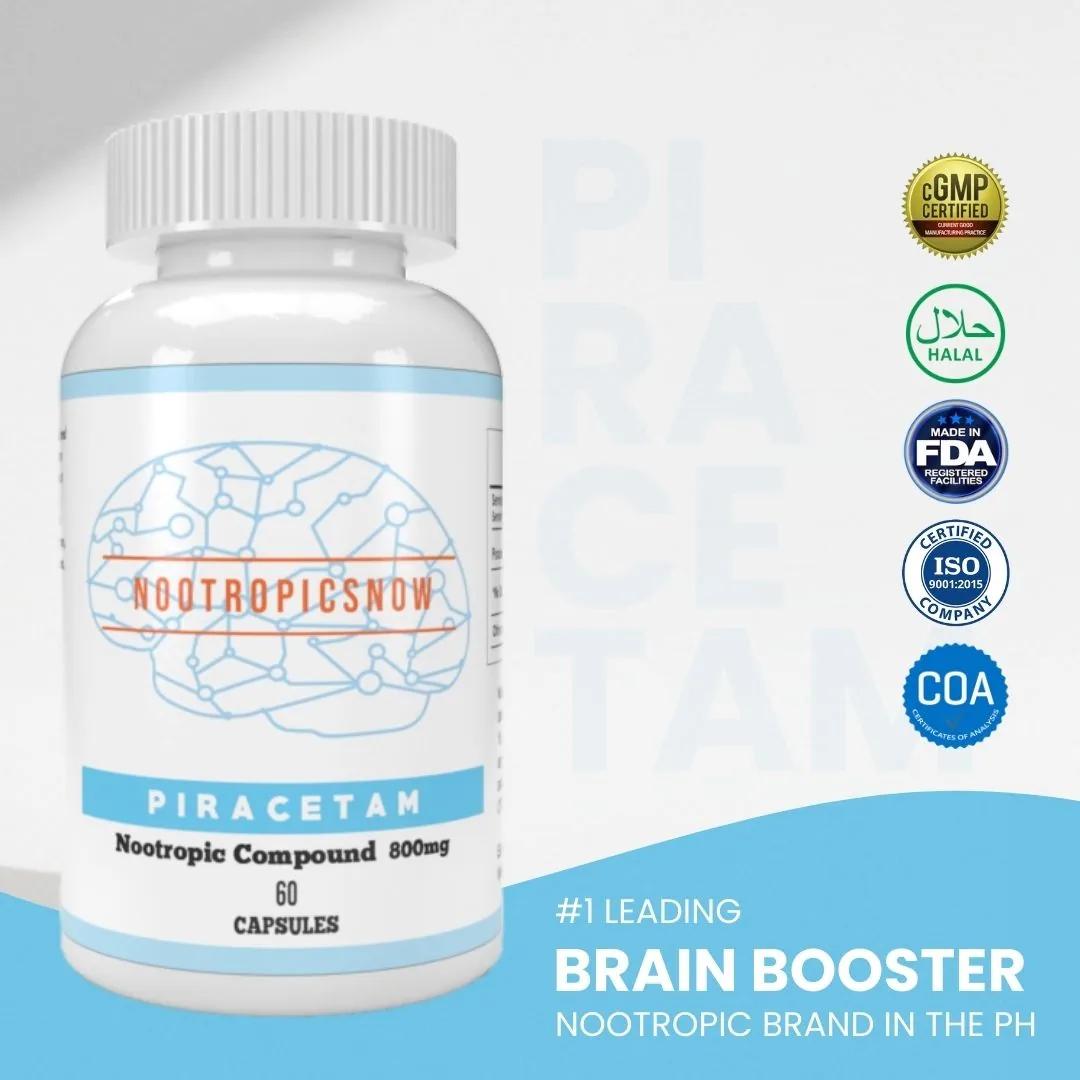
Memory
Last reviewed July 23, 2026
Occasional emails. Unsubscribe anytime.
TL;DR
In the Philippines, shoppers comparing piracetam often want a simple answer about quality, but the better question is which listing is clearest and most credible for your goal. If you are trying to build a careful buying shortlist, the evidence and the product page details both matter.14
Piracetam is a widely recognized nootropic drug and part of the racetam class, which is why it comes up so often in memory discussions.1 Reviews of smart drugs describe nootropics as substances used by healthy students and workers to improve memory, attention, learning, executive function, and vigilance, but they also note that the effect of known cognitive enhancers in non-impaired brains is still not fully assessed.2 That distinction matters: a compound can be familiar in the nootropics world without having strong, consistent real-world benefit for every reader.
The most relevant evidence summary for buyers is a recent systematic review and meta-analysis focused on adults with memory impairment. Its abstract says piracetam is hypothesized to enhance memory through synaptic plasticity and neurotransmitter levels, but there remains a lack of conclusive evidence regarding its impact on memory.1 In other words, the mechanistic story is plausible, but the outcome evidence is not strong enough to justify sweeping claims.
A broader review of nootropics also frames these compounds as a heterogeneous group with different types, different doses, and different side-effect profiles.5 That heterogeneity is one reason piracetam discussions can sound more confident than the evidence warrants. It is easy to assume that because a substance is discussed for thinking and memory, it must work broadly and predictably. The literature does not support that leap.
For readers who like the “why might it work?” angle, later mechanistic reviews describe piracetam as a cyclic derivative of gamma aminobutyric acid and discuss possible effects on acetylcholine, neurotransmitters, and blood flow.6 Those are interesting hypotheses, but mechanism is not the same thing as reliable benefit in everyday use. When you are deciding whether a product deserves a place in your cart, the practical question is whether the published evidence is solid enough for your own goal, not whether the mechanism sounds sophisticated.
The best piracetam brand is usually the one that reduces ambiguity. Start with the basics: the active ingredient should be named plainly, the exact SKU should be obvious, and the product page should not bury key details in promotional language. A review of cognitive enhancers among university students notes that these products are often used as study aids and that the category includes piracetam alongside other agents, which is a reminder that product comparisons should be specific, not vague.3
Clarity matters because piracetam sits in a category where expectations can easily outrun evidence. Reviews aimed at healthy individuals say the efficacy of known cognitive enhancers in non-impaired brains is still to be fully assessed.2 So when a listing sounds too certain, that is a sign to slow down. A good page should tell you what the product is, how it is labeled, and how it fits the seller’s catalog. It should not ask you to trust grand promises.
This is also where buyer discipline helps. A review on cognitive enhancement emphasizes the wide interest in improving or preserving memory, attention, and executive functions, but the category itself includes natural compounds, synthetic enhancers, and behavioral approaches.4 That breadth means “brain support” language can hide major differences. If you are comparing piracetam brands, look for straightforward ingredient naming and consistent information that lets you compare one listing with another without guessing.
If you want a simple rule: choose the brand that gives you the least room to misread the label. For piracetam, that usually means transparent naming, a clear amount per unit, and no overdone claims about guaranteed outcomes. Those are practical quality signals even when the research is mixed.
First, check ingredient transparency. Piracetam should be identified directly on the product page, not implied through vague “cognitive support” language. That sounds obvious, but nootropic shopping pages often blend multiple ideas together. Reviews of smart drugs describe the category as a mix of substances with different purposes and side-effect profiles, so a precise label is your first defense against confusion.5
Second, check goal match. Piracetam is most often discussed in memory and learning contexts, not as a general wellness item.2 If your intent is a narrow memory-oriented purchase, it is easier to evaluate. If you are hoping for broad productivity, the evidence becomes harder to justify. That does not make piracetam useless; it means the use case should be specific.
Third, check evidence fit. A 2024 systematic review and meta-analysis still describes piracetam’s memory evidence as lacking conclusive support.1 That should shape your expectations before you buy. A listing can be well made and still be a poor fit if your expectations are set too high.
Fourth, compare practicality. The best product for many shoppers is not the one with the loudest marketing copy, but the one you can actually reorder, verify, and track easily. That matters even more for readers in the Philippines, where local availability and delivery within the Philippines may be the deciding factor when a product is otherwise similar.3
Piracetam is most relevant when memory is the primary goal. Reviews of nootropics describe these products as affecting thinking, learning, and memory, especially when those functions are impaired.5 That framing makes piracetam a reasonable object of comparison for people who are specifically shopping for memory support rather than for energy or sleep.
The mechanistic discussion is part of why the compound has lasted so long in the nootropics conversation. A 2025 review says piracetam may augment acetylcholine effects, modulate neurotransmitters involved in cognitive function, and improve blood flow through changes in erythrocyte deformability.6 Those pathways are plausible reasons researchers keep revisiting it, but they are not the same as guaranteed user-level results. If you are a cautious buyer, the right takeaway is that piracetam is biologically interesting, not that it is a certainty.
Healthy adults should be especially careful about expectation management. Reviews focused on healthy individuals note that while cognitive enhancers are often used by students and workers to improve memory, attention, learning, executive functions, and vigilance, their effect on non-impaired brains is still uncertain.2 So if you are browsing from a productivity angle, piracetam may not live up to the way social media often presents it.
That is why the most sensible use of piracetam in a buying guide is as a narrow, memory-focused option. It has a long reputation, a long discussion history, and a plausible mechanism, but the evidence base remains mixed and incomplete.16
Any serious piracetam review should include caution. Reviews of smart drugs say side effects and risk profiles matter in the buying decision.5 That may sound obvious, but it is easy to focus only on the hoped-for benefit when reading product pages. The better habit is to ask whether the product fits your own health context, other medicines, and tolerance for uncertainty.
Combination use deserves extra care. When people stack nootropics, it becomes harder to tell which ingredient is responsible for a particular reaction or lack of reaction. Since the review literature already describes the category as heterogeneous, mixing products can make interpretation even murkier.5 If you want a clean read on how a product affects you, starting with a single ingredient is usually more sensible than adding multiple compounds at once.
It is also reasonable to be conservative about expectations because the evidence itself is limited. The 2024 review says there is a lack of conclusive evidence regarding piracetam’s impact on memory.1 That does not mean nobody will find it useful, but it does mean the decision should be framed as an informed trial, not a certainty.
If you have a medical condition or take other medicines, a clinician’s guidance is the safer step before use. That is especially important when buying from a catalog where the product description may be more sales-oriented than educational. A cautious shopper uses the product page as one input, not as the final word.
For shoppers in the Philippines, the practical question is not only whether piracetam is interesting in theory, but whether the listing is clear, orderable, and easy to verify locally. When comparing options, check whether the store offers local Philippine shipping or delivery within the Philippines, and make sure the exact SKU is easy to confirm before you add anything to cart.3
This matters because the research conversation around piracetam is already mixed. A buying choice should therefore lean on product-page clarity and catalog transparency, not on social media buzz. The review literature on cognitive enhancers highlights that these substances are used as study aids and discussed across a broad range of products, which makes careful comparison more important, not less.3
If you are comparing brands from the same catalog, use two filters first: how clearly the product is labeled, and how well it matches your memory-focused goal. Those are more dependable than flashy claims. They also fit the reality of local shopping, where the most useful product is often the one you can actually verify and reorder.
Piracetam is one of the classic nootropic names, but it is not the same as every other ingredient people mention in brain-health videos. Reviews of smart drugs note that healthy users often discuss these products for memory, attention, learning, executive function, and vigilance, yet the evidence and risk profile differ by compound.25 That means you should not assume all “brain supplements” operate on the same playbook.
Some cognitive enhancers are discussed more for attention, while piracetam is more commonly folded into memory-centered conversations.3 That makes it a better fit for a narrow comparison than for broad “best overall nootropic” language. If your personal goal is memory support, piracetam can be one of the older reference points in the category. If your goal is general alertness, there may be more direct options elsewhere.
One more caution: mechanism-based enthusiasm can be misleading. A review can describe acetylcholine modulation, neurotransmitter effects, and blood-flow changes, but those details still do not make the end result predictable for every user.6 In practice, the best comparison is always goal-based. Ask what you are trying to improve, then see whether piracetam has enough evidence to justify the purchase.
If you want a focused product card for the classic piracetam option, the next line is the relevant transaction point. Piracetam is the key term to look for when comparing the SKU itself.
Is piracetam a good choice for memory support in the Philippines?
It may be relevant if your main goal is memory, but the evidence for piracetam remains limited and inconclusive. Check the product listing carefully and compare it with your goals before buying.13
Can piracetam help if I am comparing it with other racetams?
Piracetam is the classic racetam people compare first, but the evidence base is not strong enough to make it a guaranteed winner. A goal-based comparison is more useful than a hype-based one.25
Does piracetam work the same way for healthy adults and people with memory impairment?
No. Reviews note that cognitive enhancers are often discussed differently in healthy users versus people with cognitive impairment, and piracetam’s evidence is especially uncertain in healthy people.21
Can I expect fast results from piracetam just because it is a popular nootropic?
Popularity does not equal reliable benefit. The current literature does not support strong claims that piracetam produces noticeable results for everyone.12
What should I check on a piracetam product page before buying?
Look for ingredient clarity, the exact SKU, and a straightforward product description. Those basics matter more than bold marketing language when choosing a brand.34
Why do people keep discussing piracetam in nootropics videos?
Piracetam has a long reputation as the original smart drug, so it often shows up in reviews and comparison videos even when the evidence is mixed.35
This article is for educational purposes only. It is not medical advice, not a substitute for professional consultation, and is not intended to diagnose, treat, cure, or prevent any disease.
Statements about dietary supplements have not been evaluated by the FDA. Individual results vary. Consult a licensed physician before starting any new supplement — especially if you are pregnant, breastfeeding, have a medical condition, or are taking prescription medication.
Quality and sourcing information is available on our quality page. Batch-level lab test data is available on request — contact support.
Last reviewed: 2026-07-23
Felipe Araujo Gouhie, Karina Oliveira Barbosa, Amanda Borges Rufino Cruz. Cognitive effects of piracetam in adults with memory impairment: A systematic review and meta-analysis.. Clinical neurology and neurosurgery (2024). https://pubmed.ncbi.nlm.nih.gov/38878641/
Fabrizio Schifano, Valeria Catalani, Safia Sharif. Benefits and Harms of 'Smart Drugs' (Nootropics) in Healthy Individuals.. Drugs (2022). https://pubmed.ncbi.nlm.nih.gov/35366192/
Safia Sharif, Amira Guirguis, Suzanne Fergus. The Use and Impact of Cognitive Enhancers among University Students: A Systematic Review.. Brain sciences (2021). https://pubmed.ncbi.nlm.nih.gov/33802176/
Akash Vikal, Rashmi Maurya, Brij Bihari Patel. A Mini-Review on Unlocking Cognitive Enhancement: An Innovative Strategy for Optimal Brain Functions.. Central nervous system agents in medicinal chemistry (2025). https://pubmed.ncbi.nlm.nih.gov/40662561/
Matěj Malík, Pavel Tlustoš. Nootropics as Cognitive Enhancers: Types, Dosage and Side Effects of Smart Drugs.. Nutrients (2022). https://pubmed.ncbi.nlm.nih.gov/36014874/
Hayder M Al-Kuraishy, Ali I Al-Gareeb, Duaa Eliwa. The mechanistic role of piracetam in the management of vascular dementia.. Behavioural brain research (2025). https://pubmed.ncbi.nlm.nih.gov/40139397/