Starter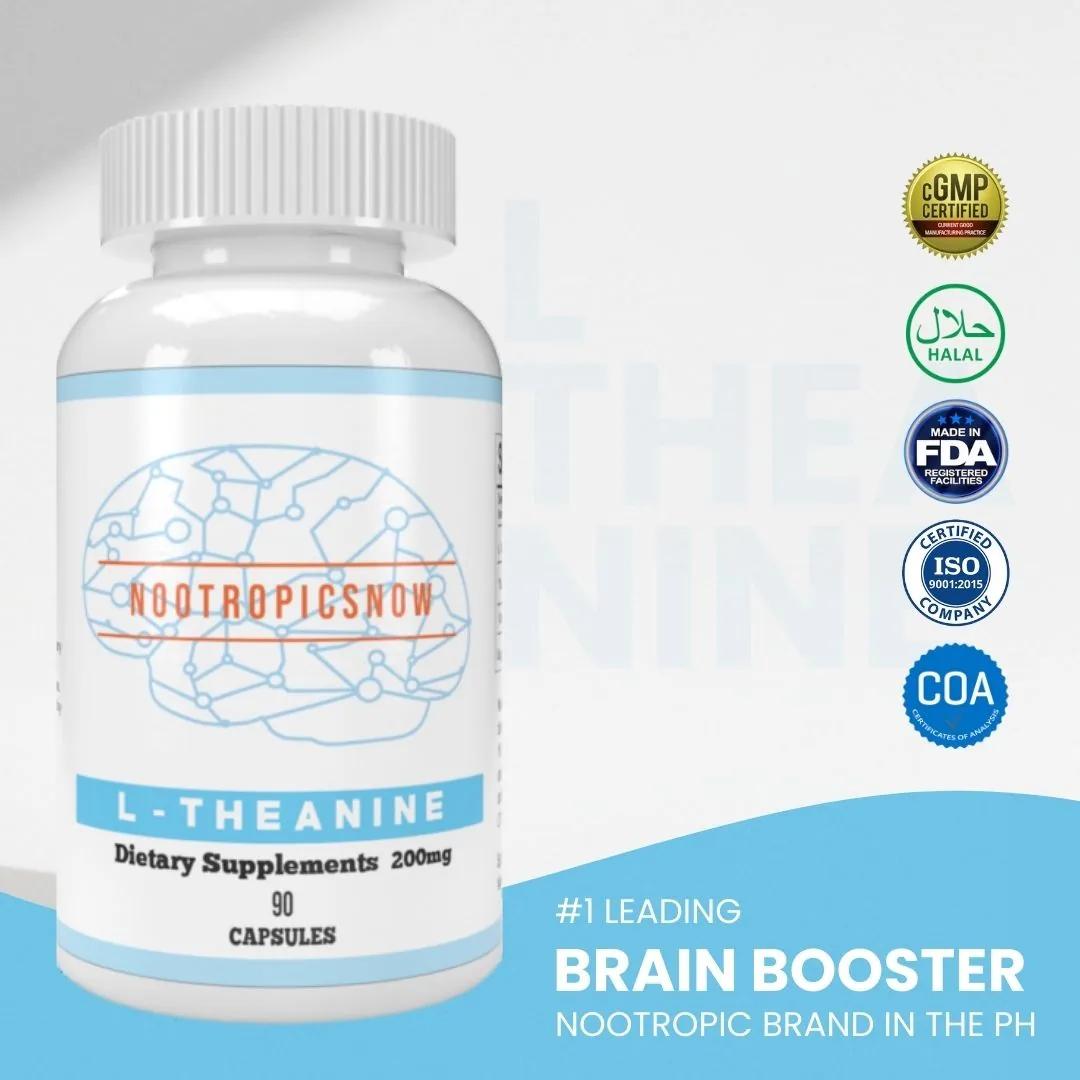
Stress
Last reviewed May 4, 2026
Occasional emails. Unsubscribe anytime.
TL;DR
In the Philippines, shoppers comparing L-theanine and ashwagandha often want a practical answer: which one fits work, sleep, and stress without overcomplicating the routine?
This comparison is less about finding a single “best” supplement and more about matching the ingredient to the use case. L-theanine is a green tea amino acid, while ashwagandha is a medicinal herb, so they tend to fit different habits and expectations.12
That difference matters because people usually reach for them for overlapping but not identical reasons. Reviews of L-theanine have focused on stress responses, anxiety-like symptoms, mood, and cognition, while broader medicinal-herb research has examined anxiety-related outcomes across several herbs, including ashwagandha.12
A helpful way to think about the choice is this: L-theanine is often used when someone wants calm without making the day feel heavy, while ashwagandha is often chosen when the goal is a more herb-centered stress routine. That is a practical distinction, not a hard rule, and individual response varies.35
L-theanine is the ingredient most people associate with stress management and a steadier mental state. A systematic review described it as the green tea amino acid linked with improvements in mood, cognition, and reductions in stress and anxiety-like symptoms.1
Human research has also looked at it in healthy adults. One randomized controlled trial examined four weeks of L-theanine administration and assessed stress-related symptoms and cognitive functions, which is why many readers think of it as a “calm focus” ingredient rather than a sedating one.3
That calmer-focus reputation also shows up in broader green tea research. A systematic review on green tea, cognition, mood, and human brain function included L-theanine in its scope, which supports why shoppers often connect it with mental clarity as well as relaxation.7
In real-world use, many people compare L-theanine to the feeling they want during work: not sleepy, not overstimulated, just less mentally jagged. That framing fits the research better than exaggerated claims because the available studies are about stress-related symptoms, mood, and cognitive measures rather than dramatic one-size-fits-all outcomes.13
If you want a simple single-ingredient option built around that profile, L-theanine is usually the starting point people mean when they say they want “smooth” calm.
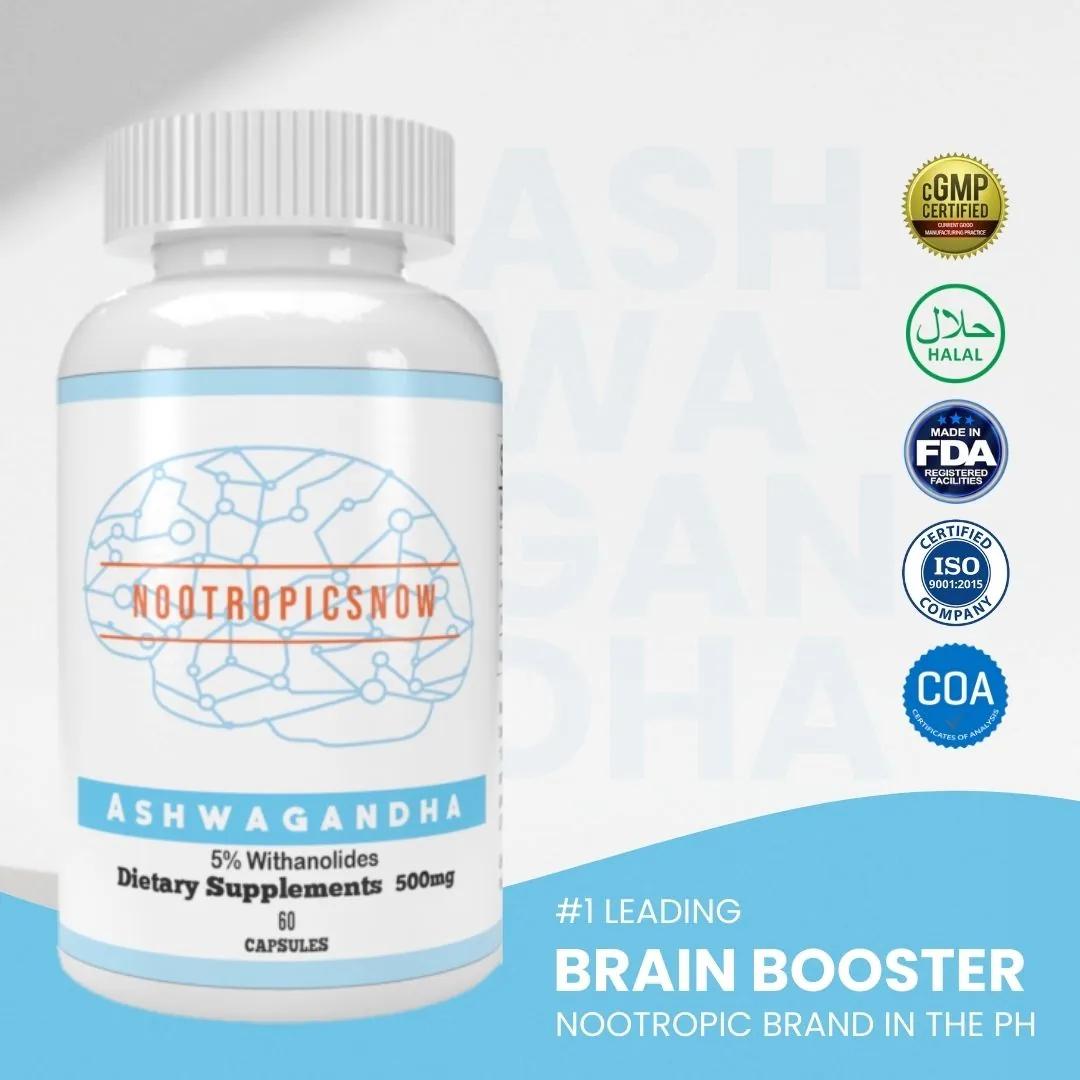
Ashwagandha is usually discussed as the more herbal, traditional-style option in this comparison. In the anxiety literature, medicinal herbs have been studied as a category for adults with diagnosed or subthreshold anxiety, and ashwagandha sits inside that broader evidence landscape.2
That does not mean it is interchangeable with L-theanine. It means the ingredient is often chosen by readers who want a more botanically oriented supplement routine, especially when stress is the main concern. Systematic-review work on herbal approaches for anxiety-related outcomes is one reason ashwagandha has become a common point of comparison with L-theanine.25
The practical difference is often in the feel of the routine. L-theanine is commonly used for daytime calm, while ashwagandha is more often put into routines that emphasize evening wind-down or a broader stress-support stack. That said, people respond differently, and neither ingredient should be assumed to work the same way for everyone.25
If you are shopping for a more herb-forward option, ashwagandha is the ingredient readers usually mean.
The clearest overlap is stress support. L-theanine has been studied directly for stress-related symptoms and anxiety levels in randomized trials, and systematic review evidence summarizes that same theme.13
Ashwagandha, meanwhile, fits into a wider set of medicinal herbs evaluated for anxiety-related outcomes in adults. That broader evidence base makes it a reasonable comparison point, but the research framing is not identical to the L-theanine literature.2
So which is stronger? It is usually the wrong question. A better question is whether you want a single amino-acid supplement that leans calm and light, or a herb-centric option that people more often place into long-term stress routines.12
For some readers, the deciding factor is simply how the supplement fits into the day. L-theanine may feel easier to deploy before work, meetings, or study sessions, while ashwagandha may feel more natural for people who prefer evening routines or want to keep the stress-support story centered on herbs.35
That distinction is useful in the Philippines too, where shoppers often compare products based on the kind of routine they can maintain consistently rather than on abstract superiority.
L-theanine gets a lot of attention because it appears to sit in the middle ground between calm and alert. A randomized controlled trial in healthy adults examined stress-related symptoms and cognitive functions, and another randomized placebo-controlled study in middle-aged and older adults looked at cognitive function as well.34
Green tea research adds context here too. A systematic review examined green tea, L-theanine, cognition, mood, and human brain function, which helps explain why the ingredient is often discussed in the same breath as studying, work, and mental clarity.7
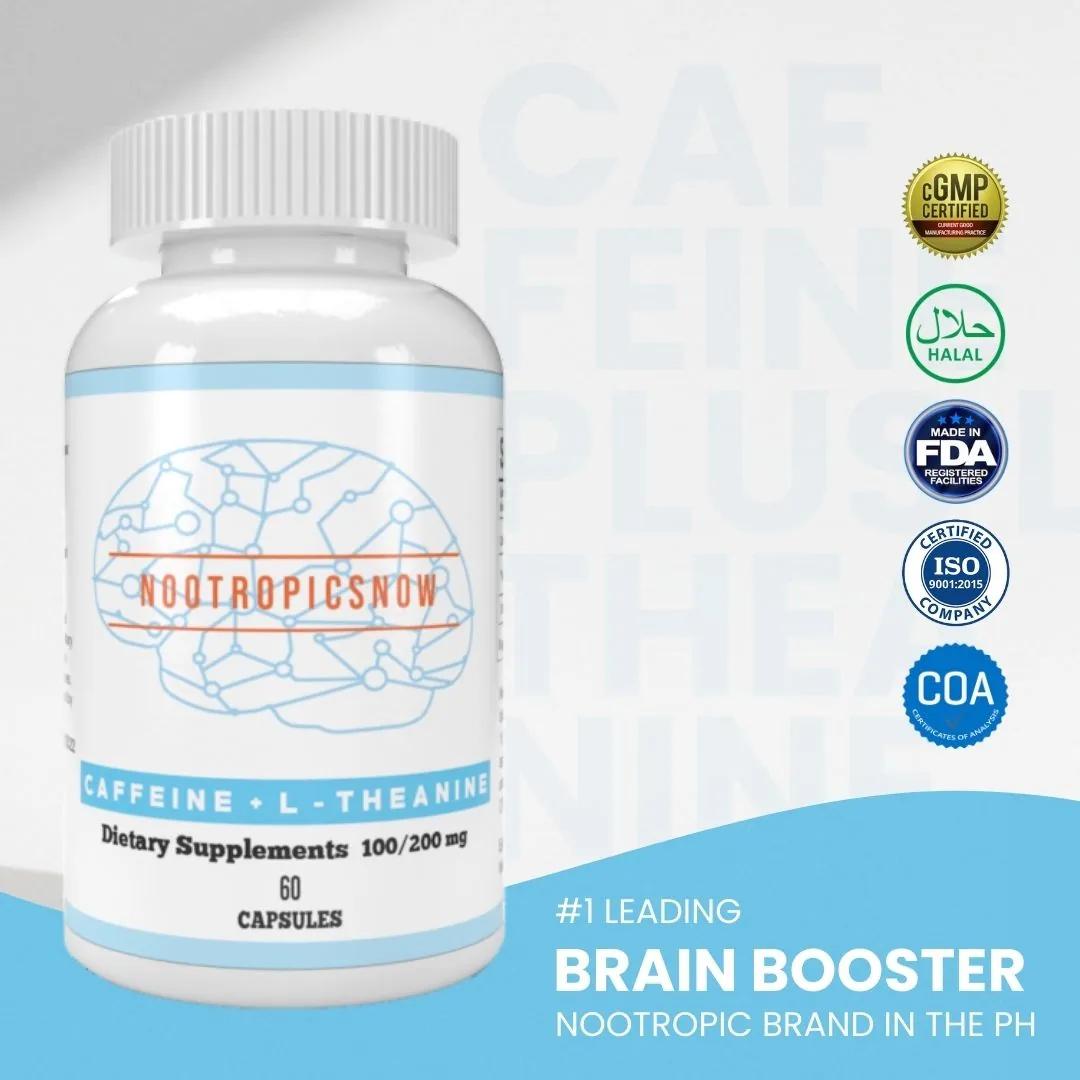
That is also why caffeine pairings are so popular. People often want the alertness of coffee without the more noticeable jitters, and that is exactly the type of use case the pairing conversation tends to address. Recent research has examined L-theanine after caffeine intake for stress-reducing effects, and the abstract notes that caffeine-induced arousal can exacerbate psychological stress symptoms while L-theanine may modulate those adverse effects without impairing desired cognitive effects.6
If your use case is daytime productivity, L-theanine is often the more straightforward fit. It is commonly chosen by people who want a lighter mental profile rather than a broader herbal routine. For shoppers who already drink coffee or tea and want a smoother experience, the caffeine-plus-L-theanine pairing is one of the most common ways this ingredient is used.6
L-theanine is not just a daytime ingredient. One randomized placebo-controlled study described it as an amino acid in green tea that has been shown to affect brain functions by relieving stress disorders, improving mood, and maintaining normal sleep.4
A separate systematic review also examined L-theanine supplementation in people with mental disorders, noting potential effectiveness when used as an adjunct with antidepressants, antipsychotics, and other psychopharmacological drugs.5 That does not make it a sleep medication, but it does show why people sometimes include it in nighttime routines when stress is part of the problem.
Ashwagandha is often grouped into sleep-oriented routines for a different reason: it is commonly discussed as a stress and relaxation herb rather than as a direct sleep-specific ingredient.25 In practice, that means some users prefer it at night because they want the whole routine to feel more herb-forward and winding-down friendly.
The key caution is that these ingredients do different jobs. L-theanine may be the better fit when the issue is a busy mind at bedtime or a desire for gentler unwinding, while ashwagandha may feel more appropriate when someone wants the stress-support story to be broader and botanical.12
If your main goal is calmer focus during the workday, L-theanine is usually the cleaner starting point. That choice lines up with the human studies on stress-related symptoms and cognitive functions, plus the long-standing interest in green tea and brain function.37
If your main goal is a herb-first routine for stress and evening decompression, ashwagandha may make more sense. The herbal anxiety literature supports why shoppers think of it as a stress-support option, even if the exact feel is different from L-theanine.25
You can also choose based on your schedule. Daytime use tends to favor L-theanine because it is commonly described in calm-focus terms, while evening routines often point people toward ashwagandha because it sits more naturally in a wind-down stack.12
Safety and tolerability still matter, of course. Even when the research looks promising, it is smart to start with one ingredient at a time so you can tell which one fits your body and your routine. That is especially helpful if you are comparing products in a market like the Philippines, where availability and formulation can vary by retailer and shipment timing.
The caffeine-plus-L-theanine pairing has become popular because it maps neatly onto a real-world problem: people want alertness, but they do not want caffeine to feel too sharp. The abstract for a recent randomized study explicitly notes that caffeine-induced arousal can exacerbate psychological stress symptoms and that L-theanine may reduce caffeine-augmented stress responses without impairing desired cognitive effects.6
That makes the pairing useful for office days, study sessions, and long commutes. It is not a magical formula; it is a routine-building strategy for people who already rely on coffee or tea and want the experience to feel smoother.6
Some readers try L-theanine alone first, then add caffeine later if they want more drive. Others start with the combo because that is what feels most natural. If you are choosing between L-theanine and ashwagandha, this pairing is one more reason L-theanine often wins for daytime use: it has an obvious role in coffee-based routines.16
For readers who want that kind of stacked approach, caffeine plus L-theanine is often sold as a focus-oriented option.
When you compare labels, a few practical points help. First, look at whether the product is single-ingredient or part of a blend. A single-ingredient L-theanine product is easier to assess if your goal is calm focus, while blends can be useful if you already know you want caffeine in the mix.16
Second, think about timing. A morning or midday formula may suit L-theanine better, especially if you are pairing it with coffee or using it before mentally demanding tasks. Ashwagandha is often more appealing when the use case is evening stress support or a broader herbal routine.32
Third, keep expectations realistic. The studies here support interest in stress-related symptoms, anxiety-related outcomes, cognitive function, mood, and normal sleep support, but they do not make the ingredients identical or universally effective for every reader.1342
In the Philippines, that means the smartest shopping habit is usually to match the ingredient to the routine, then check the product page for current stock, dosage, and local Philippine shipping details before ordering.
Is L-theanine better than ashwagandha for stress?
It depends on what you want. L-theanine is often chosen for calmer focus, while ashwagandha is usually discussed as a broader herb for stress-oriented routines.12
Can I take L-theanine with coffee?
That pairing is common because people want the alertness of caffeine with a smoother feel from L-theanine.6
Does L-theanine help with sleep?
Research has looked at L-theanine in relation to normal sleep and stress-related symptoms, but it should be viewed as a support ingredient rather than a guaranteed sleep fix.45
What is the biggest difference between L-theanine and ashwagandha?
L-theanine is a green tea amino acid often used for calm focus, while ashwagandha is an herbal option more often associated with stress and evening routines.12
Which one is better for daytime productivity?
Many readers prefer L-theanine for daytime use because it is commonly discussed in the context of alert calm and caffeine pairing.36
Can I buy L-theanine in the Philippines?
Availability depends on the retailer and stock, so it is best to check the product page, local shipping details, and current pricing before ordering.
If you want a straightforward L-theanine option for calm focus and stress support, start here: l-theanine-philippines
This article is for educational purposes only. It is not medical advice, not a substitute for professional consultation, and is not intended to diagnose, treat, cure, or prevent any disease.
Statements about dietary supplements have not been evaluated by the FDA. Individual results vary. Consult a licensed physician before starting any new supplement — especially if you are pregnant, breastfeeding, have a medical condition, or are taking prescription medication.
Quality and sourcing information is available on our quality page. Batch-level lab test data is available on request — contact support.
Last reviewed: 2026-05-04
Jackson L Williams, Julian M Everett, Nathan M D'Cunha. The Effects of Green Tea Amino Acid L-Theanine Consumption on the Ability to Manage Stress and Anxiety Levels: a Systematic Review.. Plant foods for human nutrition (Dordrecht, Netherlands) (2020). https://pubmed.ncbi.nlm.nih.gov/31758301/
Wenting Zhang, Yonghuang Yan, Yujie Wu. Medicinal herbs for the treatment of anxiety: A systematic review and network meta-analysis.. Pharmacological research (2022). https://pubmed.ncbi.nlm.nih.gov/35378276/
Shinsuke Hidese, Shintaro Ogawa, Miho Ota. Effects of L-Theanine Administration on Stress-Related Symptoms and Cognitive Functions in Healthy Adults: A Randomized Controlled Trial.. Nutrients (2019). https://pubmed.ncbi.nlm.nih.gov/31623400/
Yoshitake Baba, Shun Inagaki, Sae Nakagawa. Effects of l-Theanine on Cognitive Function in Middle-Aged and Older Subjects: A Randomized Placebo-Controlled Study.. Journal of medicinal food (2021). https://pubmed.ncbi.nlm.nih.gov/33751906/
Reza Moshfeghinia, Erfan Sanaei, Sara Mostafavi. The effects of L-theanine supplementation on the outcomes of patients with mental disorders: a systematic review.. BMC psychiatry (2024). https://pubmed.ncbi.nlm.nih.gov/39633316/
Krutzek D, Paulus F, Heinecke K. A triple blind, randomized study investigating the stress reducing effects of L-theanine following caffeine intake. (2025). https://doi.org/10.31234/osf.io/k4ctf_v2
Edele Mancini, Christoph Beglinger, Jürgen Drewe. Green tea effects on cognition, mood and human brain function: A systematic review.. Phytomedicine : international journal of phytotherapy and phytopharmacology (2017). https://pubmed.ncbi.nlm.nih.gov/28899506/