Starter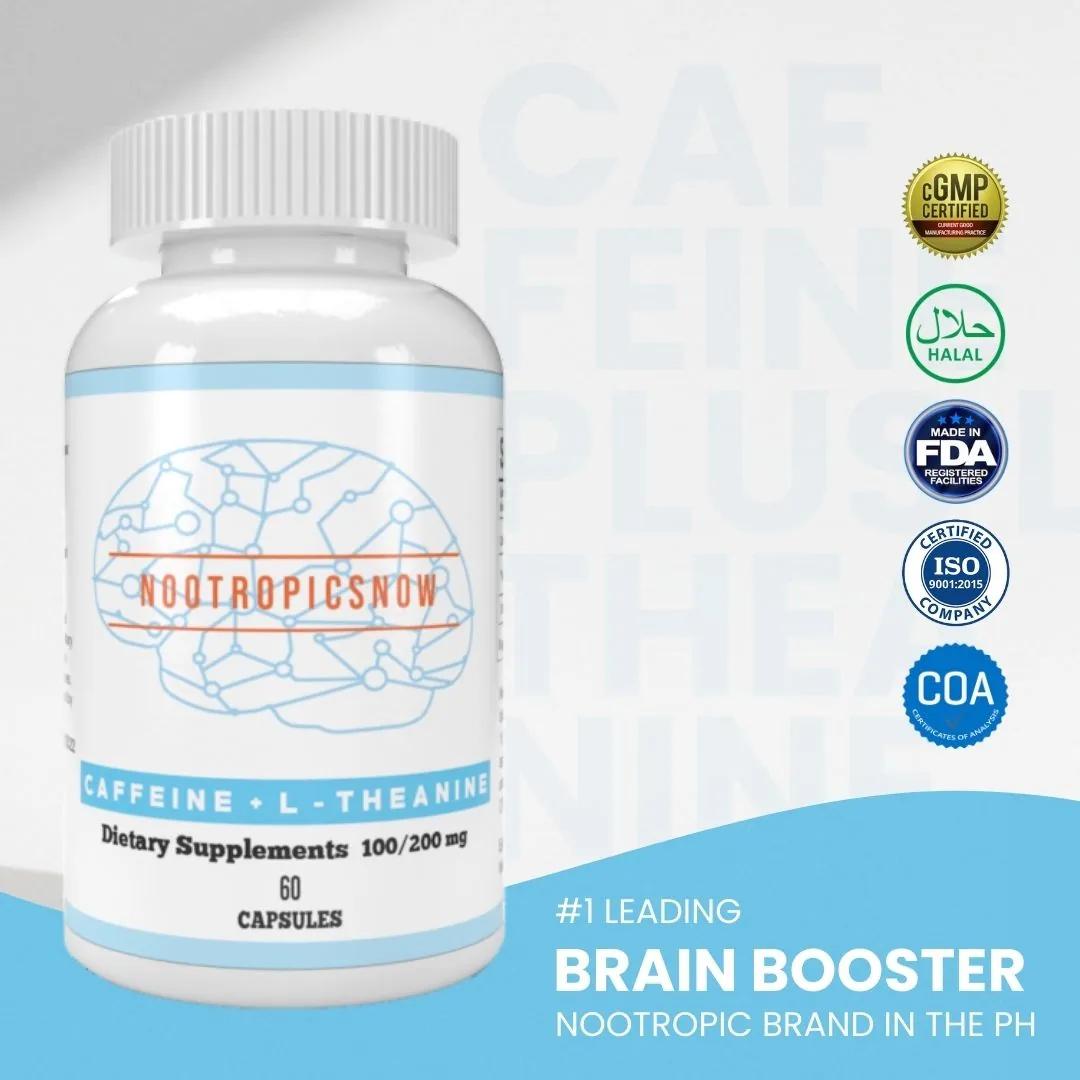
Focus
Last reviewed June 5, 2026
Occasional emails. Unsubscribe anytime.
TL;DR
Creatine is an amino acid-derived compound involved in the regeneration of adenosine triphosphate, or ATP, the cell’s main energy currency. That matters in muscle, and it also matters in brain tissue, where energy demand is constant and sometimes intense.12
That basic biology is the reason creatine keeps appearing in discussions of brain health, focus, and mental performance. The central idea is not that creatine “stimulates” the brain in the way caffeine does. Instead, creatine is studied as a way to support brain energy homeostasis and phosphocreatine stores, which may help under demanding conditions.210
That distinction matters. The current conversation around creatine for cognitive performance is increasingly specific: researchers are asking whether creatine helps with particular cognitive tasks, in particular settings, rather than assuming it produces a universal effect across all people and all forms of thinking.111
This is also why creatine is often discussed alongside exercise recovery, sleep loss, and aging. In those settings, the brain may be more sensitive to fluctuations in energy availability, making a creatine-based strategy more plausible.108
The best summary of the literature is that creatine supplementation may help some aspects of cognitive function, but the evidence is not identical across studies.111 That is a cautious conclusion, but it is the most accurate one.
Some research has reported improvements in memory and information processing speed after creatine supplementation.3 A separate review also suggested possible benefits for short-term memory and intelligence or reasoning in healthy individuals, while noting that other cognitive domains are less certain.4 Those findings are encouraging, but they do not mean every user will notice a dramatic change.
At the same time, not all studies are positive. One recent trial in young active men and women found improved exercise performance but not cognitive function, which is a useful reminder that results can vary by population, protocol, and what outcome is being measured.5 That pattern is common in nutrition research: the same supplement may look different depending on whether the subject is sleep deprived, well rested, older, younger, trained, untrained, or assessed on a different kind of cognitive task.15
There is also a 2023 randomized controlled study that reported improvements in cognitive performance, adding to the case that creatine may have real effects in some contexts.12 But the key word is “some.” The literature does not support treating creatine as a guaranteed nootropic.
A practical way to interpret the evidence is this: creatine appears more plausible for supporting certain cognitive functions than for producing a broad, universal “brain upgrade.”111
Creatine has been studied in several groups where cognitive demand is especially relevant.
One of the most interesting use cases is sleep deprivation. Creatine has been discussed as a candidate for reducing the negative effects of sleep loss on cognition.6 In a single-dose sleep deprivation study, creatine was associated with changes in cerebral high-energy phosphates along with improved cognitive performance and processing speed.136 That does not prove it works for every tired person, but it does suggest a biologically coherent role when the brain is under strain.
Older adults are another important group. A 2026 randomized, double-blind, placebo-controlled trial examined creatine combined with resistance training in older adults and included cognitive performance and quality of life as outcomes.7 That kind of study matters because aging can change both energy metabolism and the cognitive demands of daily life.87
Athletes and esports participants also drive interest in creatine for brain function. These populations often need fast decision-making, sustained attention, reaction time, and recovery from heavy physical or mental schedules.14 Reviews focused on athletes note that creatine’s effects on cognition may be most relevant when training and competition are both physically and mentally demanding.2
In short, creatine may be most worth considering when cognition is being challenged by one of these factors:
That still leaves open a major question: how might creatine help the brain in the first place?
The simplest explanation is energetic support. Creatine helps with ATP resynthesis, which is central to cellular energy availability in both muscle and brain tissue.12 Because ATP is used constantly, any system that helps preserve or restore it could, in theory, support performance under demanding conditions.
This idea is not just theoretical. Brain imaging and spectroscopy findings suggest creatine can influence markers of brain energetics.15 More recent sleep deprivation work also found changes in phosphocreatine and ATP-related measures alongside cognitive effects.136 That makes the “brain energy support” model more than a marketing phrase; it is a genuine research hypothesis with some human data behind it.
Still, there are important limits. The brain does not appear to take up creatine as readily as muscle does. The sleep deprivation study abstract notes that the main obstacle is limited exogenous uptake by the central nervous system, which is one reason repeated dosing over weeks has been the focus of much of the literature.6 So while creatine may help replenish brain energy systems, it should not be framed as an immediate, on-demand cognitive enhancer.
That nuanced model is the best one to keep in mind:
For most readers, creatine monohydrate is the form most strongly represented in the evidence base for performance and cognition.210 That is the standard reference form, and it remains the simplest choice if your goal is to align with the literature.
Research and reviews commonly discuss daily supplementation rather than a single occasional dose, and they describe brain uptake as slower than muscle uptake.615 Practically, that means consistency matters more than timing tricks. If your objective is cognitive support, it is reasonable to think in terms of sustained use over time rather than expecting a same-day effect.
The exact dose can vary in the real world, but the evidence pool here emphasizes the broader principle: creatine works more like a loading-the-system strategy than an acute stimulant.6 That is why many people describe benefits only after they have taken it consistently.
If you also use caffeine, it is worth separating the roles of each supplement. Combination research has examined creatine nitrate and caffeine together, but the cognitive outcomes are not uniformly superior across conditions.9 Caffeine is still the more direct acute focus aid, while creatine is better understood as a longer-term support for brain energetics.91
For shoppers deciding how to build a routine, a few practical rules are defensible:
A common reason people try creatine for cognitive performance is straightforward: they want help with memory, processing speed, and mental energy during stressful periods.31 That is a reasonable expectation, as long as it is kept modest.
The strongest upside is not that creatine turns someone into a different thinker. It is that it may support performance when the brain is working close to the edge of its energy resources.62 That is especially relevant for people under sleep loss, heavy training demands, or age-related changes in recovery and function.678
The most common objection is also fair: the literature is mixed. Some studies are positive, some are neutral, and some show effects only in certain tasks or groups.154 So if you have seen unusually confident claims online, skepticism is appropriate.
Another objection is that social media often presents creatine as a universal brain booster. The evidence does not support that framing.141 A better interpretation is that creatine may be useful for supporting cognitive performance under conditions of high demand, not as a guaranteed upgrade for everyone.
If you want a cautious, evidence-aligned view, here it is:
If you are comparing supplements for cognitive goals, start with the form. Creatine monohydrate is the most consistently discussed and studied option in the evidence base for performance and cognition.210 That makes it the default choice unless you have a specific reason to use another format.
Format matters mostly for adherence. Powders, capsules, and gummies can all be workable depending on preference and routine.1610 A gummy format may be convenient for some users, while capsules may suit others who want portability and a simple routine. The key is choosing a product you can take consistently.
It is also smart to keep the formula uncomplicated. If your goal is cognitive support, look for a straightforward creatine product rather than a blend with many added ingredients that may make it harder to tell what is doing what.12
For readers who also want a focus-oriented companion to creatine, a caffeine-plus-L-theanine product may be a more direct acute option than creatine itself.9 That does not replace creatine’s role, but it can complement a routine when immediate alertness matters more than long-term brain energy support.
Creatine for cognitive performance is a plausible, research-backed idea, but the strength of evidence varies by task, population, and study design.111 The most defensible use case is supporting brain energy availability when demand is high, such as during sleep loss, intense training, or in some aging-related contexts.678
If you want the simplest starting point, creatine monohydrate is the standard reference form in the literature.210 If you want a routine that may be more immediately noticeable for focus, creatine may pair well with a separate acute-focus tool rather than trying to force it to act like caffeine.91
The most honest expectation is this: creatine may help some people in some situations, especially when the brain is under stress, but it is not a universal nootropic.511
Does creatine actually help with brain fog?
Some people report that, but the research is better described as support for cognitive performance than a proven fix for brain fog. Evidence is mixed and depends on the situation.111
How long does creatine take to work for the brain?
Brain uptake is slower than muscle uptake, so sustained use is generally more relevant than expecting an immediate effect.615
Should I take creatine before studying or gaming?
The evidence base is stronger for consistent daily use than for a single pre-task dose, although sleep-deprivation research has explored acute use.613
Is creatine only for athletes?
No. Research interest also includes older adults, sleep-deprived individuals, and esports athletes, because cognition matters in those settings too.7814
Why do people online talk about 5 g, 10 g, or even 15 g?
Social media discussions often reflect personal experimentation, but the research literature emphasizes consistency and the limitations of central nervous system uptake rather than a universal high-dose strategy.615
Can creatine replace caffeine for focus?
They are different tools: caffeine is the more direct acute stimulant, while creatine is studied more as a support for brain energy and longer-term cognitive performance.91
Shop lab-tested compounds:
This article is for educational purposes only. It is not medical advice, not a substitute for professional consultation, and is not intended to diagnose, treat, cure, or prevent any disease.
Statements about dietary supplements have not been evaluated by the FDA. Individual results vary. Consult a licensed physician before starting any new supplement — especially if you are pregnant, breastfeeding, have a medical condition, or are taking prescription medication.
Quality and sourcing information is available on our quality page. Batch-level lab test data is available on request — contact support.
Last reviewed: 2026-04-19
Elechi JOG, Guandique DMA, Cannataro R.. Creatine in Cognitive Performance: A Commentary.. Curr Mol Pharmacol (2024). https://pubmed.ncbi.nlm.nih.gov/38389421/
Steven B. Machek, James R. Bagley. Creatine Monohydrate Supplementation: Considerations for Cognitive Performance in Athletes. Strength and conditioning journal (2018). https://doi.org/10.1519/ssc.0000000000000369
. The effects of creatine supplementation on cognitive function ..... https://pmc.ncbi.nlm.nih.gov/articles/PMC11275561/
. Effects of creatine supplementation on cognitive function of ..... https://pubmed.ncbi.nlm.nih.gov/29704637/
Silva JV, Nunes Oliveira T, Sampaio P. Creatine monohydrate improved cycling Wingate performance but not cognitive function in young active males and females.. Res Sports Med (2026). https://pubmed.ncbi.nlm.nih.gov/41960895/
Gordji-Nejad A, Matusch A, Kleedörfer S. Single dose creatine improves cognitive performance and induces changes in cerebral high energy phosphates during sleep deprivation.. Sci Rep (2024). https://pubmed.ncbi.nlm.nih.gov/38418482/
Fernandez-Garrido J, Martin EG, Saez-Berlanga A. Effects of high-load, velocity-intentional variable resistance training combined with creatine supplementation on neuroplasticity, oxidative stress, inflammation, physical function, cognitive performance and quality of life in older adults: A randomized, double-blind, placebo-controlled trial.. Exp Gerontol (2026). https://pubmed.ncbi.nlm.nih.gov/41941966/
Li N.. Creatine supplementation and exercise in aging: a narrative review of the muscle-brain axis and its impact on cognitive and physical health.. Front Nutr (2025). https://pubmed.ncbi.nlm.nih.gov/41601887/
Gina Mabrey, M Koozehchian, Andrew Newton. The Effect of Creatine Nitrate and Caffeine Individually or Combined on Exercise Performance and Cognitive Function: A Randomized, Crossover, Double-Blind, Placebo-Controlled Trial. Nutrients (2024). https://doi.org/10.3390/nu16060766
Kerksick C, Gonzalez D, Stout J. The emerging and evolving evidence supporting creatine as an ergogenic aid: history and applications.. J Int Soc Sports Nutr (2026). https://pubmed.ncbi.nlm.nih.gov/41870601/
. The effects of creatine supplementation on cognitive ..... https://pubmed.ncbi.nlm.nih.gov/39070254/
Julia Fabienne Sandkühler, Xenia A. K. Kersting, Annika Faust. The effects of creatine supplementation on cognitive performance—a randomised controlled study. BMC Medicine (2023). https://doi.org/10.1186/s12916-023-03146-5
. Single dose creatine improves cognitive performance and ..... https://pmc.ncbi.nlm.nih.gov/articles/PMC10902318/
Georgiou L, Tzanetakou IP, Giannakou K. Personalized Nutrition, Lifestyle, and Supplementation Strategies to Support Cognitive Performance and Well-Being in Esports Athletes: A Narrative Review.. Nutrients (2026). https://pubmed.ncbi.nlm.nih.gov/41901156/
. The influence of creatine supplementation on the cognitive ..... https://pubmed.ncbi.nlm.nih.gov/21118604/
Pereira F, Forbes SC, Romano V. Effects of Creatine Monohydrate Gummies on Performance and Body Composition in Female Beach Volleyball Athletes.. J Funct Morphol Kinesiol (2026). https://pubmed.ncbi.nlm.nih.gov/41900512/