Starter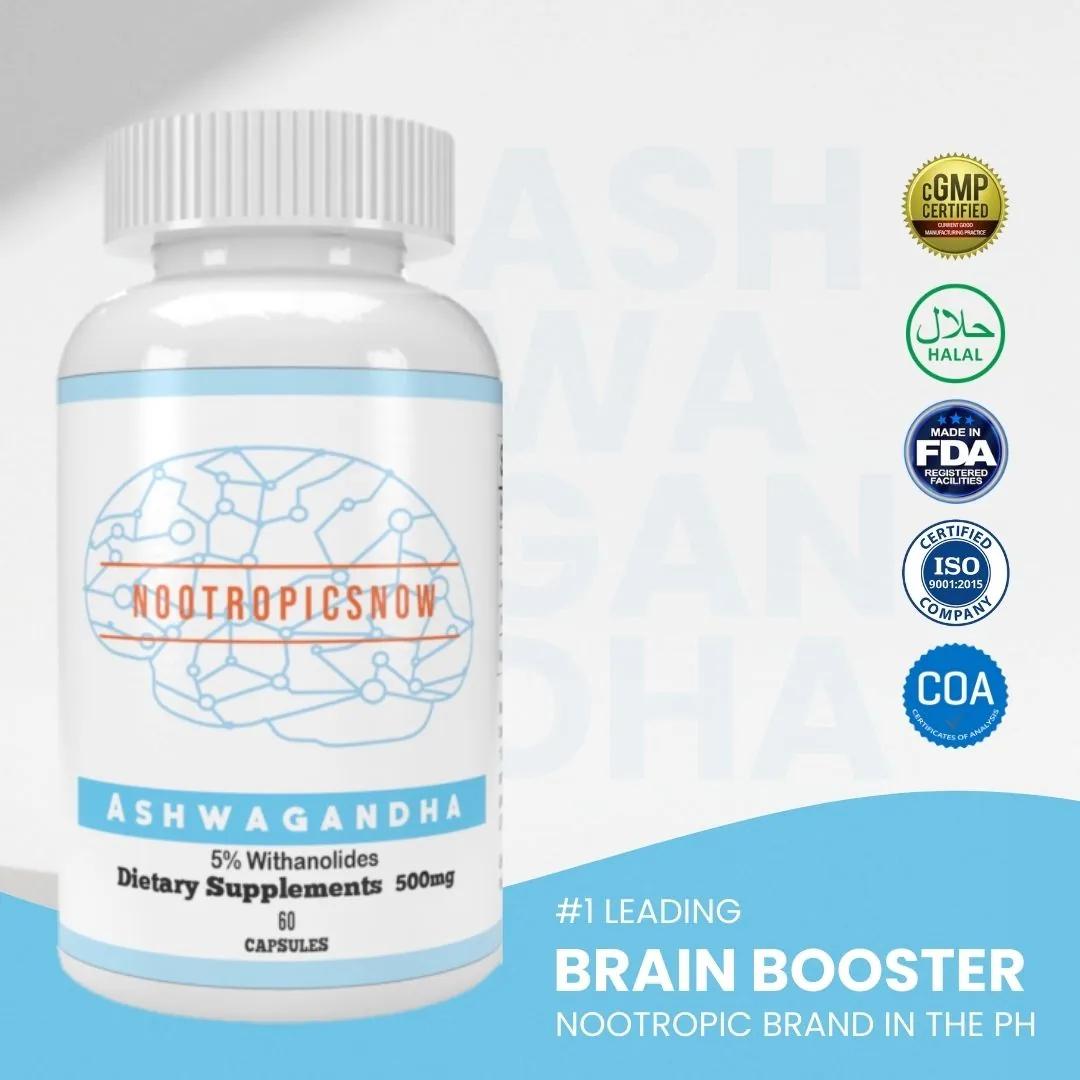
Stress
Last reviewed April 19, 2026
Occasional emails. Unsubscribe anytime.
Ashwagandha is the common name for Withania somnifera, a plant that has been used in traditional medicine systems for a long time.1 Recent reviews describe it as an adaptogen, and it is commonly discussed today in the context of stress management and sleep support.23
Research interest in ashwagandha has also expanded beyond stress. Reviews describe investigations into neuroprotective, sedative, anti-inflammatory, cardioprotective, and related effects.31 That said, this article stays focused on stress-related use, because that is where readers most often want practical guidance and where the supplement is most commonly positioned.32
Clinical and review literature commonly evaluates ashwagandha for stress-related outcomes.54 A 2022 taskforce guideline on nutraceuticals and phytoceuticals includes ashwagandha among compounds discussed in the context of psychiatric disorders.4 More recent reviews continue to frame it as a plant studied for stress management and adaptogenic effects.29
The important caution is that the evidence base is still developing. That means ashwagandha is best understood as a supplement with promising stress-related research, not a guaranteed solution that works the same way for every person or product.45 This is especially relevant because studies use different extract types, making direct comparison harder than it may first appear.678
If your main reason for considering an ashwagandha supplement is stress, the current literature supports that as the most reasonable use case to prioritize.54
Reviews describe ashwagandha as an adaptogen, a category often used to frame supplements for stress resilience.23 In practical terms, that usually means it is not thought of as a stand-alone answer, but as one part of a broader routine that also includes sleep, recovery, and daily stress management.25
If you are comparing options, it may help to choose products based on the goal you want to prioritize, such as STRESS or SLEEP.23 For readers whose main goal is stress support, a targeted ashwagandha product is often the most direct starting point.
For some people, a different stress-support ingredient may fit better. If you want a simpler compare-and-contrast option, an amino acid like L-theanine is often discussed alongside ashwagandha in stress-focused routines.
Sleep is one of the most commonly discussed secondary benefits in recent ashwagandha reviews.23 The 2021 review on stress-related neuropsychiatric disorders specifically covers insomnia among the conditions studied in relation to ashwagandha.5
That does not mean ashwagandha is a sleep medication. It does mean that if stress is interfering with sleep, ashwagandha is frequently considered in a stress-plus-sleep routine rather than as a standalone bedtime fix.25 In consumer discussions, this is one reason people look for products positioned to support both stress and sleep rather than just one goal.23
Ashwagandha is sold in different extract formats, and the research literature includes root extract and proprietary extract formulations.678 Because products vary by extract type and standardization, the label matters as much as the ingredient name.67
That is why there is no single dosage rule that can be applied across every ashwagandha supplement in the same way. The most cautious approach is to follow the product label and avoid assuming that all ashwagandha supplements are interchangeable.678
When you compare products, look for details such as:
If you are choosing an ashwagandha supplement mainly for stress, a product explicitly mapped to that goal is usually the clearest fit.23
A 2022 clinical guideline review and multiple 2021–2025 reviews discuss ashwagandha in the context of both potential benefits and the need for safety awareness.412 That framing matters because even when a supplement is widely used, response can vary from person to person.41
Some users report feeling overly calm or less motivated, while others want stress support without sedation; social discussions often highlight this concern.5 The clinical literature here supports a cautious, individualized approach rather than the idea that ashwagandha is appropriate for everyone.41
A few practical safety points follow from that:
The bottom line is not that ashwagandha is unsafe by default. It is that the evidence supports careful use, not casual one-size-fits-all use.41
Look for the extract type and standardization on the label, since clinical studies use different formulations.678 That is the single most important comparison point because the ingredient name alone does not tell you how the product was formulated.67
If your main goal is stress, a product positioned for STRESS may be the most direct fit.23 If stress and sleep both matter, a formula mapped to STRESS and SLEEP may better match your routine.23
For readers comparing adaptogens more broadly, rhodiola is another common option, especially when stress overlaps with a need for an energy angle rather than a relaxation angle.
A few buying questions to ask before you choose:
If your main concern is not stress but focus, energy, recovery, or a different goal, another supplement category may be a better match.102 Ashwagandha is best considered in context: stress is its main use case here, while other benefits are secondary or outside the scope of this guide.52
That is why it can be useful to think about your goal before you shop. If you want help comparing options, a quiz-based approach can be a practical way to match a goal to a catalog option.23
The studies and reviews available here support ashwagandha as a stress-focused supplement, but they do not provide one universal timeline that applies to every product or person. Clinical studies use different extracts and formulations, so results may vary.6784
Reddit discussions often question daily use, but the evidence in this set does not establish a single best schedule for everyone. Because formulations differ and responses vary, the safest approach is to follow the product label and use a cautious, individualized routine.6784
Some social discussions describe feeling less motivated or overly calm, which is why it is worth choosing a product carefully and starting conservatively. The clinical sources here support stress-related study interest, but not a one-size-fits-all effect profile.542
The citations provided do not establish a universal rule about taking ashwagandha with food or fat. Because extracts vary, the most reliable instruction is to follow the specific product label.678
Ashwagandha is discussed in the literature for both stress and sleep, so the better fit depends on your main goal. If stress is primary, choose a STRESS-focused product; if sleep is also important, a STRESS + SLEEP fit may make more sense.235
Look for the extract type, standardization, and the goal category on the label. Clinical research uses different formulations, so it helps to compare products carefully instead of treating them as identical.678
If you want a straightforward place to start, shop the stress-focused product callout below and compare it with other options based on your goal.
This article is for educational purposes only. It is not medical advice, not a substitute for professional consultation, and is not intended to diagnose, treat, cure, or prevent any disease.
Statements about dietary supplements have not been evaluated by the FDA. Individual results vary. Consult a licensed physician before starting any new supplement — especially if you are pregnant, breastfeeding, have a medical condition, or are taking prescription medication.
Quality and sourcing information is available on our quality page. Batch-level lab test data is available on request — contact support.
Last reviewed: 2026-04-19
Subhabrata Paul, Shreya Chakraborty, Uttpal Anand. Withania somnifera (L.) Dunal (Ashwagandha): A comprehensive review on ethnopharmacology, pharmacotherapeutics, biomedicinal and toxicological aspects.. Biomedicine & pharmacotherapy = Biomedecine & pharmacotherapie (2021). https://pubmed.ncbi.nlm.nih.gov/34649336/
Mateusz Sprengel, Radosław Laskowski, Zbigniew Jost. Withania somnifera (Ashwagandha) supplementation: a review of its mechanisms, health benefits, and role in sports performance.. Nutrition & metabolism (2025). https://pubmed.ncbi.nlm.nih.gov/39910586/
Paulina Mikulska, Marta Malinowska, Miłosz Ignacyk. Ashwagandha-Current Research on the Health-Promoting Activities: A Narrative Review.. Pharmaceutics (2023). https://pubmed.ncbi.nlm.nih.gov/37111543/
Jerome Sarris, Arun Ravindran, Lakshmi N Yatham. Clinician guidelines for the treatment of psychiatric disorders with nutraceuticals and phytoceuticals: The World Federation of Societies of Biological Psychiatry (WFSBP) and Canadian Network for Mood and Anxiety Treatments (CANMAT) Taskforce.. The world journal of biological psychiatry : the official journal of the World Federation of Societies of Biological Psychiatry (2022). https://pubmed.ncbi.nlm.nih.gov/35311615/
Alex B Speers, Kadine A Cabey, Amala Soumyanath. Effects of(Ashwagandha) on Stress and the Stress- Related Neuropsychiatric Disorders Anxiety, Depression, and Insomnia.. Current neuropharmacology (2021). https://pubmed.ncbi.nlm.nih.gov/34254920/
West RE, Biswas A, Rao R. A proprietary herbal extract of ashwagandha root for stress and anxiety in healthy adults: a randomized, double-blind, three-arm, placebo-controlled efficacy and safety study.. J Med Life (2026). https://pubmed.ncbi.nlm.nih.gov/41815853/
Thanawala S, Shah R, Alluri KV. Efficacy and safety of Ashwagandha root extract sustained-release (AshwaSR) capsules in healthy adult, stressed subjects: A randomized, double-blind, placebo-controlled, parallel-group, 3-arm clinical trial.. Medicine (Baltimore) (2026). https://pubmed.ncbi.nlm.nih.gov/41824889/
Vani I, Muralidhar G, Rao BS.. A prospective, randomized, double-blind, placebo-controlled study on efficacy and safety of Ashwagandha root extract (<i>Withania somnifera</i>) for managing menopausal symptoms in women.. Front Reprod Health (2025). https://pubmed.ncbi.nlm.nih.gov/41561822/
Michał Wiciński, Anna Fajkiel-Madajczyk, Zuzanna Kurant. Can Ashwagandha Benefit the Endocrine System?-A Review.. International journal of molecular sciences (2023). https://pubmed.ncbi.nlm.nih.gov/38003702/
Shiyi Guo, Mohammad J Rezaei. The benefits of ashwagandha () supplements on brain function and sports performance.. Frontiers in nutrition (2024). https://pubmed.ncbi.nlm.nih.gov/39155932/